



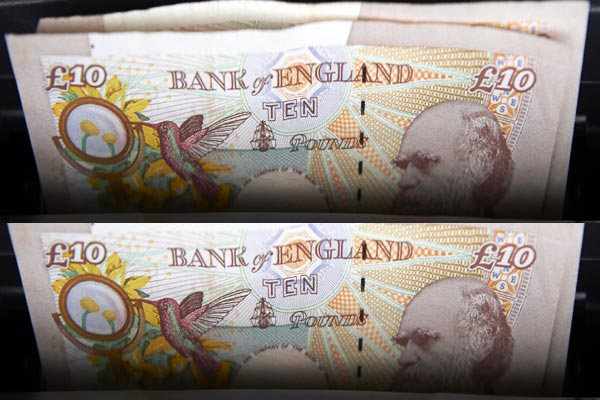
 LONDON: Sterling climbed on Thursday after data showed Britain's economy grew at a faster pace last year than had previously been estimated, though the pound was on track for its worst quarterly showing in 6-1/2 years on a trade-weighted basis.
The British economy grew by 2.3 percent over the course of 2015, the numbers from the Office for National Statistics showed, higher than a previous estimate of 2.2 percent and safeguarding Britain's position as one of the fastest-growing economies among rich countries.
Though growth slowed a little towards the end of the year, GDP was 2.1 percent bigger in the last three months of 2015 than in the fourth quarter of 2014, stronger growth than the previous estimate of 1.9 percent.
Currency traders appeared unphased by numbers released at the same time that showed Britain's current account deficit ballooning to around 7 percent of GDP, and the pound rose to $1.4395 after the data, up from $1.4360 just before its release and leaving the currency up 0.1 percent up on the day.
Against the euro, sterling pared losses to trade at 78.95 pence, still a touch down on the day.
"The current account story is well known, and the deficit doesn't have much of an impact unless we're in times of global financial stress," said Societe Generale currency strategist Alvin Tan, in London.
"Clearly we're not in that world at the moment, so growth numbers are having more of an impact on monetary policy and the currency at this point."
Though the pound is heading for a third successive quarter of losses against the dollar, for the month it is up 3 percent against the U.S. currency, its best performance in a year, helped by a push-back of expectations for U.S. interest rate rises over the past month.
Against the euro and on a trade-weighted basis, the pound is heading for its worst quarter since September 2009, having been driven down largely by increasing anxiety over a June 23 referendum on whether Britain should stay in the European Union, as well as global risk aversion.
Investors worry that leaving the EU would hurt growth and threaten the huge foreign investment flows Britain needs to fund its widening current account deficit.
"With the headwind of slower global growth and growing concerns over the Brexit debate, the MPC (Bank of England's monetary policy committee) welcomed strong GDP figures this morning," wrote Foenix Partners trader Alex Lydall.
"(The widening deficit) portrays how significant the balance of trade will be when considering whether or not to remain in Europe. Any further imbalance in trade figures will weigh substantially on the UK economy and cause a further headache for (BoE Governor) Mark Carney."


























Comments
Comments are closed for this article.