


Jordan's Central Bank governor resigns over policy

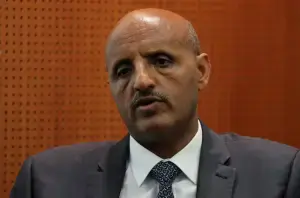
 AMMAN: Jordan's cabinet accepted on Sunday the resignation of Faris Sharaf, the Central Bank Governor of Jordan, and appointed his deputy Mohammad Said Shaheen as his replacement, officials said.
They did not disclose the reasons for the surprise resignation of Sharaf, who took the five-year post last November.
But bankers and some officials say Sharaf was enraged by an appeasement policy adopted by the government to win over disgruntled public sector employees in the wake of Arab unrest that endangered the country's financial and monetary stability.
Bankers say Sharaf, a highly respected financial expert who had senior posts in the banking and financial industry, has increasingly voiced privately his alarm at the government's expansionary fiscal policy.
Prime Minister Marouf al-Bakhit, who was appointed this year, has stepped up social spending -- after protests demanding reforms -- that critics say has raised the indebtedness of the country and widened its budget deficit beyond a targeted 5.5 percent of GDP.
Bakhit, drawn from the ranks of the country's powerful state bureaucracy and who favours a bigger state role in the economy, has sent negative signals to the vibrant private sector, which the treasury relies on to generate jobs and taxes.
Economists and bankers say Sharaf criticised a fiscal policy that saw government revenue shrinking and unable to cover rising current expenditure for security and a bloated bureaucracy whose salaries eat up most of the country's $8.98 billion budget.
Jordan has seen weeks of protests since earlier this year, when peopled called for wider political reforms, but it has so far escaped greater turmoil.
To head off civil unrest, authorities expanded subsidies to the tune of $1.4 billion and channelled tens of millions of dollars to develop provincial areas and tribal areas that form the backbone of support for the Hashemite royal family regime, and offered more handouts to citizens.
The cabinet approved a supplementary budget last month, adding 584 million dinars ($824 million) to the kingdom's spending plans.
However, the authorities said extra foreign grants received this year would help cover the extra spending and ensure the 2011 budget deficit target of 1.18 billion dinars, or 5.5 percent of gross domestic product, is met.
The package of extra social spending and subsidies since January range from salary rises for civil servants to a freeze in gasoline prices and lower taxes on basic commodities.
Sharaf was worried policymakers' efforts to resort to higher levels of domestic borrowing from banks and abroad, to finance growing social needs and the budget deficit, could derail growth and seriously jeopardise the economy's ability to recover from sharp contraction, bankers close to him said.
Copyright Reuters, 2011




















Comments
Comments are closed for this article.