


Cameron visit points to thaw in UK-Russia ties

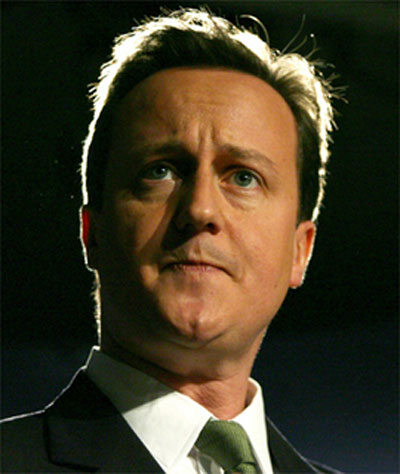 LONDON: David Cameron goes to Russia next week on the first visit by a British prime minister since the murder of a Kremlin critic in London five years ago, symbolising both sides' interest in expanding trade and business ties despite political differences.
The Kremlin announced Cameron would visit Moscow on Sunday and Monday. Tony Blair in 2006 was the last British prime minister to visit Russia.
The focus will be squarely on business and trade and analysts expect no movement in the persistent dispute over the murder of Alexander Litvinenko, a former Russian spy who died in London later in 2006 from poisoning by radioactive polonium-210.
Russia's refusal to extradite Andrei Lugovoy, who Britain wants to prosecute for Litvinenko's murder, sent diplomatic ties between the countries plunging to a post-Cold War low.
"It won't achieve an awful lot, certainly not in terms of substance," said James Nixey, a Russia expert at London's Chatham House thinktank, said of Cameron's visit.
"The business relationship is good but it would be an awful lot better if the Russian business environment were more predictable and less arbitrary," he said.
More than 20 business executives, including oil firm BP's Chief Executive Bob Dudley , are set to join Cameron on the trip, the latest of a series he has made to large emerging markets to try to win more trade and business and strengthen Britain's faltering recovery from a deep recession.
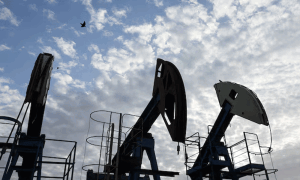
Russia needs more foreign investment to reduce its dependency on oil.
Cameron was invited by President Dmitry Medvedev but is also expected to meet Prime Minister Vladimir Putin.
British government sources said some business deals will be signed during Cameron's visit although they will not be on the scale of the multi-billion-pound agreements reached during Cameron's visits over the past year to China and Gulf countries.
FROSTY RELATIONSHIP
"For the last five years there's been a frosty, even icy relationship that has hindered business investment," said Chris Weafer, chief strategist at Troika Dialog, a leading Moscow brokerage.
"But that hasn't stopped Russians buying property in London, sending their kids to British schools, buying football clubs and being very socially visible," he said.
BP, one of Britain's biggest companies, was dealt a blow last week when US giant Exxon Mobil Corp and Russia's Rosneft signed an agreement to extract oil and gas from the Russian Arctic.
That sunk any hope of BP reviving a similar deal that had been blocked in May by its partners in another Russian venture.
However, Troika Dialog's Weafer said: "BP needs to get into the Arctic and they are still in the game. Russia needs to do several of these joint venture-type deals, not just one."
The Litvinenko row led to London and Moscow expelling diplomats in July 2007. Britain halted talks on easing visa rules and Russia stopped the British Council, the British government's cultural arm, from operating in two Russian cities.
Since then, both countries have largely agreed to disagree on those sensitive issues while developing business ties.
Relations have warmed slightly but are still far behind the relations Moscow has with either Washington or with other European Union nations such as France, Germany, Spain or Italy.
The Russian Ambassador to Britain, Alexander Yakovenko, called in an article last week for a drive to overcome the mistrust between the two countries. He suggested they could cooperate on technology and energy efficiency.
Britain is the sixth largest foreign investor in Russia, accounting for $21.3 billion of the $315 billion Russia has attracted from abroad since the 1991 fall of the Soviet Union, according to Russian government figures.
Britain and Russia are both G8 members and permanent members of the UN Security Council but Russia has been critical of NATO bombing of Libya, in which Britain has played a leading role, and opposed a British drive for a tough UN resolution on Syria.
Copyright Reuters, 2011












Comments
Comments are closed for this article.