


Second autopsy reveals signs of torture, bullet wound in Mir Raza’s body: report
- Dr Summaiya restored as convener of the eight-member medical board
A second post-mortem of Mir Raza Ali revealed signs of violence and a rear gunshot wound, strengthening murder suspicions after family objections led to the restoration of a trusted medical board.
- Mir Raza Ali's second post-mortem findings.
- Controversy over the medical board's composition.
- Forensic analysis of samples for evidence.
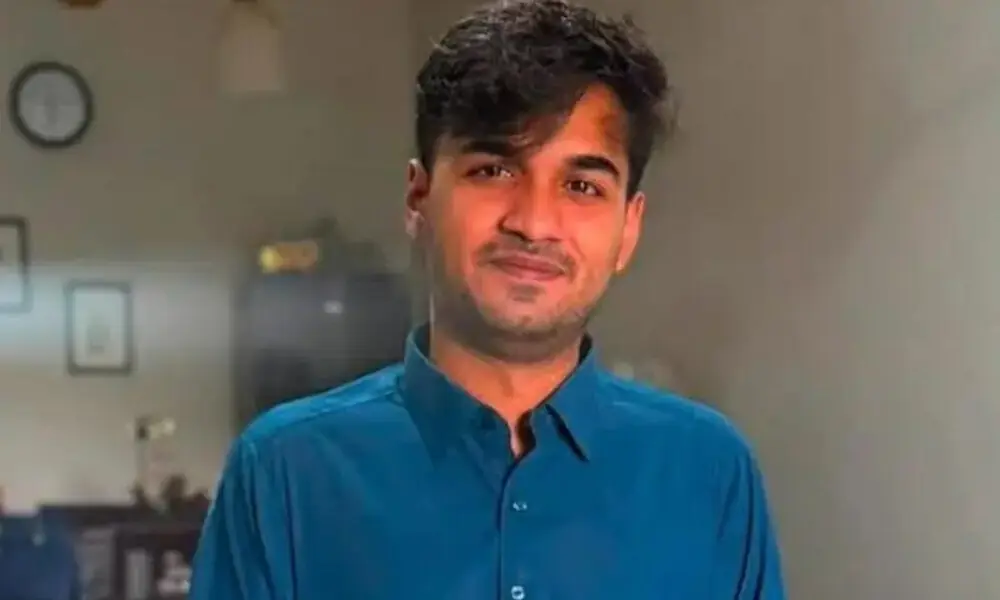

A preliminary medical report following the exhumation and second post-mortem of Mir Raza Ali has revealed signs of violence on his body and a gunshot wound from the rear, giving fresh impetus to suspicions that the young man was murdered, Aaj News reported on Saturday.
The report has also provided answers to all 14 points raised by the police surgeon regarding the case.
The mysterious death of Raza has taken a new turn, with conflicting positions previously emerging between police and the family over whether the young man was murdered or died by suicide. Findings from the second post-mortem, conducted after his exhumation, have strengthened suspicions of his murder.
Strict security arrangements were made around the cemetery adjoining Rehmania Mosque in the jurisdiction of Ferozabad police station in Karachi during the exhumation and second post-mortem. A heavy contingent of police was deployed in the area, while a civil judge and judicial magistrate Karachi East were also present at the site.
Just before the exhumation, the five-member medical board constituted by the administration was changed again and the previously constituted eight-member board was restored. The health department had earlier made a sudden change to the board, prompting strong objections from Raza’s family, who refused to accept the newly constituted panel. The exhumation was subsequently postponed temporarily.
Under a fresh official notification, Dr Summaiya Syed Tariq was once again appointed convener of the eight-member medical board. She had earlier identified 14 serious shortcomings in the initial post-mortem report.
The restored board includes Dow University Professor Dr Naseem Ahmed as pathologist, Dr Farah Wasim as forensic expert and CPLC officer Amir Hassan Khan as forensic identification expert. Dr Kamran, Dr Sri Chand and Dr Daniyal Mirza have also been retained as members.
Earlier, Mir Raza’s parents and lawyer had expressed serious concerns over the overnight change to the medical board. Speaking to the media, the deceased’s lawyer, Jibran Nasir, questioned the repeated issuance of notifications regarding the board and said a legal notice had been served on the police surgeon and health secretary over the sudden change.
Nasir said the family had demanded that experts and doctors from Karachi be included in the medical board, questioning why the panel had been changed overnight.
He further claimed that the change made by the director general health Hyderabad was contrary to court orders, as the deceased’s heirs had expressed complete confidence only in the original eight-member board.
Raza’s father had also expressed serious reservations about contradictions in the investigation and the composition of the medical board. He maintained that the family had from the outset insisted that the death was a clear case of murder and questioned the whereabouts of Dr Usama, who had conducted the initial post-mortem.
The father had also questioned why doctors from other parts of Sindh were being brought in for the medical board instead of relying on experts based in Karachi.
He had made it clear that the family would not permit the exhumation unless the medical board they trusted was restored. The administration subsequently accepted the family’s demand.
Following the exhumation, forensic experts collected several important samples that will be examined to determine the possible presence of poison, medicines or other chemicals.
Bones and tissue will also be examined in detail to investigate the gunshot aspect, while samples have been collected from different parts of the body to determine the presence of old injuries, wounds, possible fractures, gunpowder traces or other signs of violence.
The deceased’s hair, nails, bones and teeth have been sent to a forensic laboratory for DNA analysis and examination for other evidence that could help investigators unravel the circumstances surrounding his death.
Investigators expect the scientific examination to lead to significant developments in the Mir Raza case and help determine the circumstances surrounding his death.
The victim’s father, Mir Hussain on July 30 said his only son went missing in the early hours of July 28 after leaving home, telling the family he would return shortly. He had said the family later found his body in Gulistan-i-Jauhar.
“My son had been running his own business for the past five years. He never came back. We only received his body,” he had said, demanding the immediate arrest and punishment of those responsible for the killing.




















Comments