



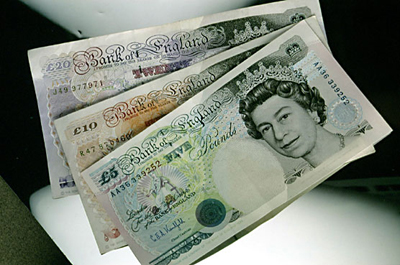
 LONDON: Sterling climbed to a seven-year high against a trade-weighted basket of currencies on Wednesday after wage growth data gave the strongest indication in some time that Britain's economy is on track to deliver higher inflation and interest rates.
Total average weekly earnings in the three months to April, including bonuses, rose by 2.7 percent compared with the same period a year earlier, speeding up from 2.3 percent year-on-year growth in the three months to March.
Economists polled by Reuters had forecast that total earnings would rise by 2.1 percent and that earnings excluding bonuses would increase by 2.5 percent.
Separately, minutes from the latest Bank of England meeting showed that the decision by two policymakers to hold interest rates at record lows was "finely balanced".
Sterling rose around half a percent to $1.5713, having hit a one-month high of $1.5755. Against the trade-weighted basket of major currencies, it rose to 93.0, its highest since just before the 2008 financial crash.
The euro also dropped to 71.58 pence from 71.97 before the data, touching its lowest level since June 1.
"Rising wages are a very good sign for the overall economy as it shows the situation is starting to normalise and employees feel more comfortable about asking for pay increases after 5 years of wages falling in real terms," said Andy Scott, associate director at HiFX.
"Sterling rose to a one-month high above $1.57 against the dollar, and to a three-week high against the euro."
The pound has broadly risen in recent weeks as some of the uncertainty from May's national election lifted with recent data showing Britain's economy growing more than previously estimated last year and in early 2015.
However, with consumer inflation rather subdued, traders do not expect the Bank of England to raise rates in a hurry. Data on Tuesday showed inflation just about turned positive again after dipping below zero in April for the first time in 55 years, suggesting Britain's flirtation with deflation was brief.
Focus will now turn to the Federal Reserve where policymakers will conclude a two-day policy meeting. Investors expect the Fed to intimate when U.S. interest rates will start rising this year.
"The $1.57 level for sterling/dollar might not last long as we await the Fed statement, at which point we should get clues as to whether to expect a Fed hike in September," said Alex Edwards, head of corporate desk at UKForex.
"If the signals are strong - which seems likely given recent rhetoric from various Fed officials - the dollar will most likely strengthen and sterling will come back down towards support at $1.55."

























Comments
Comments are closed for this article.