


US wheat rallies on crop concerns, soy also surges

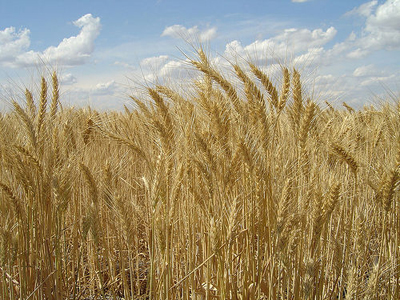 KANSAS CITY: US wheat rose for a seventh straight session on Wednesday to match the longest rally since January as a drop in the dollar improved export prospects for supplies in the United States.
High-quality spring wheat futures traded at the smaller exchange in Minneapolis led the charge, rising nearly 2 percent amid concerns over poor yields from the crop being harvested.
Traders noted that rains had halted sowing this spring over a large area in North Dakota, the top spring wheat state, as reported by the US Department of Agriculture on Tuesday.
Minneapolis Grain Exchange spring wheat futures rose 19 cents to $9.15-1/4 a bushel, while at 9:52 a.m. CDT (1452 GMT), Chicago Board of Trade September wheat was up 9-3/4 cents, or 1.4 percent, at $7.34-1/2, the highest since June 16.
The September CBOT nearby corn contract rose 4-1/4 cents to $7.18-1/4, and nearby CBOT soybeans gained 16 cents, or 1.2 percent, at $13.56.
Grains were influenced in part by outside markets including a weak dollar, gains in crude oil and higher equities.
Traders also were looking at weather forecasts that called for dry areas of the US Midwest corn and soybean growing region to see some rain soon. Temperatures over the next week will remain moderate, an agricultural meteorologist said on Wednesday.
Traders digested news from the US government that US farmers reported 7 million acres (2.8 million hectares) of prevented plantings of corn, soy and spring wheat this year due to cold and rainy conditions this spring in the corn belt and the northern US Plains.
"We have seen a big downward reduction from planted acres to harvested acres and the big reason for that has been these prevented plantings," Barclays Capital analyst Sudakshina Unnikrishnan said.
"We could see potentially further downward revisions in terms of some of the supply estimates so in that sense it's quite positive for prices," Unnikrishnan said.
In the soybean market, there were concerns that a La Nina weather pattern could threaten South American crops next year.
Copyright Reuters, 2011


















Comments
Comments are closed for this article.