



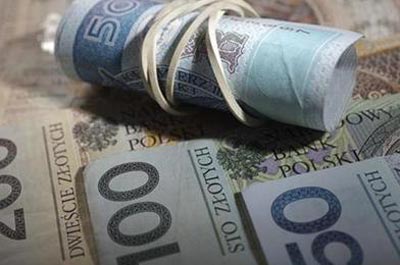
 BUDAPEST: The zloty firmed against the euro on Tuesday after Poland's finance minister Mateusz Szczurek said the pace of last week's currency fall might give cause for concern.
Szczurek repeated late on Monday that he was not worried by the zloty's recent weakening to 4.3 to the euro, which would support the economy, but he saw cause for concern in the pace of the currency's fluctuations.
Central Europe's most liquid currency extended its rebound on Tuesday for a second day, after losing almost 3 percent in December on expectations the central bank could cut interest rates again.
The zloty firmed 0.2 percent to 4.305 against the euro by 0905 GMT after gaining on Monday as exporters bought the currency.
It shed about 2.5 percent last week, and touched a two-and-1/2-year low at 4.3983, after a fall in Polish retail sales in November fuelled expectations that the central bank will resume interest rate cuts.
The Hungarian forint was flat at 315.35, off a three-year low of 317.40 hit last week.
Some market participants also expect Hungary to cut its record low 2.1 percent base rate further next year to help revive inflation and the slowing economy.
In the next few days, however, the Hungarian central bank could still try to strengthen the forint via market interventions before the year-end to help the government reduce state debt from end-2013 levels, traders said.
A firmer forint reduces Hungary's debt as about 37 percent of the country's state debt, amounting to 24 trillion forints ($92.6 billion), is denominated in foreign currencies.
Hungary's central bank never comments on currency market interventions.
"I guess the central bank could try to push the forint to 308-310 (by Wednesday's fixing) but I don't expect a bigger change, like past 305," one Budapest-based trader said.
The Serbian dinar firmed against the euro on Tuesday, by 0.1 percent to 121.09, after the International Monetary Fund said late on Monday that Serbia's 2015 budget was in line with the terms of a 1 billion euro ($1.22 billion) loan agreement with the Fund.
Passage of the budget has lifted confidence in the dinar, pushing it off record lows touched in mid-December, and the central bank, which keeps the currency in tight ranges, intervened last week to curb its rise.




















Comments
Comments are closed for this article.