



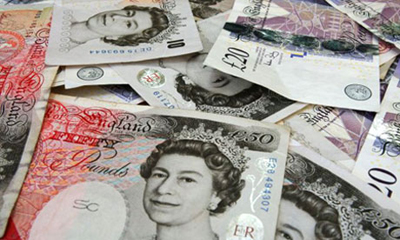
 LONDON: Sterling hit a 15-month low against the dollar on Monday as two-year interest rate differentials between the United States and Britain grew to their widest in more than two years, making the dollar more attractive to investors.
The fresh wave of dollar-buying came after data showed U.S. employers added the most jobs in nearly three years in November, the latest sign that the U.S. recovery is gaining momentum.
That saw investors price in chances that the Federal Reserve may tighten monetary policy in the middle of 2015. By contrast, investors do not expect the first interest rate hike by the Bank of England until late 2015 or early 2016.
Such expectations drove the yield gap between the two-year U.S. Treasury yield and British gilts to its widest since Sept. 2012, according to Reuters data.
Sterling was down 0.15 percent at $1.5560, having hit a 15-month low of $1.5541 in early London trade, taking the pound's year-to-date losses to more than six percent.
However, the pound firmed against the euro amid expectations that the European Central Bank may opt for quantitative easing early next year to help revive the struggling euro zone economy. The euro was down 0.15 percent at 78.75 pence.
"U.S. swap rates are moving in the dollar's favour and there is speculation that the Fed may harden its stance when it meets next week," said Petr Krpata, currency strategist at ING. "Given that, it's tough for anyone to bet against the dollar."
With the Bank of England unlikely to move on rates until after the Fed, sterling will probably underperform the dollar in the near-term, Krpata added.
Also, investors are likely to stay away from the pound as uncertainty over the outcome of Britain's general election next May grows. And with inflation staying subdued, the BoE is likely to benchmark rates at record lows in the coming six months.
Forecasts of a UK rate hike have been pushed back sharply in the past few months. That has helped knock sterling down almost 9 percent against the greenback since it hit a six-year high of near $1.72 in July, when investors had thought a UK rate rise may come by the end of 2014.
























Comments
Comments are closed for this article.