



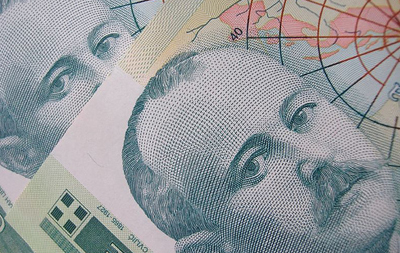
 BUDAPEST: Serbia's dinar gave up slight early gains on Thursday after its central bank kept interest rates on hold, and the currency may stay under pressure as investors await delayed fiscal reforms.
Prime Minister Aleksandar Vucic is expected to present a revised budget, possibly including cuts in pensions and public sector wages and jobs, later this week or early next week.
A delay in state spending cuts has been blocking the way of a credit deal with the International Monetary Fund, weighing on the dinar. It has also prevented the central bank from lowering rates to help the recession-hit economy.
The bank kept its main interest rate unchanged on Thursday at 8.5 percent, the highest in the region by far, calling for fiscal reforms it said would reduce Serbia's risk premium.
The dinar hit two-year lows against the euro earlier this week after a three-month slide. It was bid at 118.96 at 1129 GMT, less than one percent off its record lows hit in June 2012.
Pressure is likely to stay on the dinar even though the central bank has not lowered rates becaue uncertainties over the state budget, Hypo Bank said in a note.
Also weighing on the dinar was a deterioration in recent months of the balance of Serbia's foreign trade of goods, the bank said.
UniCredit said in a note before the rate decision that it saw scope for rate cuts totalling 75 basis points this year to boost credit and curb the recession. It said the bank could keep its market interventions to defend the dinar at low level as long as budget trends remain risky.
SHORT-TERM YIELDS UNDER PRESSURE
The Serbian central bank's decision and comments were in contrast with a dovish shift in the rhetoric and policy of other central banks in the region and the European Central Bank.
Central Europe's rate setters have turned more dovish in recent months because of an economic slowdown in the region. Government debt yields have been volatile across Europe, dropping on the prospect of loose ECB policy and rising on the back of the Ukraine crisis and possible US interest rates hikes.
Poland and Romania's central banks are expected to cut interest rates further. Hungary's central bank finished its own easing cycle in July after two years of cuts, but has pledged to increase cheap funding for commercial banks.
Loose monetary policy could keep short-term interest rates low in the region even if yields on 10-year or longer debt are driven up by an expected rise in long-term US Treasury and Bund yields, which they tend to track.
In Hungary, forint liquidity in short-term debt and money market instruments has surged anyway since the central bank limited the funds that market participants can place with it for a maximum period of two weeks as of Aug. 1.
The move has helped push Hungary's Treasury bill yields well below 2 percent. The implied yields of the forint over the euro have fallen and cross currency basis spreads have widened.
"This has a negative impact on the forint exchange rate as this makes it cheaper to short the forint," said Eszter Gargyan, analyst of Citigroup.
Short-term liquidity may drop nearer the November expiry of a 2 billion euro European Union loan as Hungary finances foreign currency debt from forints, market participants said.
The forint was flat at 314.96 against the euro. Central European government bond prices gave up early gains, with yields rising, mainly in long-term instruments.

























Comments
Comments are closed for this article.