


Portugal wakes up to cost of private-public financing

 LISBON: Debt-ridden Portugal has made great strides since joining the European Union in 1986, building infrastructure with private money which critics say is becoming dangerously expensive.
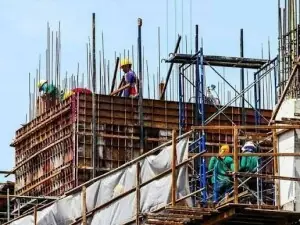
Between 1990 and 2009, 2,600 kilometres (1,600 miles) of roads and motorways were built using private-public partnerships (PPP), a financing technique now under close scrutiny in Portugal.
The United Kingdom led the way, relying heavily on PPP financing in the 1990s.
Such partnerships associate the state with private investors which take on the execution and financing of building public infrastructure in exchange for a concession to operate it, generally lasting 30 years.
In so doing, the state avoids the immediate cost of an expensive investment and a private company gains access to a new market.
Portugal, a relatively backward European country 30 years ago, turned to this method to launch construction of the giant Vasco de Gama bridge in Lisbon in 1992.
It has since relied heavily, some now say too heavily, on these partnerships to build roads, railways and hospitals as part of its rush to modernise and raise competitiveness.
Figures in the 2011 budget law showed that PPPs have cost the taxpayer 842 million euros (1.18 billion dollars), with the amount expected to reach 1.2 billion euros by 2018.
"The problem with Portugal is that there are too many," said economist Jose Manuel Viegas, professor at Lisbon's High Institute of Technology. "Portugal is by far the European country that has turned to the partnerships the most."
A recent report by the finance ministry said that Portugal had committed itself to 86 public-private partnerships in 2009 with 57 in operation, 17 under construction and 12 out to tender.
"These partnerships have allowed successive governments to realise major investments without impacting the state budget," Carlos Moreno, a former public auditor, said in a book 'How the State Spends our Money.'
"But this method is reaching a crisis point," he warned.
Last month, the European Union and International Monetary Fund mission which was negotiating terms for a debt rescue, asked the Socialist government to include three PPPs in its 2010 accounts, increasing the public deficit from 8.6 percent of gross domestic product to 9.1 percent, three times the eurozone ceiling.
The mission has also required that Portugal freeze any new partnerships until an audit of the 20 biggest ones is completed.
This has been applauded by the centre-right Social Democrats (PSD), Portugal's main opposition party, which is campaigning heavily on the theme in the run-up to snap legislative elections on June 5.
Copyright AFP (Agence France-Presse), 2011




















Comments
Comments are closed for this article.