



 LONDON: The British government said on Wednesday it would spend 3 billion pounds ($4.88 billion) on preliminary work on a new generation of nuclear-armed submarines, a sensitive issue for the coalition government.
At the same time, Defence Secretary Liam Fox made a concession to the Liberal Democrats, the junior partner in the Conservative-dominated coalition, by launching a study of alternatives to replacing Britain's current nuclear submarines.
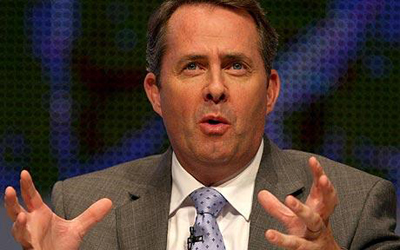
Fox said the government had chosen the design of a new generation of nuclear submarine and had approved spending 3 billion pounds on preliminary work, including ordering components with long delivery times.
"The nuclear deterrent provides the ultimate guarantee of our national security," Fox told parliament.
While Britain was not currently threatened, "we cannot dismiss the possibility that a major direct nuclear threat to the United Kingdom might re-emerge," he said.
Taking account of inflation, the final cost of the new submarines would be 20-25 billion pounds, up from an original estimate at 2006 prices of 11-14 billion pounds, Fox said.
CONTROVERSIAL DECISION
Spending billions on new nuclear submarines is controversial at a time when the coalition is cutting public services, and spending on non-nuclear defence, to curb a huge budget deficit.
It is also a divisive issue for the year-old coalition government. The current four submarines armed with Trident nuclear missiles are due to go out of service in the 2020s.
The centre-right Conservatives want to replace the submarines while the centre-left Lib Dems said in last year's election campaign this was unaffordable.
While the coalition agreement commits both parties to maintaining Britain's nuclear deterrent, the Lib Dems have continued to argue for cheaper alternatives, such as putting nuclear missiles on existing Astute submarines.
In a gesture to the Lib Dems, whose support has plunged in the past year, Fox announced the government would study the feasibility of alternatives, while making clear that his preference was for a like-for-like replacement for Trident.
The government has already announced that the main spending decision on the new generation of submarines will be delayed until 2016, after the next election, in another gesture to Lib Dem sensitivities on the issue.
Environmental group Greenpeace said Fox's announcement contradicted Lib Dem assertions that they had stopped the Conservatives moving quickly to replace Trident.
The government did not announce any contract awards.
BAE Systems builds Britain's nuclear submarines and Babcock International Group maintains them.
A Ministry of Defence spokeswoman said discussions were still under way on whether Britain needed three or four new submarines but, at present, four were needed to ensure one submarine was on patrol at all times.
Parliament gave the go-ahead in 2007 to replace Trident, but a decision on significant spending has been delayed until now.





















Comments
Comments are closed for this article.