



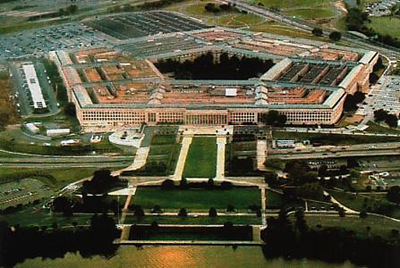
 WASHINGTON/NEW YORK: The United States has voiced its deep disappointment with New Delhi's rejection of American bid to supply it modern fighter jets under a $12 billion potential deal but said it would continue to develop defence ties with India.
"We are deeply disappointed by this news but we look forward to continuing to grow and develop our defence partnership with India," a Pentagon spokesman said, according to Indian media, after New Delhi informed the American companies of its decision.
The American bid to build the fighters came from Boeing and Lockheed Martin. Boeing had offered its F/A -18 jets, and Lockheed Martin pitched its F-16 planes. But India made its decision on 126 multi-role combat planes for its Air Force in favour of European bidders with the shortlisted bidders, including the French company Dassault, which produces the Rafale jet, and the four-nation European consortium Eurofighter, which makes the Typhoon.
Pentagon Spokesman Col Dave Lapan said, the U.S. remains "convinced that the United States offers our defence partners around the globe the world's most advanced and reliable technology."
The Washington Post reported on Friday that the deal for 126 fighters had been considered a key component of the growing defence partnership between India and the United States, and President Obama had personally advocated on behalf of U.S. companies while visiting India in November.
India's decision not to accept bids from either of the U.S. companies, Boeing or Lockheed Martin, raised questions about the strength of that relationship, analysts said.
"It's hard not to see it having ramifications for the relationship. You had two administrations lobbying very hard with the Indians for what is the fighter jet sale of the 21st century," said Bruce Riedel, a former CIA officer and senior fellow at the Brookings Institution.
A major hurdle for the United States, Riedel said according to the Post, was its perception in India as an unreliable arms supplier because of past embargoes imposed after various wars and nuclear tests. The jets will constitute more than half of India's fighter fleet over the next decade.
Experts said there was more at stake in the deal than the sale of jets. Had U.S. companies won the deal, it would have led to closer strategic cooperation: training, jet upgrades, joint military exercises.
According to a recent report by the consulting firm KPMG and the American Chamberof Commerce, about half a dozen American companies are eying an estimated $112 billion in opportunities as India goes on a buying spree to modernize its armed forces by 2016. The United States has already dethroned Russia as the leading exporter of defence wares to India, landing more than 40 percent of recent defense deals.
Meanwhile, The New York Times reported the decision was a "blow" for President Obama, who had pushed hard for the jets contract and other defence deals during his visit to India in November as part of his agenda to deepen and broaden the United States relationship with India.
The American ambassador to India, Timothy Roemer, who separately announced on Thursday that he would resign from his post for personal reasons, said the United States was "deeply disappointed by this news".
The Washington Post also quoted Kanwal Sibal, a former Indian foreign secretary, who was once the second-in-command at Indian embassy in Washington, as saying that some U.S. political leaders had viewed the fighter-jet contract as a test case for deepening the strategic relationship and a return-gesture for the nuclear deal between the two nations.

















Comments
Comments are closed for this article.