



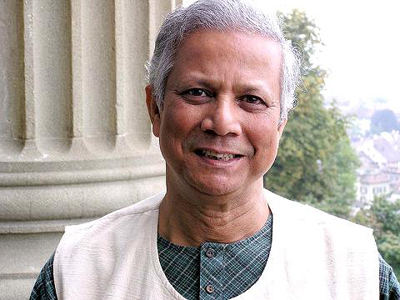
 DHAKA: A Bangladeshi probe has accused Nobel laureate Muhammad Yunus of turning his pioneering microfinance bank into a "massive conglomerate" in violation of its own rules, the probe head said Tuesday.
The investigation into Grameen Bank cleared the bank of misusing Norwegian aid and of charging excessive interest on loans, the finance minister announced Monday.
But the head investigator said Tuesday the probe also found a "large-scale trend in flouting of rules and regulations in the management of the bank".
He said the government ordinance that set up the bank -- which shared the 2006 Nobel Peace Prize with Yunus for their work providing small cash loans to the poor -- should be amended to tighten regulation of the $1 billion group.
"It needs a new legal framework" to regulate the bank and its many sister companies, known as social businesses, which include a number of profitable foreign joint ventures, probe committee chief A.K. Monowar Uddin Ahmed said.
"Grameen Bank is now the kind of massive conglomerate we see in South Korea or Japan," he told AFP.
Grameen Bank has huge influence in Bangladesh, and its sister companies have moved into solar panels, mobile phones and other consumer goods, but this expansion did not adhere to the original Grameen Bank law, the probe said.
"The Grameen Bank has violated its own laws, rules and regulations... consistently on the way," the probe report said, according to a copy obtained by AFP.
The investigation was launched after a Norwegian documentary claimed $96 million of aid was diverted in 1996 from Grameen Bank to other parts of Grameen group.
"Grameen Bank has become a person-oriented organisation, not a rules or system-based organisation," the report said, calling for an overhaul of the board structure and the restructuring of some sister companies.
The bank is still awaiting a final decision on a separate government claim that Yunus was illegally reappointed managing director, with the Supreme Court due to review an order for his dismissal early next month.


















Comments
Comments are closed for this article.