


Selloff sucks Europe back under after Asia sinks to 17-month low


LONDON: European stocks were sucked back into the red on Tuesday, as a four-day global selloff took Asia to a 17-month low and left Wall Street on course to equal its longest losing streak of the year.
There was plenty to keep the stress levels high. Ongoing worries about Italy's finances pushed its borrowing costs to their highest since 2014 and the euro lower, while U.S. Treasury yields were hovering at a seven-year high.
There was still strength in Europe's oil stocks on higher crude prices, but most sectors had buckled to leave the Euro STOXX 600 down 0.7 percent at a six-month low and S&P 500, Dow Jones and Nasdaq futures down around 0.5 percent.
If the S&P ends the day lower it will be its fourth red day in a row for the seventh time this year. It hasn't seen five falls yet.
"It all feels like it's quite nervous here over whether things are going to break (out of ranges) or not," said Saxo Bank's head of FX Strategy John Hardy.
He also pointed to the rising U.S. and Japanese government bond yields, which tend to set the bar for borrowing costs globally, as well as the latest lows for China's yuan.
China's central bank fixed its yuan rate at 6.9019 per dollar on Tuesday, so breaching the 6.9000 barrier and leading speculators to push the dollar up to 6.9120 in the spot market.
The drop should be a positive for exporters and did help Shanghai blue chips edge up 0.3 percent. Yet that followed a 4.3 percent slide on Monday, which was the largest daily fall since early 2016.
Asian shares overall fell to a 17-month low. Pakistan's rupee slumped 7 percent in an apparent devaluation before an expected International Monetary Fund programme. The Indian and Sri Lankan rupees both hit record lows.
That also followed the IMF's first downgrade to its global growth forecast since 2016.
"U.S. growth will decline once parts of its fiscal stimulus go into reverse," IMF chief economist Maurice Obstfeld predicted.
ITALY
Italian government bond yields rose to a 4 1/2-year high of 3.71 percent after Economy Minister Giovanni Tria's address to parliament on the government's budget plans did little to reassure nervous investors.
Tria called for a constructive discussion with Brussels over the budget and said he did not think Italy's deficit forecasts were so shocking. EU Commission Vice-President Jyrki Katainen said Italy's situation is vulnerable and negotiations may prove difficult.
"Maybe some people were expecting some reassurance from Tria, but he's not calling the shots," said Jan von Gerich, chief analyst at Nordea. "The general background is that the budget continues to cause uncertainty."
Back in Asia, Japan's Nikkei had dropped 1.3 percent, hurt in part by a rise in the safe-harbour yen and as yields on Tokyo's government bonds prodded the 0.15 percent cap the Bank of Japan effectively has on them .
A senior U.S. Treasury official on Monday had also expressed concern at the fall in the Chinese yuan, adding that it was unclear whether Treasury Secretary Steven Mnuchin would meet with Chinese officials this week.
NO SAFETY NET
On Wall Street, the broad spread of red in futures markets came after growth and tech stocks were pressured on Monday by worries that rising bond yields, which raise borrowing costs, might ultimately hobble the economy.
Yields on 10-year Treasury paper reached a seven-year top on Tuesday at 3.252 percent, but were edging back slightly ahead of U.S. trading.
Treasuries have had a sort of safety net up to now: rising yields tend to dampen stocks and threaten the economic outlook, thus putting pressure on the Federal Reserve to go slow on policy tightening. But the Fed has sounded so bullish on the economy and so hawkish on rates that the net has become frayed.
"The size and speed of the bearish bond impulse would suggest a collective shift in market thinking about the U.S. growth prospects and policy projections," said Damien McColough, Westpac's head of rates strategy.
"The Fed's expected 2019 profile has moved from just below 2 hikes to 2.5 hikes being factored in."
That shift has underpinned the dollar against a basket of currencies where it stood up 0.4 percent at 96.128, from a low of 93.814 a couple of weeks ago.
Against the safe-haven yen, the dollar pulled back to 113.15 from a 114.54 peak last week.
The euro was undermined by Italy's political troubles and loitered at $1.1436, well off September's $1.1815 top.
In commodity markets, gold got a modest safety bid at $1,191.10, having fallen 1.4 percent overnight. Industrial bellwethers copper and nickel jumped as much 1.4 and 2 percent.
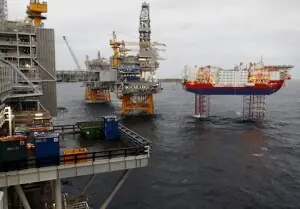
Oil prices also rose as more evidence emerged that crude exports from Iran, OPEC's third-largest producer, are declining in the run-up to the re-imposition of U.S. sanctions and as a hurricane moved across the Gulf of Mexico.
Brent crude added 60 cents to $84.51 a barrel and U.S. crude gained 41 cents to $74.70.
























Comments
Comments are closed for this article.