



ISLAMABAD: The implementation of a major World Bank-funded flood resilience project in Balochistan remains uneven, with delays in key infrastructure and climate-service components, financing gaps and unresolved grievances threatening progress despite more than 74,000 households receiving the first tranche of housing support.
According to the World Bank’s latest Implementation Status and Results Report for the Integrated Flood Resilience and Adaptation Project (P180323), overall implementation progress has been downgraded to “Moderately Unsatisfactory”, while the project’s development objective remains rated “Moderately Satisfactory”. The overall risk rating continues to be high.
READ ALSO: Waiting for the next flood
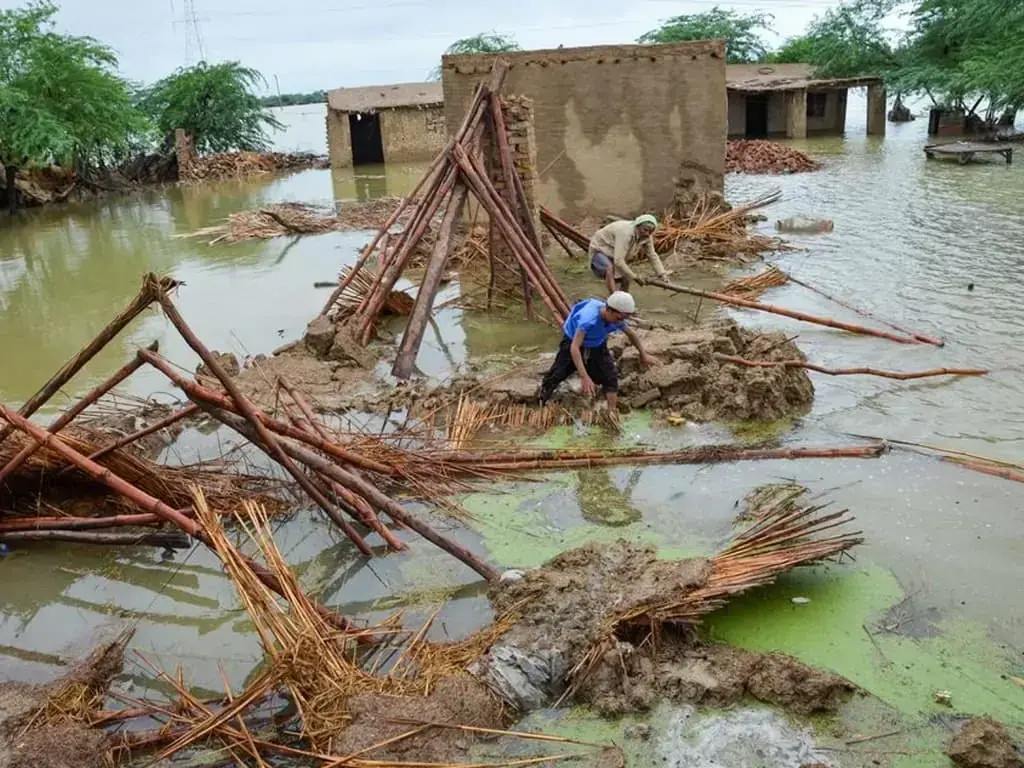
The project, approved in May 2023, aims to improve livelihoods and essential services and strengthen flood-risk protection in communities affected by the devastating 2022 floods. It comprises community infrastructure rehabilitation, hydro meteorological and climate services, resilient housing reconstruction, and project management and institutional strengthening.
The report said progress under the community infrastructure component had improved following the appointment of a dedicated Project Director and strengthening of the Project Implementation Unit. Detailed designs and bidding documents are nearly complete and procurement has started.
However, all three project development objective-linked output indicators under the component have yet to be achieved, highlighting the scale of implementation delays.
The climate-services component has also gained momentum after the appointment of a new Deputy Project Director and award of the Automatic Weather Station (AWS) contract. Nevertheless, onboarding of the System Integrator and several critical procurements remain pending.
The housing component has delivered the strongest results, with more than 74,000 households receiving the first tranche of housing support. Yet the World Bank warned that a decision by the Project Steering Committee to cap beneficiary coverage, a financing gap for remaining eligible households, unresolved grievances and communication problems could undermine implementation. The project’s performance indicators reveal significant gaps between achievements and targets. By July 2026, only 30,226 housing units had been restored or reconstructed against a target of 97,000 by December 2028. Similarly, only 214,217 people had regained access to at least one essential service, against the eventual target of 1.5 million.
The project has yet to record progress against its target of enhancing climate resilience for 1.8 million people. Restoration of flood-damaged irrigation systems and improved flood-protection infrastructure, each targeting 50,000 hectares, also showed zero achievement as of July 2026.
The World Bank also reported that no weather radar had been operationalised against a target of four, while Automatic Weather Stations are targeted to reach 110. A hydrological modelling-based early warning system for hill torrents in Balochistan, however, has been established.
Financially, the project has a revised allocation of about USD 214.03 million under IDA-73330, of which USD 113.97 million, or 62.61 percent, has been disbursed, leaving USD 68.05 million undisbursed. A separate USD 32 million IDA-78980 facility remains fully undisbursed.
The project is scheduled to close on December 31, 2028, leaving roughly two years for authorities to accelerate procurement, bridge financing gaps, resolve beneficiary grievances and convert plans into on-ground flood resilience measures.
Copyright Business Recorder, 2026

























Comments