


PBF delegation meeting at MNFSR: Rana Tanveer reaffirms commitment to supporting agri & cotton sectors
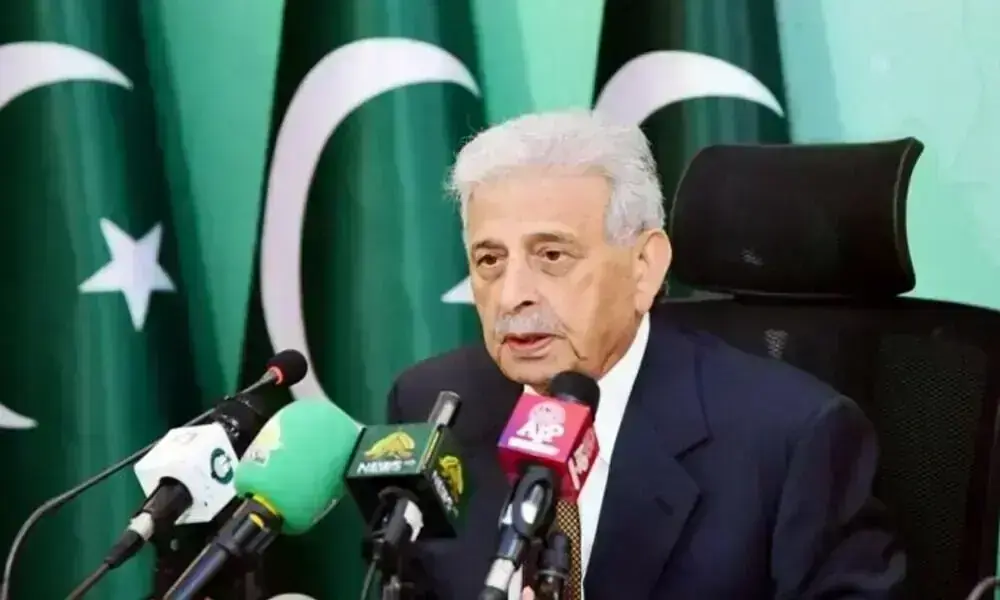

KARACHI: A delegation of the Pakistan Business Forum (PBF) called upon Federal Minister Rana Tanveer Hussain at the Ministry of National Food Security and Research (MNFSR) to discuss critical budgetary measures aimed at ensuring a level playing field for Pakistan’s cotton and agriculture sector in the upcoming federal budget.
During the meeting, Federal Minister Rana Tanveer reaffirmed the government’s commitment to supporting the agriculture and cotton sectors, describing them as vital pillars of Pakistan’s economy. He stated that the government is fully aware of the challenges faced by cotton growers and ginners and is eager to facilitate the revival of the cotton sector through practical and farmer-friendly policies.
The Minister emphasized that sustainable growth in agriculture remains a top priority of the government and assured the delegation that all genuine proposals aimed at strengthening domestic cotton production and reducing reliance on imports would be given serious consideration.
Speaking on the occasion,
Chief Organiser PBF, Ahmad Jawad, said that in its budget proposals, PBF has strongly recommended the repeal of General Sales Tax (GST) on locally produced cotton seed and oil cake, which remains a pressing demand of cotton ginners and farmers across the country.
He said the current taxation disparity adds unnecessary cost burdens at the farmer level and discourages cotton cultivation.
Jawad further highlighted that last year, with the support of MNFSR and the government, PBF successfully advocated for the repeal of the Export Facilitation Scheme (EFS) on imported cotton and ensured the imposition of tax on imported cotton, which was successfully executed in the last year finance bill provided much-needed breathing space to local cotton growers and the domestic cotton value chain.
He stressed that Pakistan’s cotton economy is facing an alarming crisis and requires urgent policy intervention to restore farmer confidence and revive cultivation.
PBF Punjab Chairman, Malik Talat Suhail, stated that removing GST on cotton seed and oil cake would provide a major boost to cotton revival in the country. He said farmers could receive a minimum additional benefit of Rs600 per maund on their cotton crop, while the revenue target of the Federal Board of Revenue (FBR) would also increase substantially due to improved economic activity and enhanced production.
He further noted that the cotton ginning sector is currently under severe pressure, with nearly 50 percent of cotton ginning factories shut down due to declining domestic cotton production.
He added that cotton cultivation in Pakistan has fallen to its lowest level in the last four decades, creating serious concerns for the agriculture sector and the national economy.
Malik Talat Suhail warned that Pakistan is expected to import between 7.0 million and 7.5 million bales of cotton this year to bridge the widening domestic shortfall, as local cotton production has drastically declined to approximately 5.0 to 5.5 million bales. He said the country’s cotton import bill is likely to exceed between USD1 billion and USD1.2 billion, putting additional pressure on the country’s foreign exchange reserves.
The PBF delegation urged the government to introduce immediate policy reforms and incentives in the upcoming federal budget to protect local farmers, revive cotton cultivation, strengthen the ginning industry, and reduce dependence on costly imports.
The meeting concluded with a mutual commitment to continue consultations between the government and the business community to formulate sustainable policies for the revival and long-term growth of Pakistan’s agriculture and cotton sectors.
Copyright Business Recorder, 2026


























Comments