


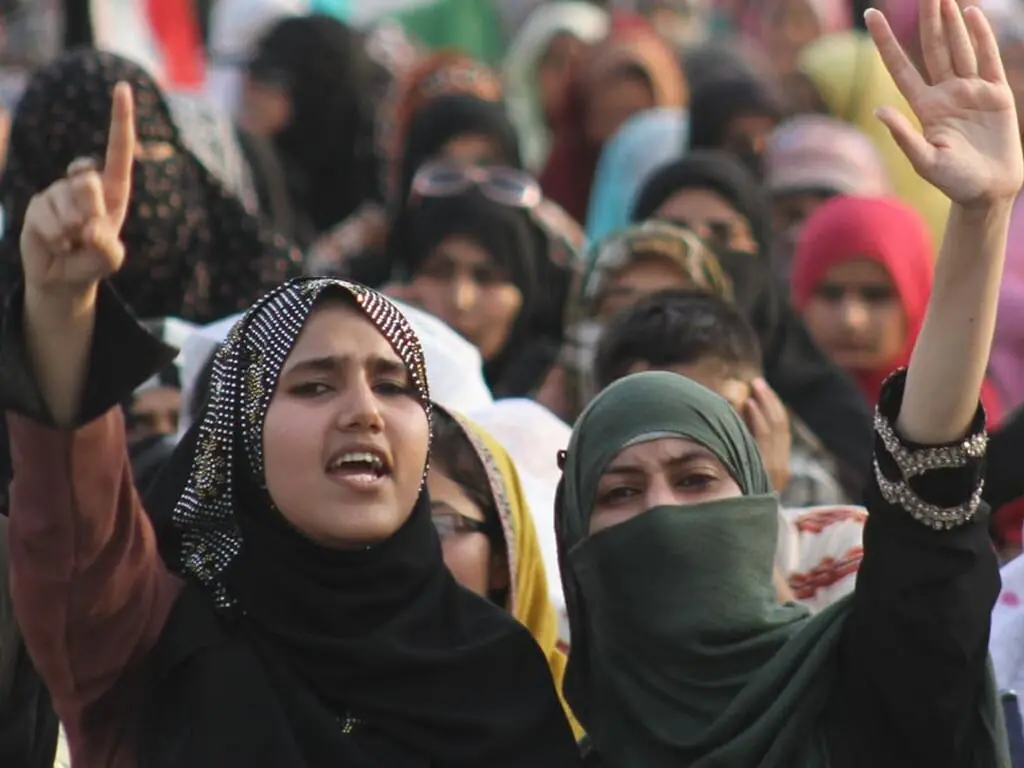
EDITORIAL: The disquieting events outside the Karachi Press Club on Tuesday raise serious questions about the state of democratic freedoms and the conduct of law enforcement. The Aurat March organisers were neither blocking roads nor defying prohibitory orders; they merely sought to hold a press conference to inform the public about their upcoming march and to urge authorities to issue a no objection certificate (NOC). Yet, the response they encountered was disproportionate, heavy-handed, and deeply troubling; notwithstanding the subsequent suspension of 3 police officers, a DSP and 2 SHOs, allegedly responsible for it.
Forcefully preventing a peaceful press conference — an activity that does not fall under the restrictions of Section 144 — suggests not only a misapplication of the law but also a deliberate attempt to suppress a prominent women’s rights platform. Section 144 is meant to regulate public gatherings under specific circumstances, not to stifle routine media engagement or pre-emptively silence dissent. The detention of activists, including a respected figure like Sheema Kirmani, along with reports of abusive language and forcible removal, points to an alarming intolerance of civic engagement — particularly when it is led by women asserting their rights.
Equally concerning is the justification being offered in some quarters: that the authorities acted out of fear of backlash from certain religious groups that have previously opposed the march. If so, this sets a dangerous precedent. The state’s responsibility is to uphold citizens’ constitutional rights — including peaceful assembly and freedom of expression — not to curtail them in anticipation of opposition. Yielding to the threat of disruption effectively grants veto power to those willing to intimidate, undermining fundamental democratic principles and emboldening those who seek to police public space through coercion.
The Aurat March, regardless of whether one agrees with all its slogans or demands, represents a segment of civil society exercising its rights. Silencing such voices through coercion deepens divisions and erodes public trust in institutions. It also signals that dissenting viewpoints may be suppressed not through dialogue or debate, but through force — a notion incompatible with any functioning democracy. Episodes like this may be meant to create a negative impact, discouraging lawful civic participation and narrowing the already constrained space for public discourse.
The swift release of the detained activists does little to undo the damage. The optics of the incident — widely reported and condemned — reinforce perceptions of arbitrary governance and selective application of the law. More significantly, they underscore a failure to distinguish between legitimate security concerns and the basic freedoms guaranteed to citizens.
Authorities must reflect on this episode and take corrective measures. Clear guidelines should govern law enforcement’s handling of peaceful civic activity, and accountability must follow where excesses occur. Protecting democratic space is not optional; it is a fundamental duty of government both at the federal and provincial levels. If the country is to move forward as a democratic society, peaceful dissent must be recognised not as a threat, but as an essential component of public discourse.
Copyright Business Recorder, 2026






















Comments