


Exports to Iran, Central Asian Republics exempted from LCs/bank guarantees
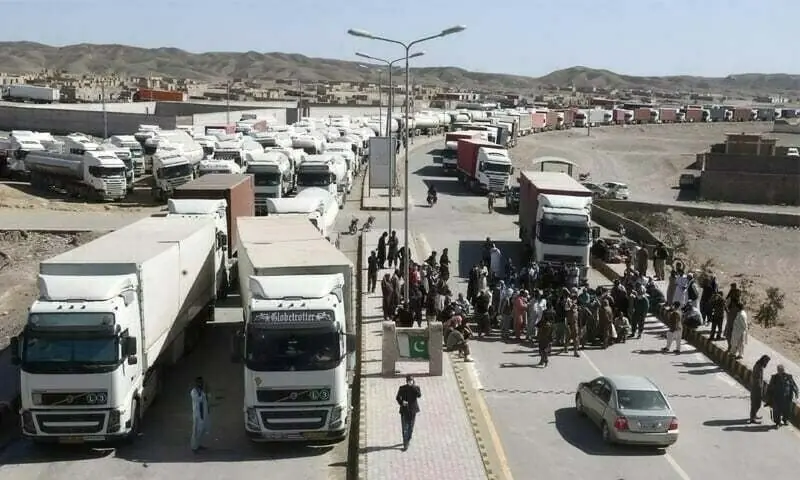

ISLAMABAD: In a major policy decision, the government has exempted exports to Iran and Central Asian Republics via land routes from the requirement of bank guarantees and letters of credit, aiming to facilitate exporters and boost regional trade.
The Ministry of Commerce issued a notification in this regard on the directives of Commerce Minister Jam Kamal Khan.
According to the notification, a temporary exemption has been granted from the requirement of bank guarantees and letters of credit for exports routed through Iran. The Ministry has also approved relaxation in financial instrument requirements for exports to Iran and Central Asian states.
The concession will remain in effect for three months, from March 24 to June 21, 2026, the minister said.
READ ALSO: Pakistan grants temporary exemption for exports to Iran, Central Asia
Exports of various items to Iran have been permitted under the scheme, including rice, seafood, potatoes, meat, onions, maize, and fruits. Pharmaceutical products and tents are also covered under the concession.
The notification further clarifies that while partial exemption from State Bank regulations has been allowed, the condition to repatriate export proceeds within the stipulated timeframe will remain intact.
The Ministry of Commerce said the initiative is expected to strengthen regional trade linkages. Pakistan will also be able to export rice to Central Asia and Azerbaijan via Iran, the minister added.
Jam Kamal Khan stated that removing bottlenecks in pharmaceutical exports is a top government priority, adding that the ministry is utilizing all available resources to enhance regional connectivity and increase trade volumes.
He noted that trade through Iran would significantly reduce costs and transit time for exporters, helping steer the country toward economic stability through increased exports.
“The government will continue taking practical measures to promote exports and facilitate traders,” he added.
Earlier, on January 5, 2026, the National Assembly Standing Committee on Commerce had directed the Ministry of Commerce to take necessary measures to address operational, logistical, and regulatory challenges in order to facilitate balanced, transparent, and lawful trade between Pakistan and Iran.
During a recent meeting, the committee was briefed on the overall state of bilateral trade, highlighting both progress and persistent challenges. The Ministry informed that although permission has been granted for the import of steel from Iran, domestic steel units have been adversely affected, with some facing closure.
The Ministry also noted that trade with Iran remains sensitive due to prevailing US sanctions, as well as risks associated with smuggling and undocumented transactions.
The Committee was informed that bilateral trade is currently conducted largely through barter arrangements. Despite improved diplomatic engagement, tariff and non-tariff barriers continue to hinder trade. Iran has reportedly imposed restrictions affecting Pakistan’s exports of rice and mangoes, while logistical constraints remain, including limited access for Pakistani transporters up to Taftan.
Over the past three months, commercial diplomacy efforts have intensified. Around 150 Pakistani businessmen—35 of them accompanying the commerce minister—participated in bilateral engagements across 17 sectors, including rice, fruits, vegetables, plastics, and polymers.
However, export and import permissions remain restricted to a single designated individual, an issue raised by the Quetta Chamber of Commerce and Industry. An amended proposal is currently under consideration, pending approval by the Economic Coordination Committee (ECC).
The Ministry further apprised the Committee that the Pakistan-Iran Joint Economic Forum has been reactivated. According to Iranian customs data for 2024, Pakistan’s exports to Iran stood at USD2.706 billion, while imports from Iran totaled USD2.422 billion.
Pakistan’s major imports from Iran include petroleum, iron and steel, vegetables, plastics, chemicals, and dairy products, while its exports comprise cement, glass, ceramics, and other industrial materials.
Copyright Business Recorder, 2026


























Comments
Comments are closed for this article.