


Australia, NZ dollars struggle as stocks slide on Iran war ultimatum
- Stocks tumbled in Asia, bringing the risk-sensitive Aussie down 0.3% to $0.6997 with bears and bulls tussling around 70 cents
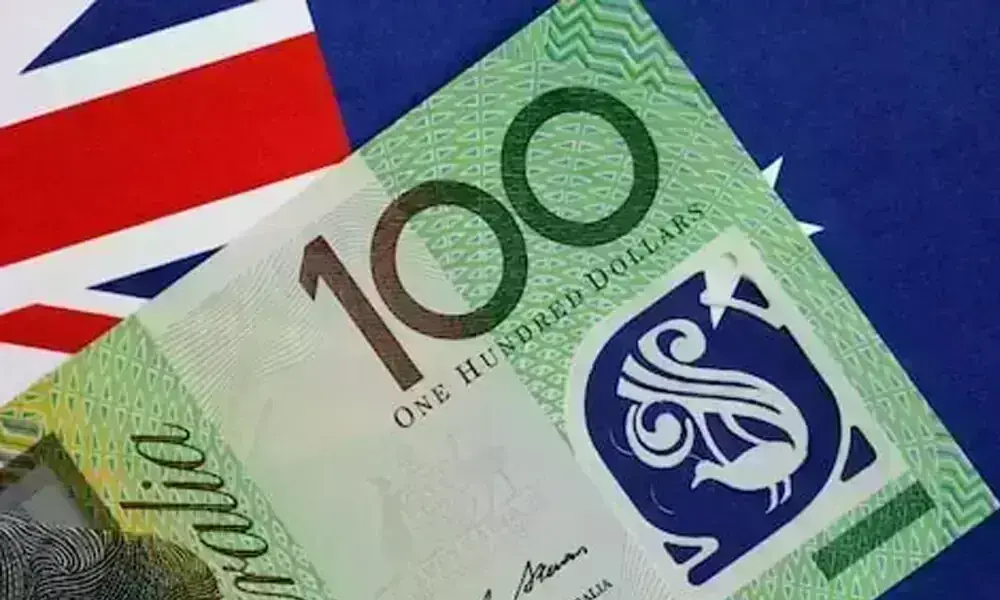

SYDNEY: The Australian and New Zealand dollars struggled on Monday, succumbing to intensifying global risk aversion as the United States and Iran traded escalating threats in the Gulf, driving yields to new heights.
Iran said on Sunday it would strike the energy and water systems of its Gulf neighbours if US President Donald Trump followed through with a threat to hit Iran’s electricity grid in 48 hours over the effective closure of the Strait of Hormuz that has choked global oil supply.
Stocks tumbled in Asia, bringing the risk-sensitive Aussie down 0.3% to $0.6997 with bears and bulls tussling around 70 cents. The next major support level is around $0.6945.
The Antipodean already lost 1% on Friday and trimmed its weekly gains to 0.6%. It was caught between two opposing forces: supported by rate-hike expectations but also capitulating to the sell-off in equity markets.
“AUD/USD will unwind last week’s gains in our view, possibly testing 0.6887,” said Joseph Capurso, head of international economics at the Commonwealth Bank of Australia.
“The huge repricing of central bank policy interest rates in the past few weeks could lead to a material downgrade to economic growth forecasts for the major economies, which will weigh further on AUD in our view.”
Australia’s three-year government bond yields hit a 15-year top of 4.925% before stabilising at 4.798%.
Markets are wagering on a 60% chance the Reserve Bank of Australia will deliver a third consecutive rate hike in May.
The kiwi dollar slipped 0.1% at $0.5825, having dropped 0.8% on Friday to pare back its weekly gain to 1%. It has gained on the Aussie for a fourth straight session, bouncing off a 13-year low as traders took profit on the crowded trade after the RBA’s rate hike last Tuesday.
All eyes are on the speech from Reserve Bank of New Zealand Governor Anna Breman on Tuesday as market pricing has shifted seismically to reflect a total tightening of almost 90 basis points this year, even though the central bank said even one rate hike is not fully baked in just last month.
Breman is expected to speak about the war’s impact on the New Zealand’s economy which is still struggling to lift out a downturn. Credit ratings agency Fitch lowered New Zealand’s outlook to “negative” from “stable” on Friday.
“We expect Breman to acknowledge near-term inflation, but emphasize the significant downside risks to growth. And in doing so, push back on wholesale rates,” said Jarrod Kerr, chief economist at Kiwibank.
“Rate hikes are completely unwarranted in our view.”
Two-year swap rates - the benchmark for housing loans in the country - jumped another 14 basis points on Monday to 3.6495%, the highest since late 2024.
This month alone, they have surged by 73 bps, equivalent to almost three rate hikes.

























Comments
Comments are closed for this article.