


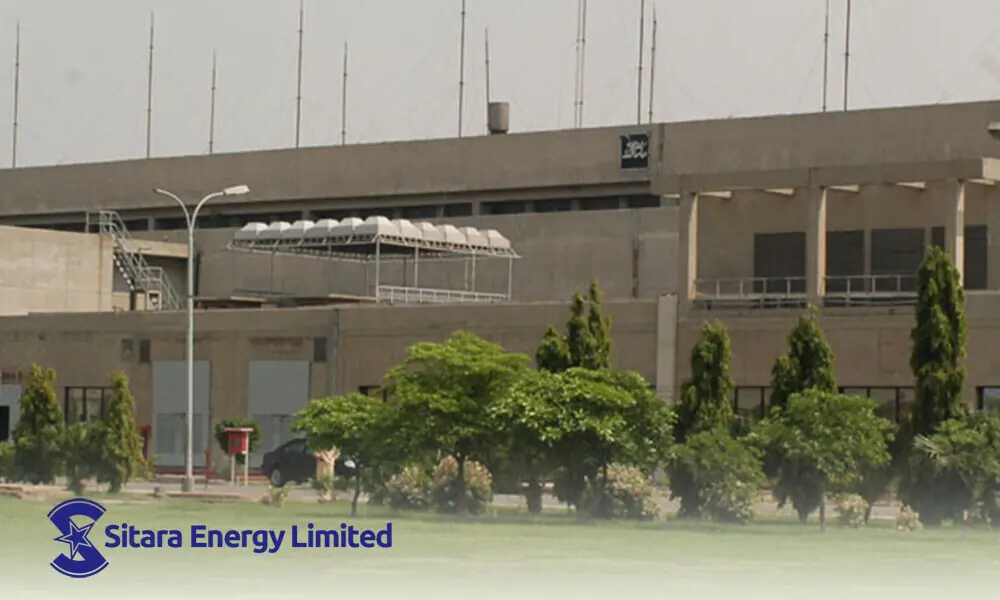

Sitara Energy Limited (PSX: SEL) is incorporated in Pakistan as a public limited company. The company is engaged in the generation and distribution of electricity.
Pattern of Shareholding
As of June 30, 2025, SEL has a total of 19.092 million shares outstanding which are held by 1212 shareholders. Directors, CEO, their spouse and minor children have the majority stake of around 40.63 percent in SEL followed by local general public holding 32.32 percent shares. Banks, DFIs and NBFIs account for 8.62 percent shares of SEL while Insurance companies hold around 8.53 percent shares. Around 3.52 percent of the company’s shares are held by joint stock companies and 3.44 percent by Sitara Fabrics Limited, an associated company of SEL. Mutual funds have 2.59 percent ownership of SEL with remaining shares being held by other categories of shareholders.
Financial Performance (2019-25)
With continuous slippages since 2019, SEL’s topline posted growth only once in 2023 over the entire period under consideration. The company’s bottomline also stayed in the negative territory until 2023 followed by net profit in 2024 and 2025. SEL’s gross margin which drastically fell in 2019, greatly improved in 2020, subsided for the two subsequent years and then considerably bounced back in 2023. In 2024 and 2025, SEL gross margin fell again. Its operating margin registered positive figures in 2020, 2023, 2024 and 2025 with the latest year witnessing the optimum level. SEL’s net margin posted a positive figure only in 2024 and 2025 with optimal level recorded in the latter year. The detailed performance review of the period under consideration is given below.
In 2019, SEL’s topline fell by a drastic 57 percent year-on-year to clock in at Rs.1036.69 million. This was on account of non-availability of system gas for around seven months while RLNG and RFO were available at inflated rates. This led to curtailed operations. Not only that, the prices of system gas also surged by over 60 percent during the year while there was a very nominal Rs.0.78/kwh increase in tariff for bulk power consumers by NEPRA. Furthermore, the government also announced subsidized gas and electricity tariff for textile sector which formed the major consumer base of SEL. All these factors cumulatively contributed in squeezing the company’s gross profit by over 97 percent year-on-year in 2019 with GP margin falling down from 2.19 percent in 2018 to 0.13 percent in 2019. The company took intense measure to control its operating expense. It laid off a number of employees compressing the tally from 205 employees in 2018 to 106 in 2019. This led to 20.71 percent erosion in its operating expense in 2019. SEL also disposed off its fixed assets at a loss to discharge its liabilities, resulting in 1659 percent escalation in its other expense. Other income couldn’t turn out to be encouraging either as it dropped by over 29 percent in 2019. This was due to the fact that the company posted gain on the disposal of its fixed assets in 2018 while in 2019; the fixed assets were sold at a loss. As a consequence, SEL posted operating loss of Rs.36.75 million in 2019 versus operating profit of Rs.42.33 million recorded in 2018. Finance cost mounted by 22.98 percent in 2019 on account of hike in discount rate. SEL also got its short-term loans restructured as long-term loans during the period with deferral mark-up to avoid the risk of default. Despite all the measures undertaken by the company to cut down on its expenses, it posted net loss of Rs.191.811 million in 2019 versus net loss of Rs.81.857 million incurred by the company in 2018. Loss per share also surged from Rs.4.29 in 2018 to Rs.10.05 in 2019.
In 2020, SEL’s net sales slid by 7.59 percent year-on-year to clock in at Rs. 958.06 million. This was because the subsidized tariff to textile industry continued along with high cost of fuel and irregular supply of system gas. This led to 15 percent lower sales volume and a poorer capacity utilization of 8 percent achieved by the company in 2020 versus capacity utilization of 9 percent achieved in 2019 (see the graph of installed versus actual energy generation). An increase in the sales price led to 6265.24 percent rise in gross profit in 2020 with GP margin mounting up to 8.71 percent. Operating expense slipped by 27.17 percent year-on-year in 2020 due to austerity measures adopted by the company which particularly led to a massive drop in payroll expense despite increase in the number of employees to 113. Skimpy gain on the disposal of investment property in 2020 drove down other income by over 76 percent. Other expense also shrank by 68.72 percent in 2020 as SEL incurred lesser loss on the disposal of its fixed assets in 2020 versus previous year. All such measures enabled the company to record operating profit of Rs.26.38 million in 2020 with OP margin of 2.75 percent. However, finance cost turned out to be unsympathetic as it spiked by 10.48 percent in 2020 due to higher discount rate for most part of the year and a slight increase in short-term borrowings. This led to net loss of Rs.143.814 million in 2020, down 25 percent year-on-year. Loss per share was recorded at Rs.7.53 in 2020.
SEL’s topline registered significant 46.5 percent year-on-year plunge to clock in at Rs.512.63 million in 2021. This was due to curtailed capacity utilization of 4.5 percent attained by the company during the year on account of higher international prices of RLNG and RFO which combined with Pak Rupee depreciation wreaked havoc on the cost of production of SEL. The government continued to provide subsidized gas and electricity to export oriented textile sector. Furthermore, the government also announced tariff discount on incremental consumption for industrial consumers with effect from November 2020. All these factors compressed SEL’s gross profit by 72.27 percent in 2021 with GP margin plummeting to 4.52 percent. SEL was able to trim down its operating expense by 15.19 percent in 2021 by cutting down its workforce by 39 employees during the year. This took down the tally to 74 employees in 2021. The company sold its fixed assets at a loss in 2021, resulting in 76.87 percent spike in its other expense. Other income tumbled by 66.87 percent in 2021 as unlike last year there was no gain on the disposal of investment property. As a consequence, SEL registered operating loss of Rs.40.99 million in 2021. Monetary easing led to 36.88 percent reduction in the company’s finance cost during the year, yet this couldn’t keep the company from posting net loss of Rs.149.48 million in 2021, up 3.94 percent year-on-year. Loss per share climbed up to Rs.7.83 in 2021.
Conforming to the descending trend of previous years, SEL’s topline marched down by another 5.91 percent to clock in at Rs.482.31 million in 2022. This was on account of lower demand by Bulk Power Consumers (BPCs) due to a steep rise in tariff as the average price of RFO and RLNG exorbitantly rose up by 78 percent and 110 percent respectively during the year. However, export oriented textile sector continued to enjoy subsidized gas and electricity tariffs. SEL capacity utilization fell to 2.2 percent in 2022. High cost of production due to extraordinarily higher fuel charges which were further exacerbated by Pak Rupee depreciation led to 76.34 percent thinner gross profit with GP margin falling down to 1.14 percent in 2022. SEL further cut down its operating expense by 16.11 percent in 2022 as it curtailed its workforce by 8 employees to bring it down to 66 employees. There was an encouraging 108.88 percent rise in SEL’s other income in 2022 due to higher rental income, scrap sales as well as greater balances written off during the year. This led to SEL recording 25 percent lesser operating loss to the tune of Rs.30.72 million in 2022. Finance cost mounted by 15.31 percent in 2022 due to hike in discount rate. This was despite the fact that the company paid off a substantial portion of its loan during 2022. Net loss clocked in at Rs.154.896 million in 2022, up 3.62 percent year-on-year with loss per share of Rs.8.11.
SEL’s topline which had been sliding down until 2022 posted a tremendous 121.37 percent year-on-year rise to clock in at Rs. 1067.69 million in 2023. Not only did the company’s capacity utilization grew from 2.2 percent in 2022 to 4.8 percent in 2023, higher prices of RLNG and RFO coupled with Pak Rupee depreciation led to an increase in tariff charged to BPCs. Upward revision in tariff along with lower auxiliary and line losses resulted in 791 percent year-on-year growth in SEL’s gross profit in 2023 with GP margin clocking in at 4.57 percent. Higher balances written back during the year as well as greater gain on the disposal of property, plant and equipment translated into 264.19 percent year-on-year growth in SEL’s other income in 2023. Operating expense posted a negligible downtick of 0.13 percent in 2023 as the company hired new employees which increased the total HR count to 75 employees in 2023. After two years of posting operating losses, SEL was able to record operating profit of Rs.41.02 million in 2023 with OP margin of 3.84 percent. While the company rescheduled two of its financing facilities in 2023, higher discount rate resulted in 15.52 percent spike in finance cost in 2023. This led to net loss of Rs.103.282 million incurred by SEL in 2023, down 33.32 percent year-on-year. Loss per share stood at Rs.5.41 in 2023.
In 2024, SEL’s topline ticked down by 14.2 percent year-on-year to clock in at Rs.916.06 million. This was due to lower demand from BPCs owing to high electricity tariff. Higher RFO price was passed on to the consumers as higher electricity rates. This led to capacity utilization falling down to 3.4 percent in 2024. High price of fuel squeezed SEL’s gross profit by 85.11 percent in 2024 with GP margin drastically falling down to 0.79 percent – the lowest level recorded since 2020. Operating expense mounted by 51 percent in 2024 due to massive hike in depreciation recorded on investment property during the year. The company also disposed of certain investment properties during the year for the payment of its restructured credit facilities. Legal & professional charges as well as fee & subscription charges also enlarged during the year. Other expense slid by 25.23 percent in 2024 as the company did lesser provisioning for doubtful receivables during the year. What turned the fortunes around for SEL was a tremendous 553.32 percent growth recorded in other income in 2024. This was on account of gain recorded on the disposal of investment property in 2024. Balances written off during the year and higher sale of scrap and waste also contributed in driving up SEL’s other income in 2024. Operating profit strengthened by 466 percent in 2024 with OP margin clocking in at 25.35 percent. Finance cost grew by 15 percent in 2024 due to higher discount rate. During the year, the company also restructured its short-term loan as long-term loan. For the first time during the period under consideration, SEL posted net profit to the tune of Rs.41.991 million in 2024 with EPS of Rs.2.20 and NP margin of 4.58 percent.
In 2025, SEL posted 80.78 percent deterioration in its net sales which clocked in at Rs.176.07 million. This was because the company was unable to compete with the electricity offered by DISCOs, leading to BPCs resorting to DISCOs to meet their demand. SEL’s capacity utilization fell to its lowest level of 0.8 percent in 2025. Despite reduction in the prices of RFO and RLNG, the company posted gross loss of Rs.38.59 million in 2025. Operating expense slid by 7.41 percent in 2025 due to lower fee & subscription charges as well as legal & professional charges incurred during the year. Other expense mounted by 594 percent in 2025 due to massive spike in provisioning done for doubtful receivables as well as WPPF. Operating expense and other expense were conveniently offset by 19.15 percent stronger other income recorded in 2025 predominantly due to greater reversal of provision of interest on short-term borrowings. Higher dividend income, rental income and gain on disposal of fixed assets also drove up other income in 2025. Operating profit slightly ticked down by 2.52 percent in 2025 with OP margin clocking in at 128.56 percent. Finance cost plummeted by 66.97 percent in 2025 due to lower discount and substantial repayments. During the year, SEL had to dispose of its investment property to repay its loan as per the rescheduling agreements. This resulted in a gearing ratio of 27.63 percent in 2025 versus 32.38 percent in 2024. Net profit strengthened by 298 percent to clock in at Rs.167.137 million in 2025. This translated into EPS of Rs.8.75 and NP margin of 94.93 percent in 2025.
Recent Performance (1HFY26)
During the first half of the ongoing fiscal year, SEL recorded a drastic 91.58 percent year-on-year slide in its net sales which clocked in at Rs.13.67 million. This was due to lower generation by the company which ultimately reduced the gross loss by 62.24 percent to clock in at Rs.8.98 million. Operating expense also fell by 42.91 percent likely due to lower payroll expense on account of workforce rationalization. Operating expense was conveniently offset by other income of Rs.178.50 million recognized during the period, up 340.26 percent year-on-year. This was due to gain recognized on the disposal of investment property. The company sold its non-core assets during the period to pay off its rescheduled financial loans. Superior other income enabled SEL to post operating profit of Rs.137.70 million in 1HFY26 versus operating loss of Rs.38.50 million recorded in 1HFY25. OP margin clocked in at 1007.35 percent in 1HFY26. Finance cost tapered off by 55.42 percent in 1HFY26 due to monetary easing and regular repayments of outstanding liabilities as per rescheduling arrangement. The company registered net profit of Rs.98.498 million and EPS of Rs. 5.16 in 1HFY26 versus net loss of Rs.89.257 million and loss per share of Rs. 4.68 recorded in 1HFY25. NP margin was recorded at 720.59 percent in 1HFY26.
Future outlook
The profitability of SEL is highly contingent on the prices of RFO and RLNG. The company added 1460 megawatt hours of solar power generation in 2025 and plans to further increase it subject to regulatory approval. This is done to stay immune from rising prices of RLNG and RFO and to produce electricity at a competitive tariff. While this may benefit the company in the long-run, extraordinary spike in the prices of RFO and RLNG, due to ongoing crisis in the Middle East, will continue to cast a shadow on the financial performance of SEL in the short to medium term.




















Comments
Comments are closed for this article.