


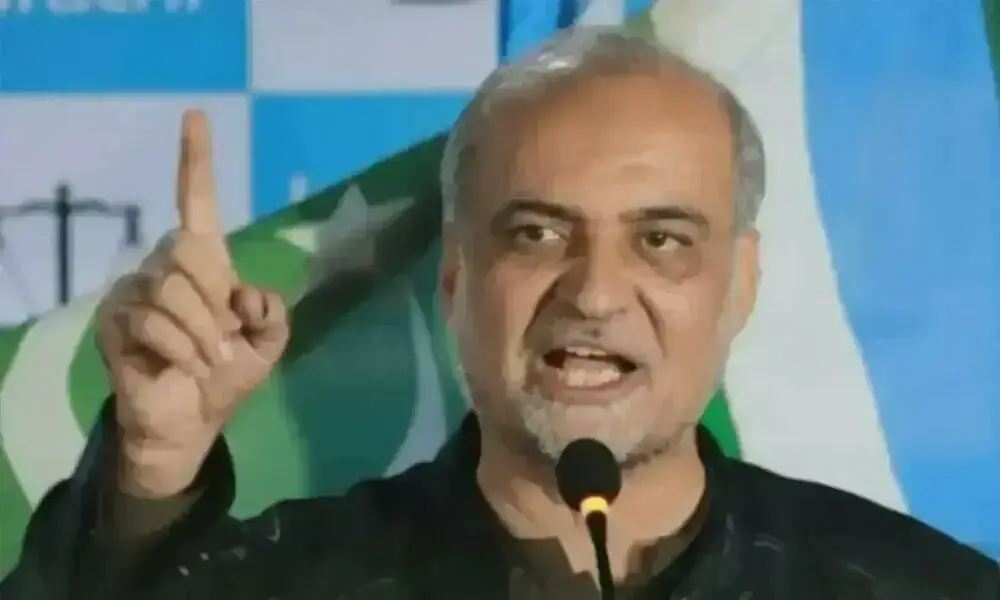

KARACHI: Jamaat-e-Islami (JI) Karachi on Wednesday launched its “Jeene Do Karachi” (Let Karachi Live) campaign to highlight civic issues and what it termed the denial of citizens’ rights, sharply criticizing the city’s mayor and calling him a “fake mayor” imposed on the metropolis.
The party said the first of 13 protest conventions announced under the campaign was held in Karachi, while the second convention is scheduled for February 27 in Orangi Town. Central Chief of Jamaat-e-Islami, Hafiz Naeemur Rehman, and Karachi Chief, Monem Zafar Khan are due to address the gathering.
Addressing the convention, JI Deputy Chief Pakistan Dr Osama Razi said the country was being run by what he described as a “Form-47 government,” alleging that an illegitimate local setup had been imposed to deliberately ruin Karachi.
He announced that the “Jeene Do Karachi” movement would be intensified and said citizens would take to the streets, adopting every constitutional, legal and democratic method of protest. Warning the authorities, he said when people come out in protest, they would not recognize any so-called government “red lines,” adding that the Constitution of Pakistan was the only true red line as it guarantees the right to peaceful protest.
Dr Osama Razi termed what he called the theft of public mandate and disregard for public opinion as rebellion against the Islamic spirit of governance. Drawing a historical parallel, he said similar actions in 1971 had led to the country’s break-up, and claimed that the prevailing situation in Khyber Pakhtunkhwa and Balochistan was a result of denying people their right to rule.
Criticizing both foreign and domestic policies, he said they were contrary to the will of the people and alleged that constitutional manipulation was being used to keep the ruling elite in power. He blamed feudal lords, landlords, civil and military bureaucracy, and the ruling class for aggravating Pakistan’s internal and external challenges.
Highlighting economic hardships, he claimed that 47 percent of the population was living below the poverty line and that many citizens lacked access to basic necessities such as water, electricity and gas. Referring to Karachi, he alleged that nearly half of the city’s population had no access to water and that residents were increasingly becoming victims of unsafe infrastructure and fatal traffic accidents involving heavy vehicles.
He further alleged that Sindh had effectively been “leased” to the Zardari family and Punjab to the Sharif family, while claiming that the Khyber Pakhtunkhwa chief minister himself had admitted that operations in his province were being carried out without his consent. He said those attempting to pit Pakistan against Afghanistan were not well-wishers of the country.
Dr Osama Razi accused political forces of historically stoking ethnic unrest to weaken Karachi’s political strength and alleged that certain parties were misleading the public. He claimed that from Karachi to Dir and Chitral, people were undergoing a “mental revolution” and becoming increasingly aware of those responsible for the country’s decline, predicting that this awareness would soon transform into a political movement for genuine change and public empowerment.
Copyright Business Recorder, 2026























Comments
Comments are closed for this article.