


Capital market: T+1 settlement cycle speeds up transactions
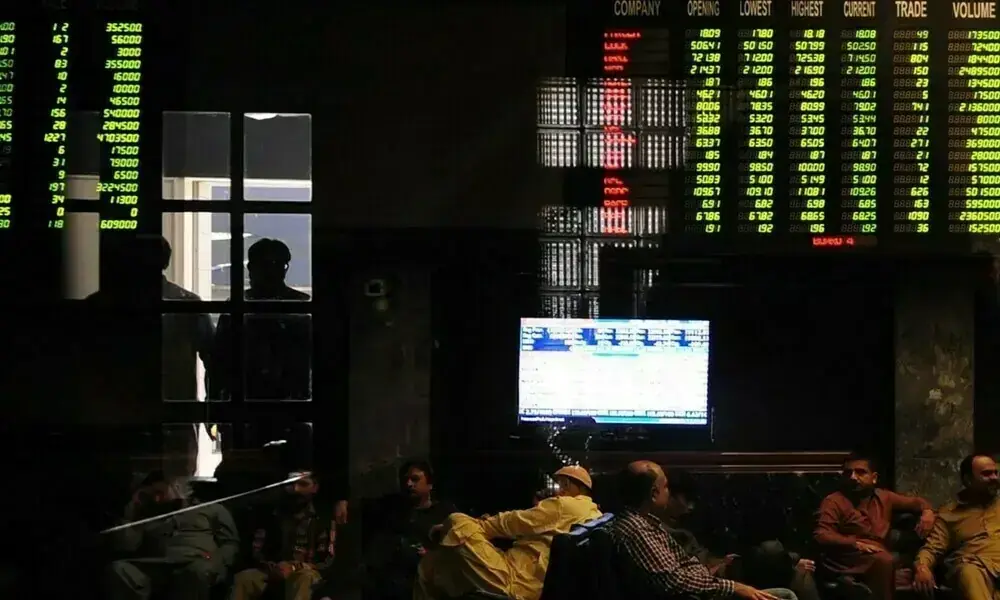

KARACHI: Pakistan’s capital market has implemented a faster T+1 settlement cycle, significantly shortening the time required to complete equity trades in a move aimed at reducing systemic risk, improving liquidity and strengthening post-trade efficiency across the market ecosystem.
All eligible trades at the Pakistan Stock Exchange (PSX) are now settled on a Trade plus one (T+1) basis, replacing the long-standing T+2 settlement framework. The transition was carried out under the oversight of the Securities and Exchange Commission of Pakistan (SECP) through coordinated efforts involving PSX, the National Clearing Company of Pakistan Limited (NCCPL), the Central Depository Company (CDC), commercial banks, securities brokers, asset management companies, and other clearing and settling institutions.
Addressing a media briefing, PSX Chief Executive Officer Farrukh H Sabzwari described the shift as an efficiency-oriented reform rather than a structural disruption to trading activity. He said the initiative was designed to streamline settlement operations while supporting the market’s ongoing expansion.
Sabzwari noted that investor participation has continued to strengthen, with Unique Identification Numbers (UINs) reaching 23,400 in January — the highest monthly figure recorded to date — reflecting rising engagement from both retail and institutional investors. He added that the PSX remains in a multi-year rally, and enhancements in post-trade infrastructure are essential to sustaining market momentum.
He further disclosed that consultations are underway for approximately 12 initial public offerings (IPOs) expected over the next 12 months, signaling growing depth and activity in the primary market. Sabzwari also said Pakistan has attained full membership of the World Federation of Exchanges (WFE), a development that enhances the credibility of the domestic market and improves its visibility among global investors.
Providing a technical overview of the transition, NCCPL Chief Executive Officer Naveed Qazi said that while most global markets historically operated on T+2 settlement, several have now adopted shorter cycles to reduce counterparty exposure, prompting Pakistan to follow a similar path.
Qazi outlined the evolution of settlement practices in Pakistan, noting that prior to 2001 the market operated on a T+5 weekly settlement system, which was shortened to T+3 in 2005, further reduced to T+2 in 2008, and has now advanced to T+1 in 2026.
He said the move to T+1 offers multiple benefits, including lower settlement and credit risk, improved liquidity, enhanced market efficiency, and stronger operational and technological integration across the capital market infrastructure.
Detailing the implementation process, Qazi said preparatory work began in September 2023, followed by the formation of an implementation committee in March 2024, development of a working model by December 2024, and extensive consultations with market stakeholders. System configuration and operational readiness were finalized by February 2025, culminating in the successful launch of the T+1 settlement cycle in February 2026.
Among the key features of the reform, Qazi said the transition was executed in a single phase, with provisions for time extensions to ensure smooth settlement during the initial period. He added that a future shift toward T+0 settlement would represent another significant milestone, noting that China remains the only market to have partially implemented same-day settlement.
Speaking at the briefing, CDC Chief Executive Officer Badiuddin Akbar said that although Pakistan’s capital market is relatively small in size, it operates in line with international best practices. He disclosed that the CDC currently safeguards assets valued at approximately Rs16 trillion, underscoring the growing scale and importance of the country’s post-trade infrastructure.
In a separate statement, SECP Chairman Dr Kabir Ahmed Sidhu commended PSX, NCCPL, and CDC for the successful implementation of the T+1 settlement framework. He said the reform places Pakistan’s capital market at par with modern jurisdictions by accelerating trade settlement, reducing counterparty and market risks, and enhancing overall liquidity.
Dr Sidhu added that the adoption of T+1 is expected to strengthen investor confidence, particularly among institutional and foreign investors, while aligning Pakistan’s capital market with evolving international standards and global best practices.
Copyright Business Recorder, 2026




















Comments
Comments are closed for this article.