



Pakistan’s agricultural higher education system has witnessed a steady decline over the almost past two decades. Punjab, despite being the country’s agricultural backbone, presents the most visible symptoms of this erosion. The causes extend beyond fiscal constraints or infrastructure limitations. At the heart of the problem lies weak governance, prolonged concentration of authority, and sustained political interference with deep nepotism in academic leadership.
Punjab hosts three public sector universities dedicated exclusively to agriculture and allied sciences: the University of Agriculture Faisalabad (UAF), MNS University of Agriculture Multan, and Pir Mehr Ali Shah Arid Agriculture University Rawalpindi. These institutions are expected to play a central role in food security, productivity growth, rural development and farmers welfare. Yet, over time, all three have come to reflect a pattern of leadership continuity and political alignment that has diluted merit-based governance.
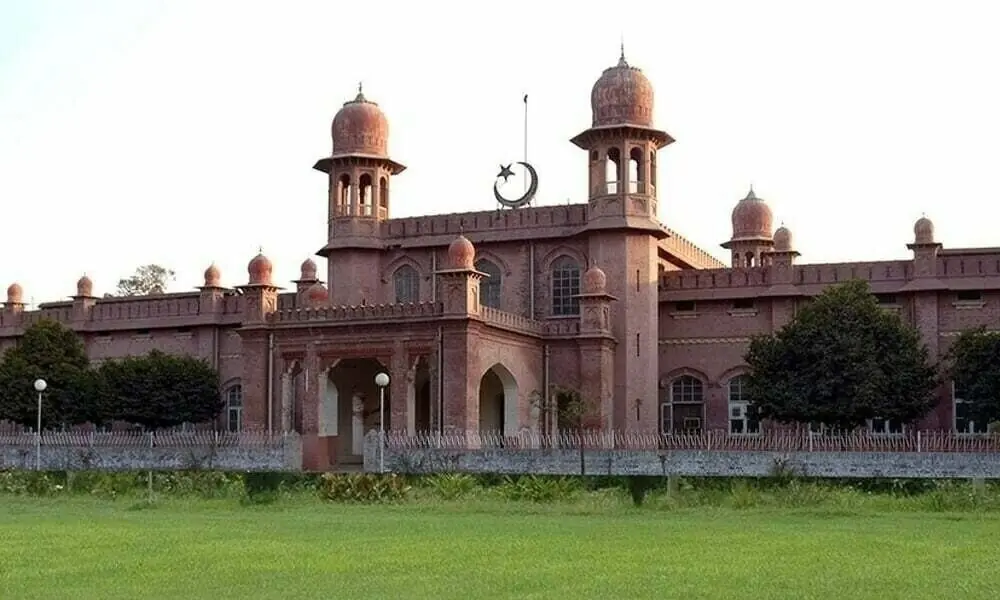
The case of UAF is particularly instructive. Once counted among Asia’s leading agricultural universities, UAF remained under the uninterrupted control of a single vice chancellor from 2008 to 2025 — an unusually long tenure by international standards. Such prolonged occupancy of the top academic office is rare in modern university governance systems and raised persistent concerns within academic and administrative circles regarding political patronage and lack of accountability.
Objective global rankings provide a useful lens to evaluate institutional performance during this period. In the QS World University Rankings by Subject (Agriculture & Forestry), UAF although continues to secure a respectable position on margin, reflecting historical strength in a narrow academic domain. However, this masks broader institutional weaknesses too. In comprehensive rankings such as the Times Higher Education (THE) World University Rankings, UAF has remained confined to the 801–1000 band, while other global ranking systems place it outside the top 1000 universities worldwide. Over nearly two decades of uninterrupted leadership, the university failed to demonstrate sustained upward mobility in overall global standing.
The situation is more concerning for the other two agricultural universities. MNS University of Agriculture Multan appears in THE rankings only in the lower 1201–1500 band, while Pir Mehr Ali Shah Arid Agriculture University Rawalpindi maintains a weak and inconsistent presence in major global rankings. This limited international visibility suggests underperformance in research impact, global engagement, and institutional development.
These outcomes contrast sharply with trends at other Pakistani public universities. Institutions such as Quaid-i-Azam University, Punjab University, and NUST — despite operating in the same political environment — have avoided prolonged leadership monopolies and have shown relatively stronger progress in international rankings. This comparison demonstrates that institutional decline in agricultural universities is not inevitable but largely a consequence of governance choices.
Instead of course correction, leadership replication became entrenched. Repeated reappointments at MNS University of Agriculture Multan, after bringing back the favourite one from federal government, despite faculty concerns, reinforced perceptions that political alignment outweighed institutional performance. At Pir Mehr Ali Shah Arid Agriculture University, senior professors with stronger academic credentials were reportedly bypassed in favour of politically acceptable appointments. At UAF, leadership succession was widely perceived as internally managed rather than competitively determined, further reinforcing a closed governance loop.
The broader economic and social implications are significant. During the same period, Pakistan’s agricultural growth averaged only about 2.6 percent annually, with crop growth remaining close to one percent — below population growth. Per capita agricultural incomes stagnated, and food insecurity persisted despite repeated policy interventions. Weak agricultural universities translate directly into weak research, poor extension support, and limited innovation in the farm sector.
If political continuity and clan-based leadership were substitutes for merit, outcomes would have improved. They did not. Global rankings, institutional performance indicators, and national agricultural outcomes collectively suggest that political capture of agricultural higher education weakened academic standards, discouraged independent scholarship, and eroded accountability.
This issue now warrants attention at the highest level of provincial governance. Chief Minister Punjab, who is introducing many projects in education, is respectfully urged to initiate an independent and transparent review of vice-chancellor appointment processes and governance structures in Punjab’s agricultural universities. Such a review should aim to restore merit-based selection, fixed tenures, and performance-linked accountability in line with international best practices.
Agricultural revival depends not only on technology and subsidies but also on strong institutions. Without addressing governance failures and deep penetrated nepotism in agricultural higher education, Punjab risks continued stagnation in a sector vital to economic stability, employment, and food security.
Copyright Business Recorder, 2026
The writer is a former Director General, Federal Government; Former Associate Professor, University of Agriculture Faisalabad - ([email protected]). The views expressed in this article are not necessarily those of the newspaper

























Comments
Comments are closed for this article.