


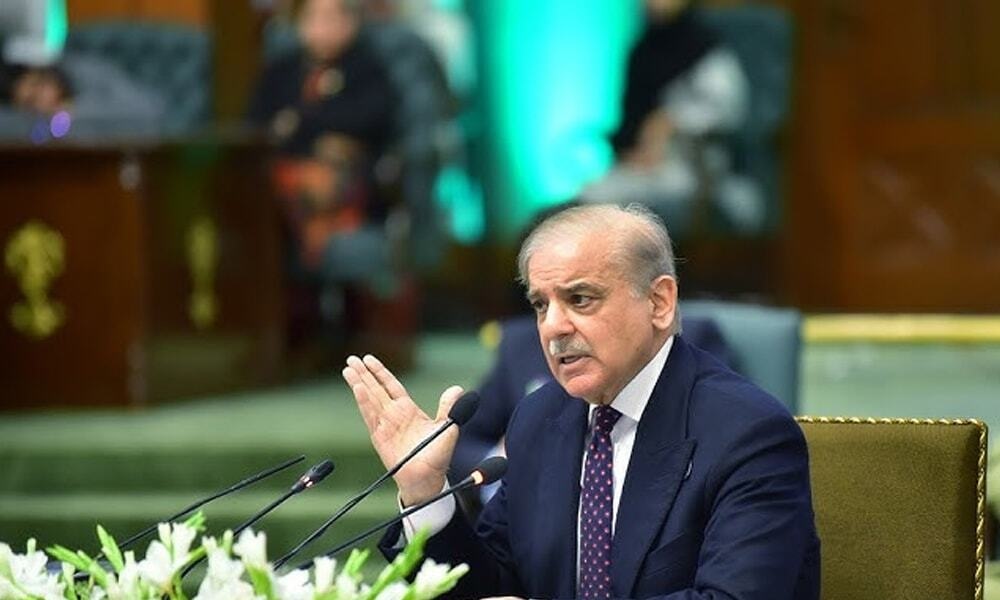

ISLAMABAD: With catastrophic flooding and climate change looming large, Prime Minister Shehbaz Sharif on Wednesday called for immediate preparations ahead of the next monsoon season, warning that Pakistan could face another devastating year unless urgent measures are taken to safeguard lives and property.
The directive from the prime minister comes in response to the growing risks posed by catastrophic flooding and the broader impacts of climate change experienced last summer, which have increasingly endangered lives and property.
During a review meeting on the government’s strategy to mitigate the adverse effects of climate change, PM Sharif underscored the urgency of starting preparations for the next monsoon without delay, stressing that timely action is crucial to minimise the loss of life and infrastructure.
“We cannot afford to wait,” he said, highlighting that the government must act swiftly to prevent the devastating effects seen in previous years.
He called on the Ministry of Climate Change, the Ministry of Planning and Development, and the National Disaster Management Authority (NDMA) to work closely with provincial governments to ensure a coordinated approach.
PM for formulation Climate Resilience Action Plan
One of the key outcomes of the meeting was the approval of a short-term action plan aimed at addressing immediate climate-related challenges.
The prime minister also instructed that preparations begin for a ‘National Water Council’ meeting to develop a comprehensive national strategy for improved water management.
Pm Sharif lamented the growing financial strain that climate-related disasters are placing on Pakistan, a developing country already facing significant economic challenges. “Every third year, we are forced to divert a considerable portion of our GDP to combat the adverse effects of climate change. These resources should be used for development, not for managing climate crises.”
Despite contributing minimally to global greenhouse gas emissions, Pakistan has been severely impacted by climate change, which has led to more frequent and intense floods, droughts, and extreme weather events.
The prime minister reiterated that Pakistan, though a small emitter of carbon, continues to bear the brunt of climate-related disasters.
The meeting also included a briefing on global climate forecasts for the upcoming monsoon season, with senior government officials predicting another year of unpredictable weather patterns.
The Ministry of Climate Change presented a series of short, medium, and long-term plans, with the short-term strategy receiving immediate approval from the prime minister.
The meeting attended by key government officials, including federal ministers Ahsan Iqbal, Ahad Khan Cheema, and Dr Musadik Malik, focused on devising an integrated strategy to mitigate the impact of climate change.
Copyright Business Recorder, 2025
























Comments
Comments are closed for this article.