


Call for resilience & preparedness to combat recurring extreme weather events
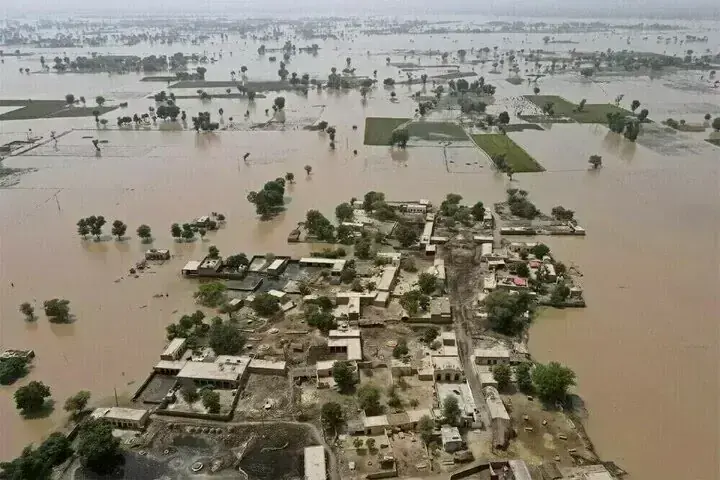

ISLAMABAD: Zafar Iqbal, Member of Space Applications and Research, Suparco, has said that “climate change is no longer a forecast of tomorrow; it is the living reality of today.” He noted that recurring extreme weather events are stark reminders of the urgent need for resilience and preparedness.
The Inter-Islamic Network on Space Sciences and Technology (ISNET), in collaboration with the Pakistan Space & Upper Atmosphere Research Commission (Suparco), inaugurated a five-day international training course titled Space-Based Disaster Management – Shifting Focus from Reactive to Proactive Approaches.
The event was attended by participants and experts from OIC member states, including Tunisia, Libya, Senegal, and Iraq. He highlighted that although Pakistan’s contribution to global CO2 emissions is less than one percent, the country remains among the most vulnerable to climate impacts.
The chairman emphasized that the training reflects a critical shift in approach – from reactive responses to proactive strategies. He explained how modern space-based tools allow risks to be monitored in advance, vulnerable areas to be identified, and decision-makers to be equipped with timely, actionable information. “Disasters do not recognize borders,” he remarked, underlining that regional cooperation, data sharing, and joint strategies are essential for sustainable disaster risk reduction.
Administrator ISNET, Sadaf Sajjad, highlighted ISNET’s mandate to strengthen capacity-building, knowledge exchange, and collaboration among member states in the field of space science and technology. She emphasized the importance of integrating space-based applications in disaster management frameworks to improve preparedness and resilience.
Dr. Muhammad Farooq, Director of the Space Applications Centre for Response in Emergency and Disasters (SACRED) and course organizer, briefed the participants on the scope and technical framework of the training programme.
He underscored the role of satellite data, remote sensing, and geospatial technologies in shifting disaster response from reactive measures to proactive strategies, with a special focus on climate-induced disasters such as floods and droughts.
Speaking on behalf of the ISNET-sponsored participants, Dr Jalal Alanatoy from Libya expressed gratitude to ISNET and SUPARCO for providing an opportunity to enhance regional expertise in disaster risk management. He stressed that shared learning and cooperative approaches are essential for member states facing common climate-induced challenges.
The event concluded with an interactive session, where experts and participants exchanged views on national experiences, challenges, and opportunities in applying space-based solutions for disaster management.
The training course will continue over the next four days, with technical lectures, hands-on exercises, and collaborative discussions aimed at equipping participants with practical skills and knowledge that can be applied in their home institutions to strengthen national and regional disaster resilience.
Copyright Business Recorder, 2025

























Comments
Comments are closed for this article.