


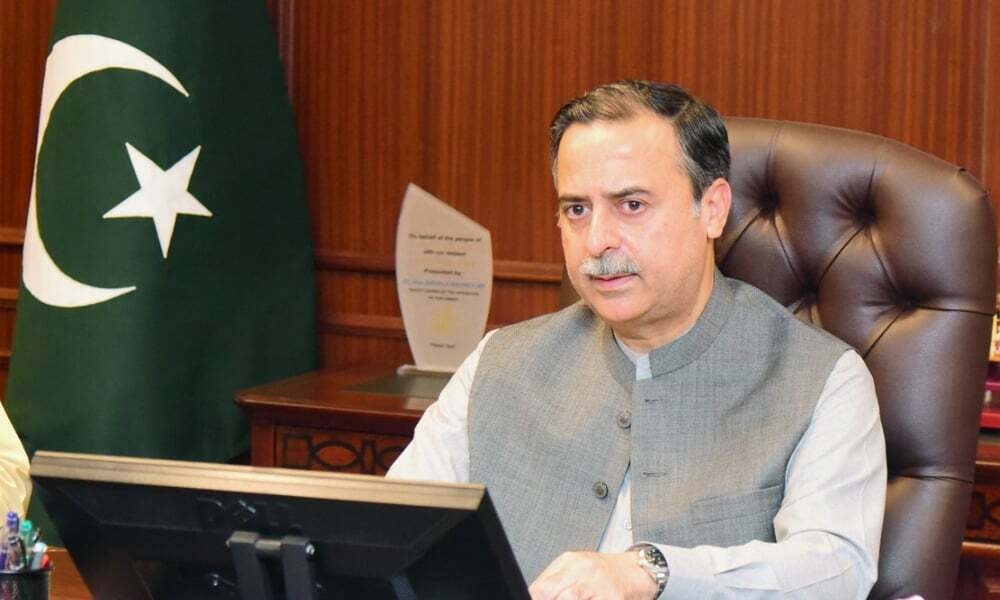

ISLAMABAD: Federal Minister for Maritime Affairs, Muhammad Junaid Anwar Chaudhry, on Saturday warned that the rising tide of textile and fashion waste flooding our oceans poses a growing threat not only to marine life but also to economic future, climate resilience, and the wellbeing of future generations.
On World Cleanup Day 2025, which carries the theme “Tackling Textile and Fashion Waste Through Circular Fashion,” he underscored the urgent need for sustainable practices to protect oceans and secure the future for coming generations. World Cleanup Day is a global initiative focused on combating solid waste and marine debris, highlighting the pressing challenges posed by textile pollution.
The minister stated that the Prime Minister’s firm commitment to prioritizing climate change underscores the urgent need for sustainable policies aimed at protecting environment, economy, and citizens.
“The health of our oceans is directly linked to the wellbeing of our people, economy, and planet. I urge industries, policymakers, and citizens to recognize the dangers of textile and fashion waste and collaborate to build a circular economy that protects both livelihoods and biodiversity,” said Junaid Anwar Chaudhry.
Pakistan’s textile and fashion sector, one of the world’s largest and responsible for nearly 60 percent of national exports, also generates significant waste and pollution. Studies reveal textile waste contributes heavily to microplastic contamination in rivers and seas, threatening marine life including fish, corals, and vital coastal ecosystems.
Every year, tons of textile waste end up in landfills and waterways that eventually flow into the Arabian Sea. Microfibers from synthetic fabrics are consumed by marine animals, disrupting food chains and placing additional stress on species already threatened by climate change, overfishing, and habitat degradation.
The minister emphasized that the issue extends beyond ecology to economics as Pakistan’s blue economy, encompassing fisheries, shipping, tourism, and coastal industries, suffers major losses due to polluted waters and habitat degradation.
Pollution-related losses in fisheries alone exceed USD 200 million annually, while the potential of coastal tourism remains largely untapped. If this trend continues, financial losses will escalate further. Globally, the fashion industry loses about USD 500 billion annually due to underutilization and lack of recycling. For Pakistan, adopting circular fashion is not only an environmental imperative but also an economic necessity to safeguard these critical sectors.
He also highlighted the link between textile waste and climate change, noting that the textile sector is a major water consumer and greenhouse gas emitter. Discarded textiles in landfills release methane, a potent climate pollutant, worsening global warming impacts on coastal communities already vulnerable to rising sea levels and extreme weather events.
Copyright Business Recorder, 2025

























Comments
Comments are closed for this article.