




Earlier this month, BR Research highlighted how millions of domestic gas consumers are facing a significant hike in their monthly bills — even in the absence of any change in base tariffs. The shift came not through the headline rate per MMBTU, but more subtly through higher minimum charges and a sharp increase in fixed monthly fees.
With the July 1 gas sales price notification now in effect, early signs from the Pakistan Bureau of Statistics (PBS) suggest the impact may again be flying under the radar.
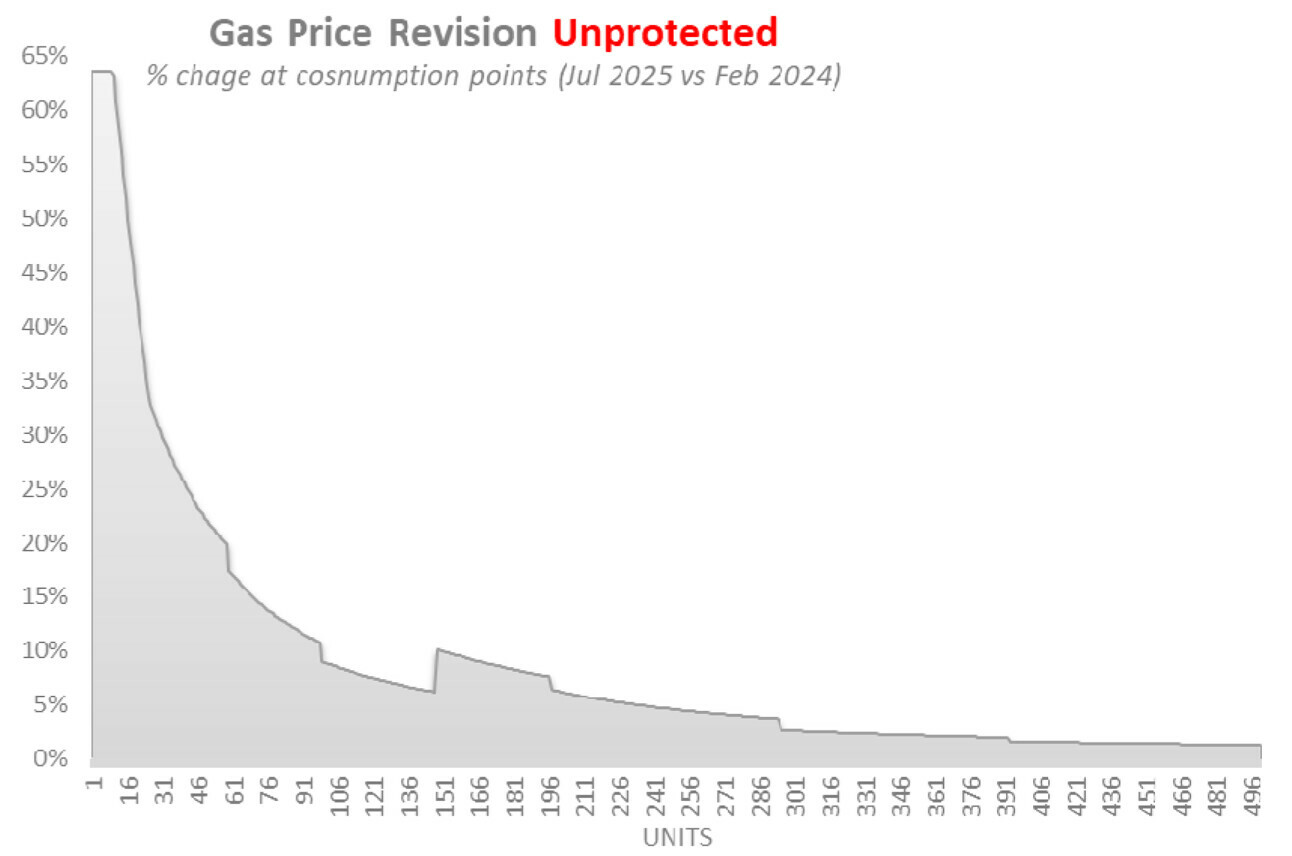
The latest Sensitive Price Index (SPI) update released on July 18, 2025, showed no change in gas prices — despite the fact that minimum monthly charges for protected consumers have risen from Rs645 to Rs968, and for unprotected users from Rs1,436 to Rs2,350, largely driven by increased fixed charges and a recalibrated floor based on first-slab energy usage.
In previous instances — notably during the last two tariff revisions — the PBS revised its gas price index within two weeks of the respective notifications (dated 8th and 15th of the month). This time, the notification was issued on the 1st of July, yet three weeks in, the price index remains unchanged.
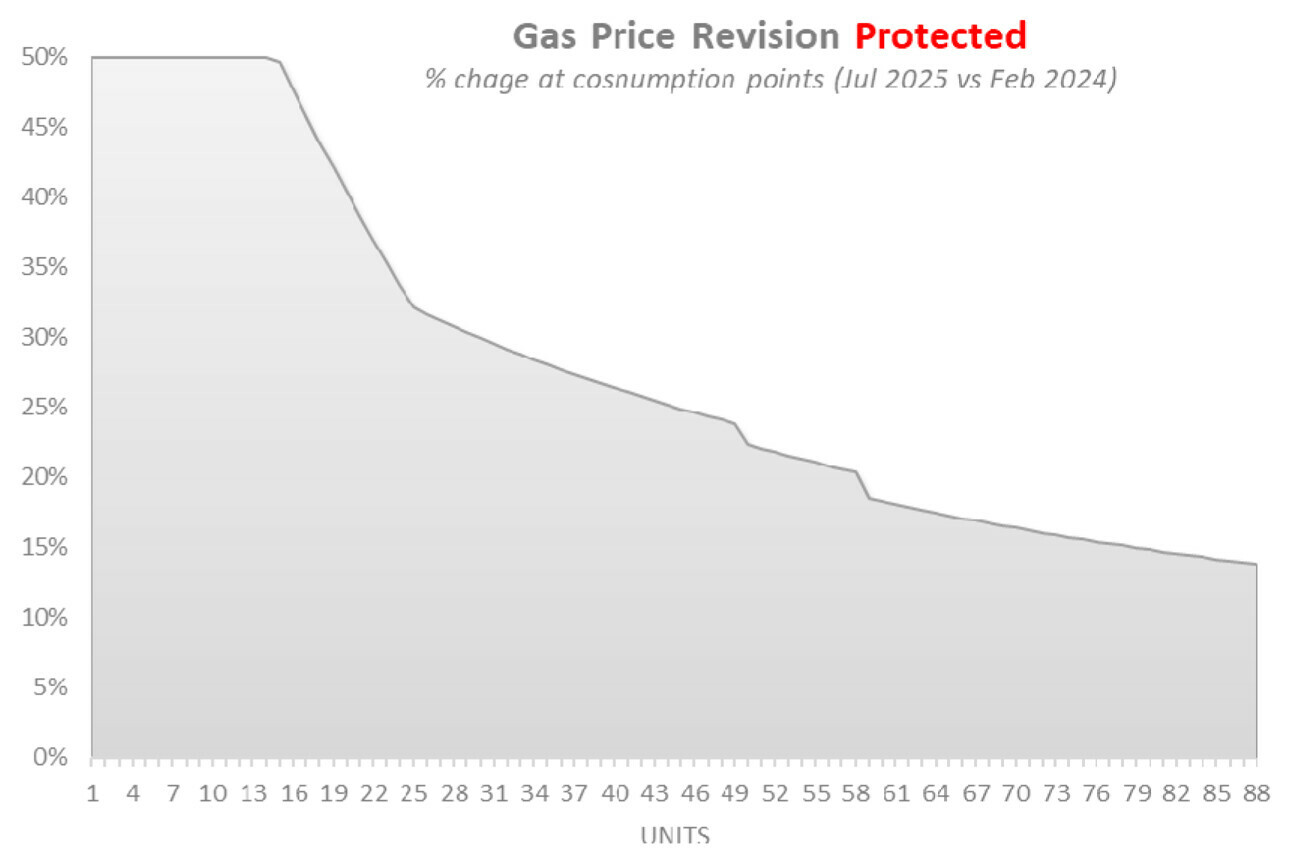
While this may be the result of a procedural lag — perhaps PBS logs utility tariff changes in the following calendar month (last two instances do not support this lenient view) — the omission is worth flagging, particularly because the nature of this change is less visible.
Importantly, this isn’t about assigning blame. But the concern is valid, especially when more than half of all domestic gas consumers — 55 percent (4.1 million of 7.1 million) by latest SNGPL data — fall in the protected category, and the percentage increase in their minimum payable bills is the highest.
The SPI only covers prices for the bottom quintile – all of which invariably falls within the protected category. (More on the ills of blanket ‘protected’ and ‘non-protected’ on different regions, later in these columns).
The piece dated July 9, 2025 had emphasized the importance of accurately capturing these changes in inflation reporting. With both fixed charges and minimum billing methodology quietly revised, the net effect on consumers is material, even though headline tariffs remain unchanged. That subtlety increases the risk of the change being statistically missed — and with it, the risk of understating inflation for the lower three consumption quintiles, where most of these users reside.
Here’s a soft reminder to the PBS: this time the change may not be loud, but it is real — and it matters. Get it right, and get it in time.




















Comments
Comments are closed for this article.