


No judgment has touched Article 175 pertaining to military courts: SC judge
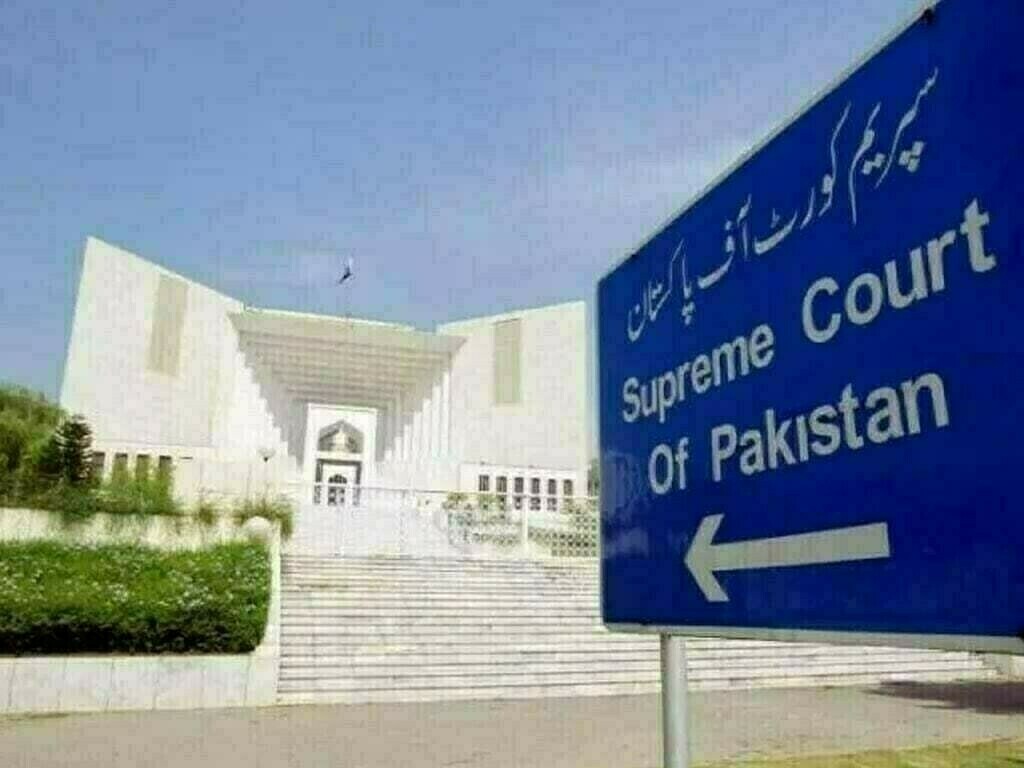

ISLAMABAD: Justice Muhammad Ali Mazhar remarked that no judgment, including the impugned judgment of the Supreme Court, has touched Article 175 of the Constitution pertaining to the military courts set up under Pakistan Army Act, 1952.
Justice Jamal Khan Mandokhail questioned whether the Court Martial is a court under Article 175. He said lawyer Salman Akram Raja, while arguing the case, had maintained that the civilians cannot be tried by a court, which is not subordinate to the High Court, and that the armed forces which are part of the executive cannot perform judicial functions.
A seven-member Constitutional Bench, headed by Justice Aminuddin Khan, on Monday, heard intra-court appeals (ICAs) against the apex court’s decision on trial of civilians by military courts.
A five-member larger bench, headed by Justice Ijazul Ahsan and comprising Justice Munib Akhtar, Justice Yahya Afridi, Justice Sayyed Mazahar Ali Akbar Naqvi and Justice Ayesha A Malik on 23-10-23 declared that the trial of the civilians, who allegedly attacked army installations during the (9th May) riots, by military courts is illegal and of no legal effect.
It, by a majority of 4-1, declared that clause (d) of subsection (1) of Section 2 of the Pakistan Army Act, 1952 (in both of its sub clauses (i) & (ii)) and subsection (4) of Section 59 of the said Act are ultra vires the Constitution and of no legal effect.
Khawaja Haris, representing the Ministry of Defence, contended that the Court Martial is a special court that has distinctive status. He emphasised that even the constitution has made exceptions regarding the military court, as these are not subordinate courts in terms of Article 203 of the Constitution, and the impugned judgment has mentioned that as well, he added.
He said that the impugned judgment has declared that the Court Martial is a constitutionally valid court. He maintained that a court, which is not subordinate to the High Court, would not come in the ambit of Article 175, and these courts (military) are not in the hierarchy of the judiciary.
Earlier, Haris argued that the legislature provided protection to the Army Act, saying anything inconsistent with the fundamental right can be challenged before the Courts. He said if a civilian commits an offence which falls in the ambit of Army Act then he would be tried by the Court Martial.
Justice Jamal Khan Mandokhail noted that in the FB Ali case, the two categories have been created and a forum has been provided. He said sub-clause ‘D’ of clause 1 of Section 2 of the Act applies to everyone, who violates the Army Act, as no classification has been made.
However, Haris contended that reasonable classification has been made, saying that sub-clause ‘D’ of Section 2 does not say that all citizens would be tried by the military court, adding it would apply only to those who violate the law.
Justice Mandokhail said the offences of Official Secret Act and Pakistan Penal Code have been incorporated in the Army Act through Defence Services Laws (Amendment) Ordinance, 1967, adding before that Army Act was legislated only for the members of armed forces, but due to inclusion of sub-clause ‘D’ civilians, who commit such offences, could also be tried under the Act. He questioned which of the provisions except the Court Martial would not apply to a person who violates the law.
Haris stated that in Article 8 (3) (a) of the constitution, two issues are very important; i.e., maintenance of public order and the discharge of duties, adding if anyone commits an offence which affects the duty of armed forces members then would be tried by the military court.
He emphasised that the purpose of Army Act is that if a member of armed forces or a civilian commits an offence; i.e., to breach army security or interfere in discharge of duties then he would be court-martialed.
Justice Muhammad Ali Mazhar remarked that only those offences are covered in the Act for trial before military court, which falls under the Official Secret Act.
Haris said under the law there is no impediment to lodge an FIR or private complaint. Justice Mazhar noted that for offence under Official Secret Act it is mandatory to file an FIR. Justice Syed Hasan Azhar Rizvi asked how a person could be arrested by army authority. Justice Mazhar noted that a person is accused after the framing of charges against him.
The case was adjourned until today (Tuesday).
Copyright Business Recorder, 2025

























Comments
Comments are closed for this article.