



EDITORIAL: After enduring years of economic turbulence and bleak headlines, there was finally some good news and much-needed reprieve for Pakistan’s industries, exporters and citizens at large, with Prime Minister Shehbaz Sharif announcing substantial reductions in electricity tariffs for various categories of consumers, offering a welcome boost to the economy.
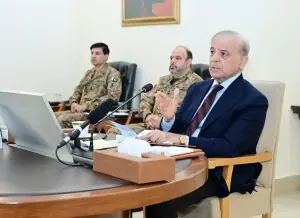
At an event announcing the tariff reductions on April 3, he intimated that electricity rates would drop 12-17 percent across consumer categories, achieved through quarterly adjustments, cost savings secured from power producers, and the reallocation of petroleum and grid levies on oil and gas products.
According to a tariff sheet issued by the power division, electricity rates for industries have been reduced by Rs7.69 per unit, or 13 percent, bringing the new average rate down to Rs40.51 per unit from the previous Rs48.19 per unit.
Similarly, residential consumers – both protected and non-protected – will see an average reduction of Rs6.71 per unit, lowering the average rate to Rs31.63 per unit from Rs38.34 per unit.
Additionally, commercial consumers, as well as those in the general services and agriculture sectors, are also set to receive significant reductions in their power tariffs. Cumulatively, the national average tariff has been lowered by Rs7.41 per unit to Rs37.64 from its current level of Rs45.05 per unit.
With domestic manufacturing long mired in stagnation, largely due to escalating energy costs, it goes without saying that these tariff cuts are poised to offer a vital respite, lowering production costs and enhancing the country’s export competitiveness. As has previously been highlighted in this space, the International Energy Agency’s “Electricity 2025” report had recently revealed that Pakistan’s industrial sector bore some of the highest electricity costs in the region, nearly double those of not only China and India, but also of the US, and 18 percent higher than the rates in the European Union.
This stark disparity in energy costs has had far-reaching consequences for Pakistan’s manufacturing competitiveness – dampening profitability and eroding global market shares of various industries, particularly the textile sector. Although the sector remains a cornerstone of our manufacturing and export economy, it faces a continuous battle in the form of mounting costs of production fuelled by exorbitant electricity tariffs. This has constrained investment, stifled growth and ultimately weakened overall productivity, leaving the textile sector struggling to maintain its competitive edge in an increasingly volatile global market.
Given that this volatility is set to sharpen even further following the US imposing 29 percent tariffs on Pakistani imports as part of its so-called Liberation Day tariffs, this electricity rate restructuring could not have come at a more opportune moment. As Pakistani industries brace for an uncertain future, the reduction in energy costs could help offset at least some of the financial pressures they will inevitably face as they navigate the challenges posed by global market shifts.
It is also important to note that while the prime minister highlighted the power sector task force’s crucial role in securing Rs3.699 trillion in savings through revised IPP agreements, he also emphasised the potential for further tariff reductions if critical challenges like electricity theft and administrative reforms within DISCOs are addressed. Thus, while the necessity of power tariff reductions cannot be overstated, tackling the multitude of underlying inadequacies causing chaos in the broader energy value chain – inefficient power generation, worn-down transmission and distribution infrastructure, weak recoveries, rampant power theft – is equally critical.
Without a comprehensive reform effort to overcome these inefficiencies, power tariff reductions will only go so far in delivering the kind of lasting benefits that the manufacturing and export sectors are hoping for, as any gains achieved will be short-lived, and will not provide the sustainable relief and competitiveness needed for long-term economic stability.
Copyright Business Recorder, 2025
























Comments
Comments are closed for this article.