


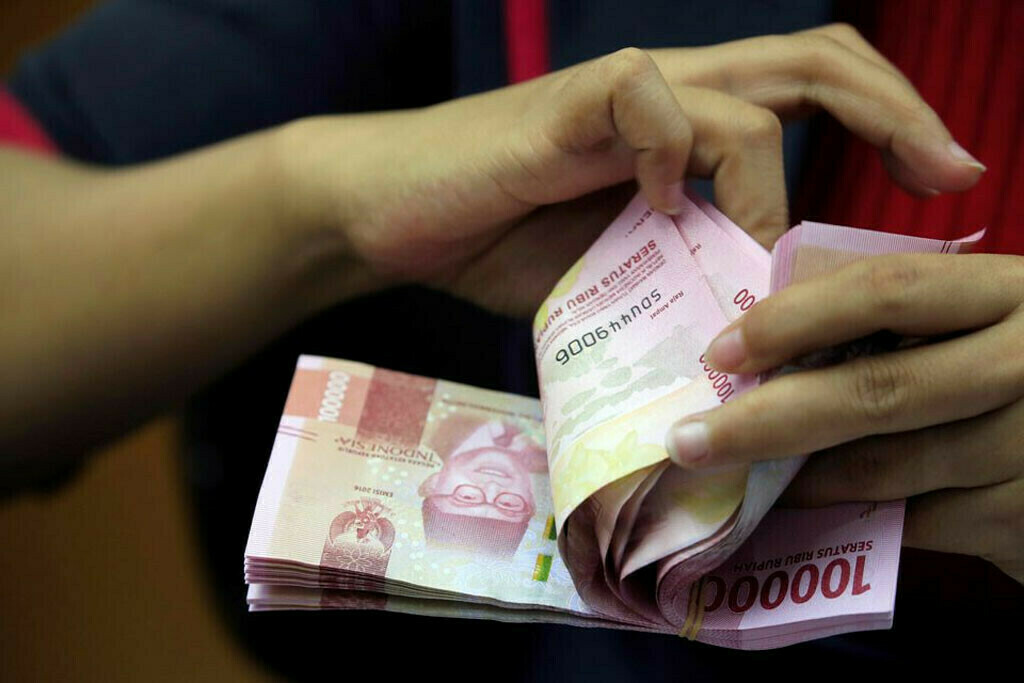

Indonesia’s rupiah led declines in emerging Asian currencies on Thursday, while Malaysia’s ringgit fell to a 25-year low, as rising expectations that US Federal Reserve will keep rates higher for longer pushed US Treasury yields to a 16-year high.
Equities in the region also lost ground as investors remained cautious on worries of growing geopolitical tension in the Middle East.
The rupiah fell as much as 0.8% to its lowest since April 2020, ahead of a Bank Indonesia policy decision.
It is expected to leave its interest rate unchanged.
“Rupiah’s underperformance will remain the policy focus, driven by narrowing policy differentials (ID vs US), weak debt portfolio flows and a firm US dollar,” analysts at DBS wrote.
Malaysia’s ringgit weakened as much as 0.4% to its lowest level since 1998. The Philippine peso and the Thai baht fell 0.2% and 0.1%, respectively.
The South Korean won weakened 0.6% as risk-off sentiment dominated markets, even as the Bank of Korea kept its interest rate unchanged for a sixth straight meeting.
“The immediate impact is the continuing rise in the US bond yields that has helped to push the dollar stronger and as a result negatively impacted Asian market today,” said Khoon Goh, head of Asia research at ANZ.
Thai baht, Indonesian rupiah lead declines among Asian currencies
A sell-off in the US bond market continued into Asian hours with the yield on 10-year notes touching a 16-year high as investors assessed the Federal Reserve’s expected higher-for-longer interest rate stance.
However, a Reuters poll found that the Federal Reserve will keep its key interest rate on hold on Nov. 1 and may wait longer than previously thought before cutting it.
All eyes turn to Fed Chair Jerome Powell, who is taking part in a discussion on the economic outlook at the Economic Club of New York at 1600 GMT.
The poor market sentiment can also be attributed to uncertainty regarding the Israel-Hamas conflict, according to ANZ’s Goh.
Oil prices climbed about 2% to a two-week high overnight on concern about global supplies after Iran called for an oil embargo on Israel. Prices reversed gains on Thursday, after OPEC showed no sign of supporting Iran’s call.
Meanwhile, US stocks ended sharply lower overnight, with the S&P 500 and Nasdaq falling more than 1% each.
The negative sentiment spilled over into Asian equities with stocks in Shanghai, Seoul and Singapore falling between 1.1% and 1.8%.

























Comments
Comments are closed for this article.