




Having stayed largely flat over the past four months, palm oil spot prices have receded, shedding 13 percent in the last month alone – the biggest month-on-month dip since July 2022. A slowdown was on the cards given how Asian buyers had beefed up inventories during peak Ramadan season. Both Malaysia and Indonesia have reported a double-digit increase in palm output, taking the commodity down 50 percent from the highs of a year ago.
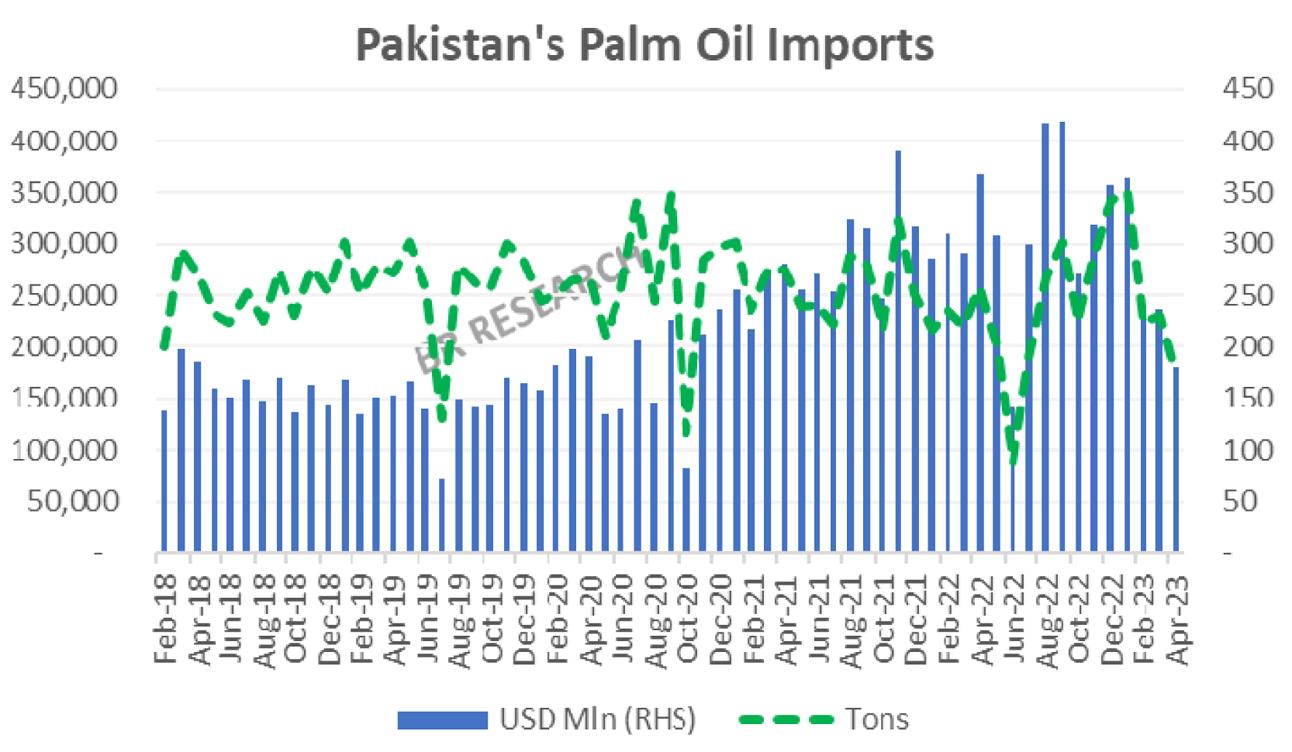
Pakistan’s palm oil imports too have come down crashing in April 2023 –at 0.17 million ton, lowest for any month in FY23 and second lowest since peak Covid. Import bill for April 2023 at $180 million is less than half compared to the same period last year – because of both unit cost and reduced quantity. Year-to-date imports in value and quantity though, remain virtually unchanged from 10MFY22 at $3 billion and 2.5 million tons respectively – as Pakistan continues to arrange the Afghan neighbors don’t fall short of cooking oil.

The relative calm in the international commodity prices has not translated into reduced prices in the retail market. Retail cooking oil prices have doubled in less than two years – with a 50 percent increase in average prices during 10MFY23. SPI reading of May thus far show there are no signs of prices cooling down at retail stores. That is largely because the rupee has lost considerable value against the greenback, limiting the impact of substantially reduced imported price. Transportation prices are almost double that from a year ago – and that also plays in heightened retail rates.
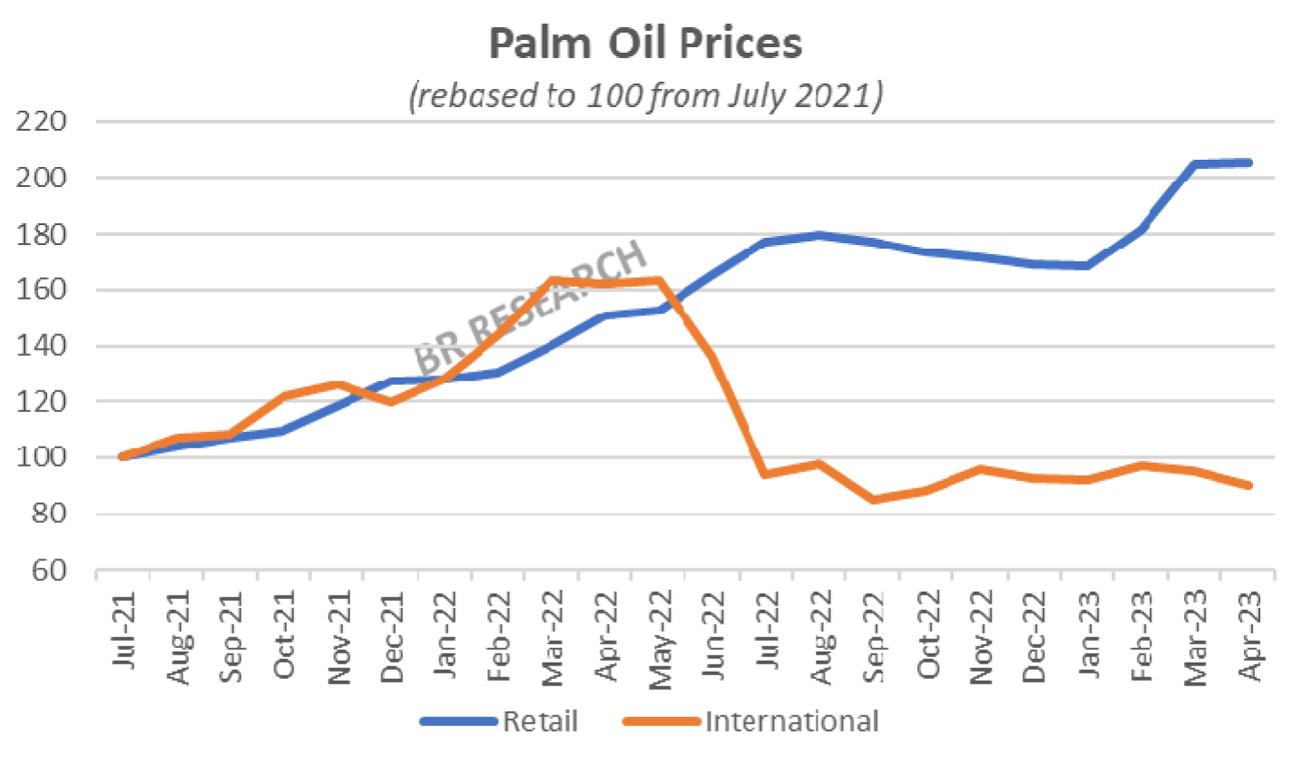
With another round of significant currency depreciation just around the corner as the gap between the interbank and open market widens – it is almost certain the cooking retail prices will not go down despite significant correction in international spot rates. April numbers alone cannot be overanalyzed as it could well be a result of delayed shipments or any other factor. In times as trying as these, more efforts on border patrolling to curb smuggling could yield much better results than engaging elsewhere.
























Comments
Comments are closed for this article.