


ECB's latest stimulus expected to have little impact on euro zone economy
- Despite the ECB's decision to top up its pandemic emergency purchases by half a trillion euros to 1.85 trillion euros and extend the programme for nine months.
- It was then expected to expand 2.3%, 1.9% and 1.0% in the second, third and fourth quarters.
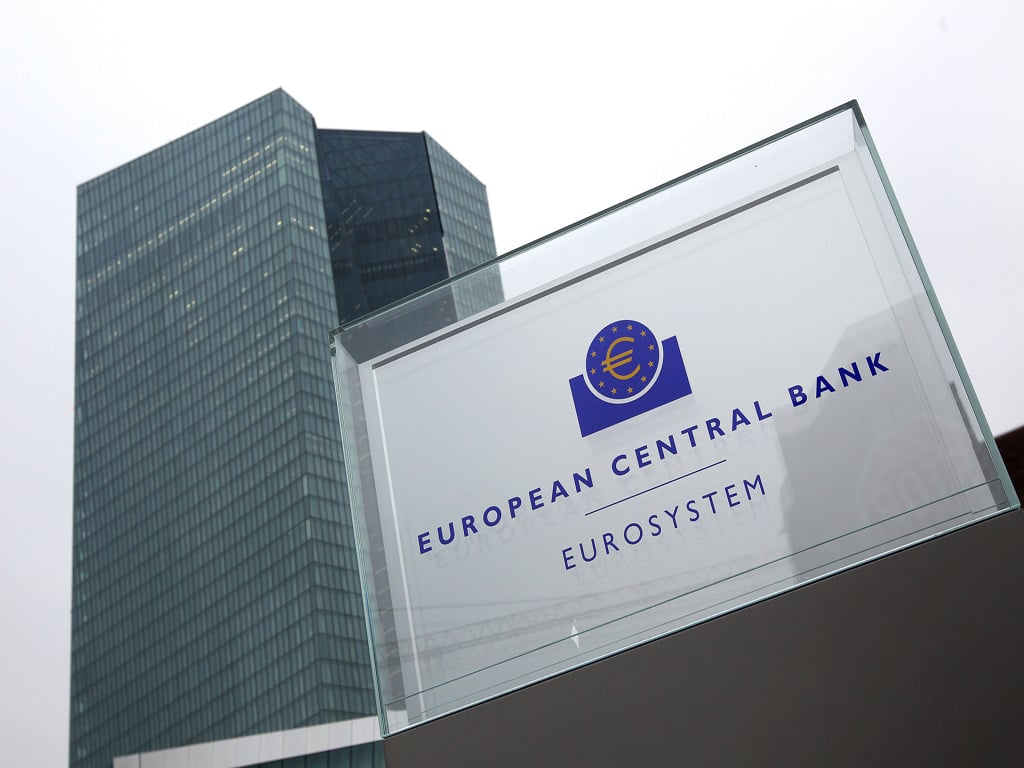

BENGALURU: The European Central Bank's new policy package will have little effect on the euro zone's coronavirus-ravaged economy, according to the forecasts of a Reuters poll of economists, who nearly halved their outlook for first-quarter growth.
Despite the ECB's decision to top up its pandemic emergency purchases by half a trillion euros to 1.85 trillion euros and extend the programme for nine months, the bloc's economic outlook remains bleak.
The Reuters poll consensus of over 80 economists forecast the euro zone economy shrank 2.5% last quarter after expanding 12.5% in the third quater and was expected to grow 0.6% this quarter, nearly half the 1.1% predicted a month ago.
It was then expected to expand 2.3%, 1.9% and 1.0% in the second, third and fourth quarters, largely unchanged from last month's forecasts collected just before the ECB introduced more stimulus.
Over 70% of economists, or 28 of 39 who replied to an additional question, said the ECB's latest policy moves would have little impact on the euro zone economy. The others said it would provide a significant boost.
"Interest rates are already so low and policy is ultra-loose, so for now, monetary policy cannot impact investment or consumer demand. Thus we do not think the ECB can influence the economy strongly at this time," said Christoph Weil, senior economist at Commerzbank.
"We expect a bitter couple of months. Lockdowns will dampen the economy and we expect falling GDP in the last quarter of 2020 and in the first quarter of this year. So technically a recession".
Of the participants in the Jan. 11-15 survey, over 25% expected the euro zone - where growth plumbed to an historic low in the first half of 2020 - to have again entered a technical recession, defined as two consecutive quarters of contraction.
On an annualised basis, the economy was expected to have shrunk 7.3% in 2020, roughly in line with the last poll, but for this year, the median was downgraded to 4.5% from 5.0% last month. For 2022, the growth forecast was upgraded to 3.9% from 3.5%.
"The start of the year continues to bring bad news for Europe as the health situation deteriorates. With lockdowns already being extenin several countries, short-term risks to the economic outlook are clearly skewed to the downside, especially as the vaccination roll-out is still slow," said Angel Talavera, head of Europe economics at Oxford Economics.
"The new and more transmissible variants of the virus mean a further deterioration could happen very quickly."
Over 70% of respondents, or 30 of 42, who replied to a separate extra question said the economy would return to pre-crisis levels within two years, including six who said within a year. The others said it would be more than two years.
The two largest euro zone economies were expected to grow much slower in 2021 compared with expectations in October. Germany was forecast to grow 3.7%, down from 4.6%, and the outlook for France was downgraded to 5.9% from 6.9%.
Euro zone inflation, which remained in negative territory for five straight months last year, was expected to remain below the ECB's target of just under 2%, averaging 0.9% in 2021 and 1.3% in 2022.
A slim majority, over 52% of economists, or 21 of 40 who answered a separate question, said a significant pick-up in inflation was likely. Seventeen said it would remain around the same as 2020 and two said deflation was more likely.
"If history is any guide, any too-high expectations of inflation can be shattered. But we have very supportive fiscal policy and a number of structural factors that could support higher inflation a little further down the road," said Florian Hense, senior Europe economist at Berenberg.





















Comments
Comments are closed for this article.