


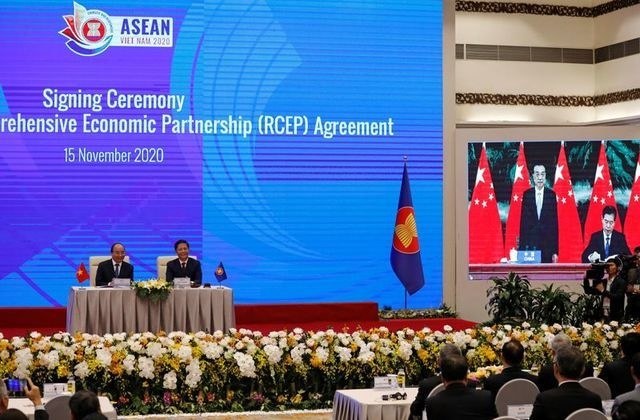

The world’s largest free trade deal, the Regional Comprehensive Economic Partnership (RCEP) has been signed between China, Australia, Japan, South Korea, New Zealand and the ASEAN 10. The world’s largest economy, the US is not included. When talks over the deal began in 2012, then US President Barack Obama had favoured his country’s inclusion in the pact to counter China’s growing economic influence in the Asia Pacific region.
But his successor, President Donald Trump decried the deal as a capitulation to Beijing. His administration pulled out of talks in January 2017. At the time, Trump’s decision won support among some of his staunchest critics, like Senator Bernie Sanders, and public concerns over US jobs going overseas could keep President-elect Joe Biden from reversing course on RCEP.
New Delhi was also in the fray until last year. Prime Minister Narendra Modi’s government abandoned the idea over concerns that India’s domestic producers would not be able to compete with more efficient ASEAN rivals. The current signatories to the deal have expressed hope that New Delhi will come around later, but its worsening relationship with Beijing remains an impediment to a rapprochement.
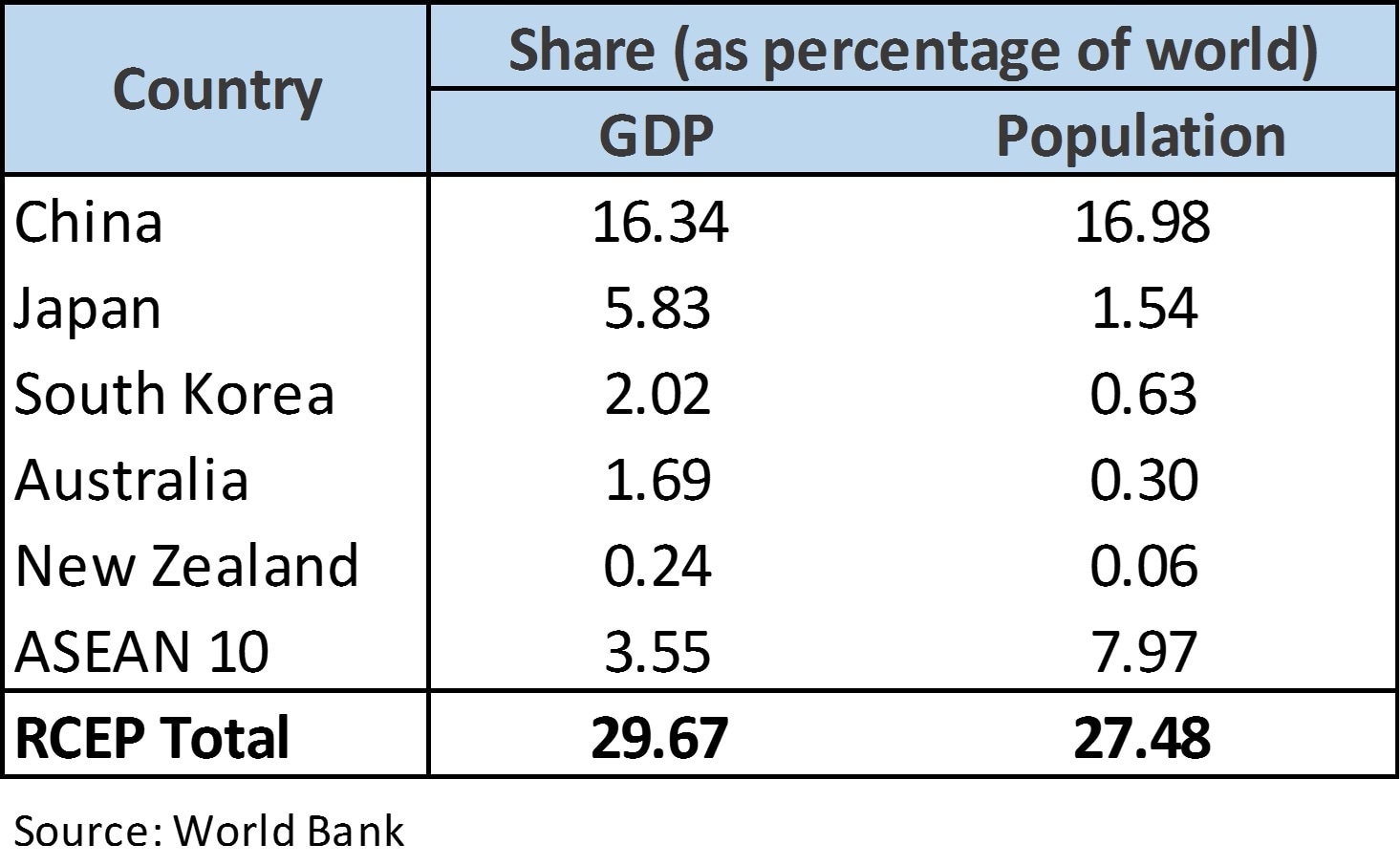
The current members of the RCEP represent 28 percent of the world’s population and 30 percent of the global economy. It opens up services trade between member countries and aims to eliminate import tariffs over the next 20 years. But Beijing can begin reaping the benefits of this deal almost immediately, and on a number of fronts.
It makes it easier for Chinese manufacturers to cushion the impact of rising domestic wages by shifting production to markets with cheaper labour like Laos, Cambodia and Vietnam. Manufacturers on the Mainland can also avoid a surge in US tariffs brought on by the trade war initiated by Trump. The Thailand Board of Investment says higher US tariffs on Beijing are driving a wave of relocations to industrial hubs like Rayong in the country’s south.
The opening up of the region’s service sector will benefit China’s tech industry which is being boxed out of the US and the EU through targeted regulations. Washington has been exerting pressure on its allies to boycott Huawei’s 5G technology over data security concerns. Broader availability of support services and lower import costs of Chinese technology will undoubtedly make the US warnings less effective.
Most importantly, RCEP places Beijing at the head of the negotiating table among many trade disputes in the Asia Pacific region. That role can be expected to grow progressively larger as Washington’s influence wanes and the World Trade Organisation struggles to fulfil the role of global trade regulation as discussed previously in these columns.



















Comments
Comments are closed for this article.