


Developing countries, including Pakistan, often raise the demand of "trade not aid" in various international trade/investment-related forums. Ideally, this should have been one of the important components of the world economic system, but since the role of developing countries in restructuring the system is very limited, this demand continues to be a far cry.
Pakistan, since its inception has been an aid-starved country and its appetite for borrowing still remains unsuitable. Development assistance to Pakistan, between 1960 to 2002 stood at $73 billion. In FY 2002, it was $46 billion or 43% of GDP. In FY 2011, foreign debt moved to $59 billion, which inclusive of domestic debt, constitutes 60% of GDP. Aid has been obtained both from bilateral and multilateral sources. This is, in addition to the military aid. Had there been no military aid, its multiple requirements would have also been. met by domestic economic source,. Among the aid-giving countries, America ranks No 1.
During the Ayub era, although foreign aid played a spectacular role in the economic development of the country, its adverse impact and implications were also realised which led to him to his autobiography as "Friends not masters". The name of its Urdu version is still more pronounced. Since then, occasionally, this demand is repeated either by some politicians in their discourses or by economists/writers, in their writings, though it has never been a part of official policy.
What is most distressing in this regard, is that whatever efforts to achieve self-reliant economic growth were made in the past, have slowly and gradually started to recede and the component of foreign aid in economic development, instead of being diminished, is perpetually on the rise. While macro-economic indicators are disappointing and the over-all state of economy is precarious a downward slide remains unchecked, the demand of 'trade not aid' is without any substance, having no relevance with the ground reality and must be termed as a myth.
Trade is not promoted in isolation. It is the off-shoot of self-sustained economic growth, which depends on resource endowment, socio-economic policy frame-work and the quality of leadership manifested in effective and efficient management.
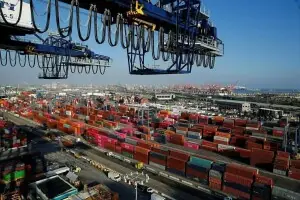
The usual pattern of economic growth in developing countries is that the ratio of consumer goods in import declines significantly in the first phase of development while that of capital goods rises, but at the later stage, imports either start to decline or at least stabilise. But in our country, despite long phase of industrialisation, we continue to import finished consumer goods, including food items, in addition to capital goods. There has been no diversification in exports, which is spearheaded by textile whose machinery is not manufactured in the country and is imported. This is a reflection on our over-all development strategy which has further widened the import-export gap. Our exports hardly finance 50% of imports. The remaining are financed either by home remittances or by external resources. The fiscal deficit is met by internal and external borrowing. During the year 2010-2011, imports were estimated at $32 billion as against exports of $20 billion. The country is rich is natural resources, but they still remain unexploited either fully or partially. Therefore, recourse to external resources for their exploitation as well as to meet the modern requirements of socio-economic development is inescapable and inevitable.
Judged on the criteria, prescribed by famous economist Rostew in his book "The stages of economic growth", though Pakistan has entered the take-off stage, yet it still has the traces of a traditional society. Our rural economy has yet to be modernised.
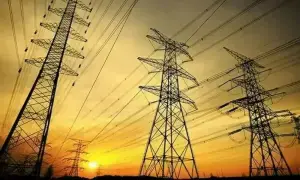
The over-all economic scenario very depressing and speaks volume of the mismanagement of the economy. Almost all public enterprises are suffering from huge losses. The Steel Mills which was the symbol of import substitution is struggling for its survival. Railways and national airlines are creating problems in transport. The Energy crises appear to be unmanageable and its high prices is adding to the cost of doing business. Rampant corruption is eating into the vitals of the economy. The fiscal deficit during the current year is likely to cross the level of 7% of GDP. Total investment has declined from 22.5 percent of GDP in 2006-7 to 13.8 percent in 2010-11. Foreign direct investment (FDI) which could be a substitute to foreign aid, stood at $1232 million in 2010-11 as against $1725 million in the preceding year. The low rate of FDI which was mainly concentrated in energy and financial sectors, was due to a volatile security.
According to a State Bank report, the growth fixed at 4.2% for the current year, shall be missed because of gas shortages, high oil prices and decline in the global prices of agricultural commodities.
Admittedly, foreign aid is not an unmixed blessing. Its major portion is ploughed back in the forms of debt-serving repayment, purchase of goods from the donor country and payment for various services to experts and technicians. Undue interference in the domestic affairs of the aid recipient country by the aid-giving countries and multilateral institutions undermines its economic sovereignty.
Despite this, however, there is hardly any country which has developed a self-reliant and self-sustained economic growth, after the second world war end emergence of the twin Breton-wood institutions, the International Bank for reconstruction and Development (IBRD) and the International Monetary Fund (IMF). The war-ruined economy of Germany and Japan soon assumed the posture of developed and forward-looking economy. Japan is the only developed & country which does not have any kind of raw material, but within a short span of time, developed all kind of industries by effectively utilising the imported raw material through much needed commitment and visionary leadership. In the current era, China has emerged to be the No 2 world economic power after USA, although the latter is hugely indebted to the farmer. India, having a socio-economic milieu, similar to us is bracketed among the ten most developed countries of the world. They effectively utilised foreign aid and fully exploited their man and material resources, for the progress and prosperity of their countries.
This is, therefore, obvious that the foreign aid does have both positive and negative implications, but the recipient country must focus on its positive side for raising the productive capacity of the country to its optimum level for attaining the ultimate goal of progress and prosperity and getting rid of the menance of aid. Pakistan must a learn lesson from history and all-out efforts be made to effectively and judiciously utilise both domestic and external resources to accelerate the process of economic development. It must be kept in mind that as a consequence of the 'Occupy work street movement' in USA, prolonged Euro zone debt crises in Europe and 'Arab Spring' in the Middle East, the possibility of curtailment of aid inflow from these countries cannot be ruled out. This phenomenon would apparently have a negative impact on the quantum of home remittances.
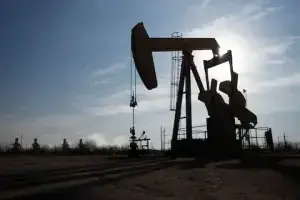
Meanwhile, it will be in the fitness of things if along with short-term planning, long-term planning is also restored, in which the role of Planning Commission must be decisive and pivotal. As a first step, the capacity of existing import-substitution industries be expanded through adequate fiscal and monetary incentives. New import-substitution industries, having export-potential be set up both in public and private sectors to cater to the demand of both domestic and foreign markets. Along, with production plan, a consumption plan at least of consumer goods must be prepared to avoid their shortages, wastage or hoarding. All public enterprises be reorganised, restructured and manned by dedicated and honest professionals. It is argued that some unessential import items are tied to loan. We can negotiate with donors to sell us, for example, technology, expertise and facilities for setting up large-scale dairies and animals ranches in Pakistan. Similarly, the country must attract FDI in similar import-substitution industries. It is encouraging that petroleum products appear in our exportable list. This calls for gearing up our oil-exploring efforts. Likewise, external resources be meaningfully tapped of overcome the on-going energy crises. Serious, efforts be made to develop domestic technology specially to find out substitute to imported raw material' through public-private partnership. Meanwhile, fiscal responsibility and debt limited Act 2005, designed to limit expenditure as well as debt build-up must be strictly adhered to both in letter and spirit.
Last, but not the least, it must be emphasised, that political stability is a sin-que-non of economic progress and prosperity/and vice versa. The country has been experiencing political instability due to a variety of factors and the government, leadership and functionaries remain busy in dealing with political issues and the economic issues are kept at back-burner. In this era of globalisation, economic development must be given priority and good governance combined with rule of law must be the cornerstone of any economic development strategy.
(The writer is former KCCI Secretary)




















Comments
Comments are closed for this article.