


Trump governance carries Chinese characteristics

 LONDON: Donald Trump is bringing Chinese characteristics to American governance. On the face of it, the next US president couldn't be more different from his opposite number in Beijing, President Xi Jinping, who Trump has been trolling on Twitter.
Yet the two men - and the cults of personality that have propelled them to power - have a surprising amount in common.
Here are some parallels to look for in Trump's first year in office. Though the reality-TV star has yet to take his oath, he has already displayed several traits that Xi and other Chinese leaders would recognise.
He has threatened to purge and even lock up political rivals, displayed an obsession with boosting economic growth and reducing the trade deficit, and shown disdain for free speech and an independent media.
Like China's rulers, he appears obsessed with returning his nation to its former greatness - though in the case of the United States this means winding the clock back a few decades rather than several centuries.
Trump continues to rail against China, even after clinching victory. His economic plans, however, suggest a sneaking admiration for the policies pursued by the Communist Party.
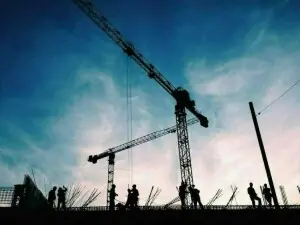
Apart from cutting taxes, the president-elect has promised to make the country's infrastructure "second to none". That's an objective familiar to Chinese officials, whose fondness for building airports and high-speed train lines helped keep the country humming after the global financial crisis.
To finance the splurge, Trump could borrow another Communist Party tactic: entice the country's biggest banks to lend to prestige projects at preferential rates.
In industrial policy, Xi and his cohorts have already shown America the way. Even before taking office Trump displayed a Chinese-style willingness to intervene in private business decisions, bribing and bullying manufacturers like United Technologies and Ford Motor not to move workers overseas. A closer study of Beijing's approach suggests this "America First" policy could go further.
For example, Trump could instruct government bodies to only buy from local enterprises, as Beijing is fond of doing. Similarly, he could mimic China's use of vaguely defined cyber security rules to freeze out foreign technology firms.
Like China's rulers, Trump understands the value of family connections. He owes much of his success to his real-estate developer father - a trait he shares with Xi and other "princelings" of the Communist Party. Meanwhile, the presidency is shaping up to be a golden business opportunity for Trump's children, who he says will run his empire while he is in office.
China counts many similar "entrepreneurs" who have grown rich as a result of their relatives' political influence. Unlike the ostentatious Trumps, though, the beneficiaries of Chinese nepotism hide their investments in shell companies and tax havens, where they are less likely to be discovered by the media or anti-corruption investigators. Then there is foreign policy. The People's Republic is notoriously thin-skinned when it comes to international affairs.
It is quick to take offence when other countries receive the Dalai Lama, or publish maps which don't conform to China's own view of its borders. Such slights are often described as having "hurt the feelings of the Chinese people".
American diplomacy has historically been less sensitive. Yet Trump is already breaking with that tradition. Electoral success hasn't tamed his habit of lashing out at criticism.
His approach to international relations could be similarly touchy. After he accepted a congratulatory telephone call from Taiwan's leader - something no US president has done for decades - Trump responded to the ensuing disapproval by attacking China's currency policy and its expansion in the South China Sea. Such tantrums make Xi look the temperate statesman by comparison.
A fondness for Twitter highlights an important difference with the Chinese leadership. The self-proclaimed billionaire communicates ceaselessly and with little apparent forethought, often contradicting himself within a matter of hours.
Xi and other Chinese leaders have a similar scorn for the truth. But on the rare occasions that they speak in public, they favour speeches in which every word has been carefully drafted.
President Trump also faces constraints that his Chinese counterpart does not. The American constitution limits executive power and defends free speech.
The Oval Office is subject to the rule of law: China's Communist Party is literally above it. Xi sits atop an apparatus that controls hundreds of giant state-owned corporations - a power that Trump lacks. And, crucially, the US Commander-in-chief must face the electorate again in four years. By contrast, Xi is as good as guaranteed to be awarded a second five-year term as the party secretary in 2017.
Despite these important differences, China's statist, authoritarian approach may offer the best framework for thinking about the Trump era. In a way, Trump may better resemble the founder of modern China, Mao Zedong, who had a similarly whimsical approach to policy, a fondness for giant earthworks, a hot temper and multiple wives. Expect more similarities to emerge when Trump takes the reins of the American superpower.














Comments
Comments are closed for this article.