



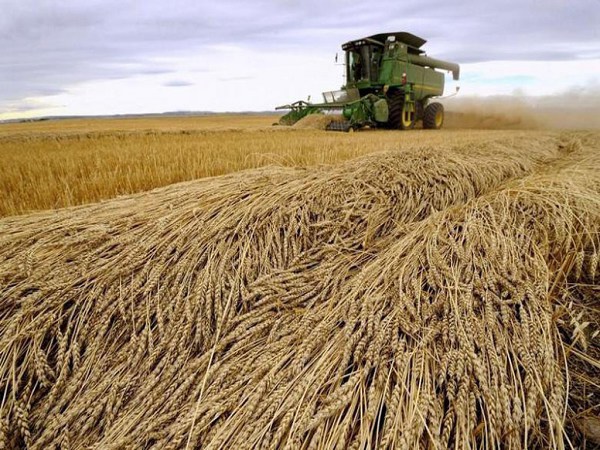
 PARIS/SYDNEY: US wheat was slightly higher on Monday as a severe cold spell raised the threat of crop damage in some key US growing belts.
Chicago soybean futures eased after export-fuelled gains on Friday, while corn also ticked lower.
Grain markets remained capped by recent strength in the dollar, which has clouded US export prospects, and large global inventories that have mitigated weather risks such as the US freeze or dry conditions in Argentina.
The most active wheat futures on the Chicago Board of Trade were up 0.2 percent at $4.10-1/4 a bushel by 1229 GMT.
Forecasts of extreme cold had helped wheat prices steady at Friday's close after falling earlier in the session.
Parts of the US Plains and Midwest have experienced since the weekend negative Fahrenheit temperatures, equivalent to minus 18 degrees Celsius or lower, a level that can threaten wheat crops depending on snow cover.
"It is very cold in the US and that has some concerned about crop losses," said Phin Ziebell, agribusiness economist, National Australia Bank.
Roughly 20 percent of the hard red winter wheat crop in the US Plains is vulnerable to frost damage, an agricultural meteorologist said on Friday.
European winter crops including wheat could also be vulnerable to frost damage, including from a cold front expected mid-week in parts of eastern Europe, after a generally mild autumn did not harden crops fully, the European Union's crop monitoring service said on Monday.
The most active CBOT soybean futures were down 0.5 percent at $10.31-1/4 a bushel. Corn edged down 0.4 percent to $3.54-3/4 a bushel.
The US Department of Agriculture on Friday said private exporters reported a deal to ship 205,000 tonnes of soybeans to unknown destinations in 2016/17, marking the third flash sale of the week.
In Brazil, independent analysts Safras & Mercado raised their forecast for Brazil's 2016/17 soybean crop to 106.1 million tonnes, adding to widespread expectations that Brazil will harvest a record crop.
The dollar, which steadied on Monday close to a 14-year high against a basket of major currencies, remained a curb on US grain futures as it makes dollar-priced commodities less attractive to overseas buyers.
Traders were also monitoring the spread of bird flu in Asia and Europe, which could affect demand for livestock feed. South Korea has ordered the slaughter of more than 18 million poultry birds, the country's biggest-ever cull, to contain the disease.



















Comments
Comments are closed for this article.