


Australia economy slows as government spending falls

[caption id="attachment_330664" align="alignnone" width="3500"] Pedestrians including office employees cross a road in the central business district of Sydney on March 3, 2015. Australia's central bank left interest rates unchanged at 2.25 percent but suggested that further reductions could be on the cards to spur the economy. AFP PHOTO / SAEED KHAN[/caption]
SYDNEY: Australia's economy contracted for just the fourth quarter in 25 years, official data showed Wednesday, slowing the annual growth rate to 1.8 percent amid weaker government and consumer spending on top of softer trade figures.
The Australian Bureau of Statistics reported a 0.5 percent contraction for the September quarter.
It was the weakest figure in eight years -- despite the recent upswing in commodity prices -- and underlined the challenges facing a country in transition from a mining investment boom.
"The contraction in real GDP (gross domestic product) recorded in the September quarter is not just a reminder, not just a wake-up call or a warning about being complacent when it comes to economic growth," Treasurer Scott Morrison told reporters in Canberra.
"It is a demand to support economic policies that drive the investment needed... to survive in a tough and competitive environment."
The latest figures -- at the lower end of analysts' forecasts -- came after a stellar second-quarter report that saw the economy expand by a revised 0.6 percent, to mark a quarter of a century that Australia has avoided recession.
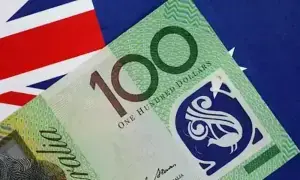
The Australian dollar fell about half a US cent to 74.25 cents.
"It was even weaker-than-expected, and consumer (spending) was a big disappointment," JP Morgan economist Ben Jarman told AFP.
"We are of the view that the RBA (Reserve Bank of Australia) is going to have to ease to keep growth at a satisfactory level."
Government investment fell by 0.2 percent for July-September, while household spending grew by a slow 0.4 percent.
The central bank on Tuesday held interest rates at a record-low 1.50 percent, as governor Philip Lowe said that "some slowing in the year-ended growth rate is likely, before it picks up again".
Despite the negative quarter, Australia's economy was still powering forward in comparison to its developed world peers, Morrison said.
"Our annual real growth is still higher than six out of the world's G7 economies, second only to the United Kingdom. Higher than the US, Canada, Japan, Germany, and higher than the OECD average," he said.
Copyright AFP (Agence France-Presse), 2016












Comments
Comments are closed for this article.