



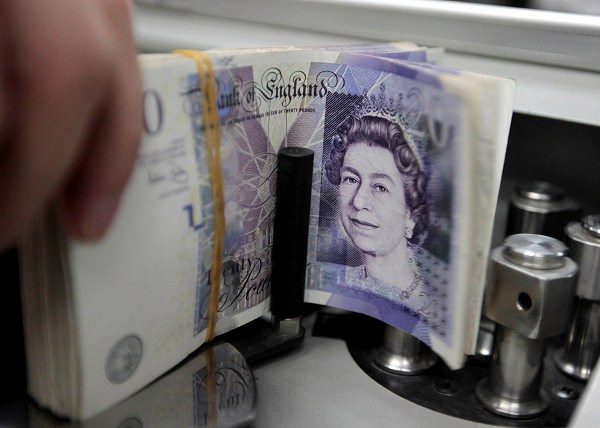
 LONDON: Sterling's fall since Britain's vote to leave the European Union will not necessarily lead to higher grocery prices, as it could be offset by lower commodities prices and stiff competition, the country's No.2 supermarket group Sainsbury's said on Wednesday.
Britain's grocery sector has seen more than two years of falling prices as German discounters Aldi and Lidl have led a price war, forcing a fight back from the "big four" players - market leader Tesco, Sainsbury's , Asda and Morrisons. Deflation in commodities has also been a major factor driving prices lower.
Most analysts and economists believe grocery prices are set to rise after a 10 percent drop in sterling following the "Brexit" vote, which makes importing goods more expensive.
A return to food price inflation, in moderation, would be welcomed by investors in grocery stocks as it boosts sales and profit margins. But Sainsbury's Chief Executive Mike Coupe said the situation was not clear cut.
"You could argue there are some inflationary pressures as a result of currency changes but equally there are some deflationary pressures because of commodity price movements," he told reporters after Sainsbury's reported a drop in underlying sales for the second straight quarter.
"If you look at the northern hemisphere harvests this year, they've been good again and that is probably going to put some deflationary pressures in the market," he said.
"It's still too early to tell how they will play out."
Coupe also said the market was the most competitive he had known in his 30-plus years in the sector with rivals continuing to push through tactical price reductions.
He said Sainsbury's' prices "have never been sharper" versus the discounters.
On Monday, Aldi said it would continue to cut prices to ensure it was the cheapest player.
SALES DECLINE
Sainsbury's, which this month completed a 1.4 billion pounds ($1.8 billion) takeover of Argos-owner Home Retail, said sales at stores open over a year fell 1.1 percent, excluding fuel, in the 16 weeks to Sept. 24, its fiscal second quarter - slightly better than analysts' average forecast of down 1.2 percent but worse than a first quarter fall of 0.8 percent.
The decline was driven by deflation of about 1 percent as the firm cut prices on targeted products, such as a 33 percent reduction to 2.50 pounds for an own-label pack of 46 nappies.
However, Sainsbury's highlighted like-for-like transaction growth across all sales channels - supermarkets, convenience stores and online - and volume growth. It said it remained confident it would continue to outperform major rivals.
Shares in the firm, already down 9 percent over the last six months, fell as much as 3.5 percent on the cautious outlook.
Sainsbury's has both lowered and simplified its prices, reducing the number of promotions and removing most "multi-buy" deals. It has also worked to improve the quality and range of its own-brand food and general merchandise products, while investing in the growth areas of online and convenience stores.
While the firm has proved more resilient to the discounters than others, it has still reported two straight years of profit decline and analysts forecast a third for the 2016-17 year.
"We see the gradual recovery of Tesco UK as a cause for real concern for Sainsbury's in terms of the scope for greater direct competitor attrition," said Shore Capital analyst Clive Black, who put his "hold" rating on the firm's shares under review.
Other analysts believe Sainsbury's is vulnerable to a possible major step-up in price cuts from Asda and could be distracted by the integration of general merchandise chain Argos.
In its second quarter to Aug. 27, Argos achieved total sales growth of 3.0 percent and like-for-like growth of 2.3 percent.


























Comments
Comments are closed for this article.