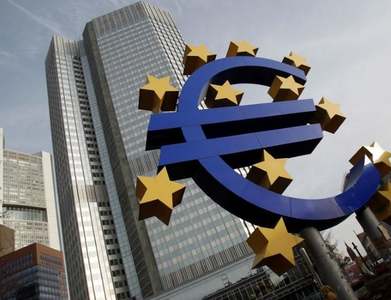
The ECB has missed its goal of keeping price growth "below but close to 2%" for a decade despite massive money printing, negative rates on deposits and subsidised loans to banks.
SPDR Gold Trust, the world's largest gold-backed exchange-traded fund, said its holdings rose 0.6% to 1,043.16 tonnes on Wednesday from 1,037.33 tonnes on Tuesday.
The ECB is reviewing its strategy and President Christine Lagarde has put equality on the agenda along with other issues, such as climate change, which have not traditionally been part of the central bank's focus.
Weidmann, who is also president of Germany's Bundesbank, reaffirmed his scepticism, saying monetary policy was too blunt a tool to address wealth distribution and this should be left to elected politicians.
Panetta said the ECB could and should keep credit cheap for a long time, even if borrowing costs around the world rise as a result of a booming US economy.
"For the ECB, this implies that we will have to maintain very favourable financing conditions well beyond the end of the pandemic period," he added.
"Think of a patient which is out of a deep crisis but still on two crutches," Lagarde said.
"You don't want to remove either crutch, the fiscal or the monetary, until the patient can actually walk fine, and to do that means support well into the recovery."
Worried that rising yields would derail an eventual recovery, policymakers in March decided to "significantly" increase bond purchases and undo some of the rise in borrowing costs, which was deemed a reflection of a global repricing rather than improved economic prospects.
"It was underlined that the flexibility embodied in the PEPP was symmetric, implying that the purchase pace could be increased and decreased according to market conditions," the ECB said.
The ECB bought 18.2 billion euros worth of bonds on a gross basis - that is, before taking out redemptions - under its Pandemic Emergency Purchase Programme last week, the data showed.
ECB policymakers appeared divided on the question of greater market intervention ahead of their policy meeting on Thursday.
"These developments underline the importance of avoiding premature increases in nominal interest rates," de Cos added.
The ECB will next meet on March 11 and while an outright increase in the 1.85 trillion-euro Pandemic Emergency Bond Purchase quota is not likely, the ECB could say it will increase the flow of purchases to cap yields.
Europe's spending stimulus has been less ambitious, but markets have signalled expectations that inflation will rise in the coming months, with borrowing prices for EU governments increasing.
Risk-free overnight indexed swap rates and sovereign yields are particularly important, because they are good early indicators of what happens at downstream stages of monetary policy transmission.
"Accordingly, the ECB is closely monitoring the evolution of longer-term nominal bond yields," she said.
Concerns were voiced ... over developments in the exchange rate that might have negative implications for euro area financial conditions and, ultimately, consequences for the inflation outlook.
It was maintained that not every increase in nominal yields should be interpreted as an unwarranted tightening of financing conditions and trigger a corresponding policy response.