


Punjab has achieved 99pc tax target, says finance minister
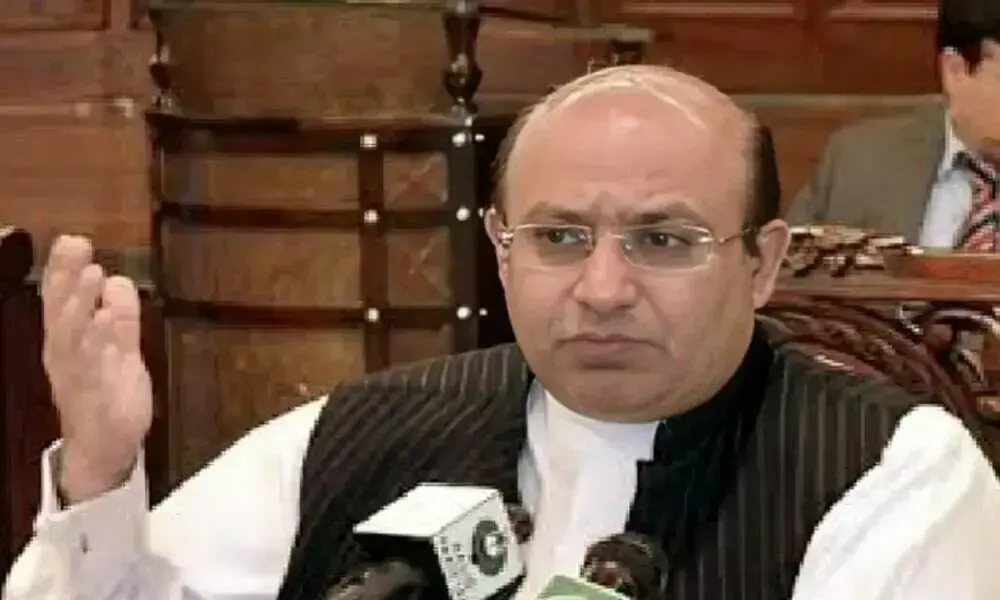

LAHORE: Punjab Finance Minister Mian Mujtaba Shuja-ur-Rehman has said that the province successfully achieved 99 percent of its tax collection target during the outgoing fiscal year, while the revenue target for FY 2026–27 has been increased by 46 percent.
He made these remarks while addressing the post-budget press conference held here on Wednesday. He was accompanied by Punjab Senior Minister Marriyum Aurangzeb, provincial ministers and senior officials.
Expressing confidence in the government’s revenue reforms, Mian Mujtaba Shuja-ur-Rehman said the enhanced target would also be achieved successfully, adding that Punjab will establish a unified revenue authority on the model of Federal Board of Revenue (FBR) during the next fiscal year, bringing all provincial taxes under a single institutional framework.
Highlighting the Punjab government’s fiscal performance, the Minister announced that Punjab’s own-source revenues are expected to witness an increase of 30 to 40 percent. He emphasised that it has neither imposed any new taxes nor increased the rates of existing taxes over the past two years.
Instead, significant improvements in revenue collection have been achieved through eliminating corruption in the tax administration and expanding the provincial tax base, he added.
He stated that during the current fiscal year, the Punjab Revenue Authority (PRA) exceeded its assigned target by collecting 30 percent more revenue, while the Excise and Taxation Department recorded a 12 percent increase in collections. Among the non-tax revenue-generating departments, the mines and minerals department emerged as the leading contributor, he added.
“In view of the sustained growth in revenue generation, the collection target for the Punjab Revenue Authority has been enhanced to Rs 528 billion for the next fiscal year, while the excise and taxation department has been assigned a target of Rs 124 billion. Similarly, a target of Rs 461 billion has been proposed for non-tax departments,” he said.
According to him, only a modest revision in certain existing tax rates has been proposed for the upcoming fiscal year in light of prevailing economic circumstances. One of the key reasons behind this adjustment was Punjab’s decision to provide a grant of Rs 546 billion to the federation, which effectively reduced the province’s development budget from Rs 1,240 billion to Rs 752 billion.
He noted that this decision was taken by Punjab Chief Minister Maryam Nawaz Sharif in the larger national interest, reaffirming the principle that the strength of the federation depends upon the strength of its constituent units.
He further clarified that despite the reduction in development resources, the government has made no compromise on the province’s development agenda or the provision of public services. The resulting fiscal gap is being addressed through rationalisation of current expenditures and by promoting greater economic activity across the province, he added.
Responding to media queries, the Finance Minister observed that the taxes whose rates have been revised for the upcoming fiscal year had remained unchanged for several decades.
He pointed out that the proposed amendments to the Agricultural Tax, which has remained unchanged since 1998, will apply only to landholdings exceeding 12.5 acres.
He further announced that following the successful digitisation of revenue collection under the excise and taxation department, the Board of Revenue’s collection system will also be shifted online. “The property tax regime is being fully digitised to eliminate corruption and improve efficiency.
Simultaneously, with the expansion of the Punjab Revenue Authority’s mandate, its human resource capacity is also being strengthened. These reforms are aimed at enhancing governance, increasing institutional efficiency, and ensuring transparency across the provincial revenue system,” he added.
“The Punjab government’s achievements in tax reforms and revenue mobilisation over the past two years surpass the performance of the previous decade, placing Punjab ahead of the federation and other provinces. The most compelling evidence of the government’s success is the commencement of implementation on all development projects announced in the previous two provincial budgets, an accomplishment without precedent in the province’s history,” he said.
Meanwhile, Punjab Senior Minister Marriyum Aurangzeb used the briefing to showcase federal and provincial performances over the past 30 months, contrasting them with the economic crisis inherited when Prime Minister Shehbaz Sharif first took power.
“When Shehbaz Sharif assumed office, the country was on the precipice of a sovereign default,” she said, crediting the current stabilisation to the federal economic team’s structural compliance with the International Monetary Fund (IMF). “Today, economic stability is returning because of hard fiscal decisions. The federal government’s economic management had helped restore stability and create conditions for sustained growth,” he added.
According to her, the Punjab government had maintained fiscal discipline by controlling expenditures while continuing to invest in social sectors, including health, education and public welfare programmes. No cuts were made to key development and social-sector budgets.
She highlighted aggressive rightsizing measures in Punjab, saying that the provincial government has abolished 870 duplicate or redundant ongoing development schemes and eliminated 100,000 vacant bureaucratic positions to lower public expenditures.
Aurangzeb highlighted a significant rise in provincial revenues, saying Punjab’s revenue collection had increased from Rs 426 billion to Rs 820 billion, while provincial tax revenue stood at Rs 519 billion. She added that the government expanded the tax base without imposing new taxes.
According to her, the province had completed more than 125,000 homes under the ‘Apni Chhat, Apna Ghar’ housing scheme and eliminated around 100,000 vacant government positions through rightsizing measures aimed at improving efficiency.
She also announced continued investment in public transport and infrastructure, including work on the Gujranwala and Faisalabad metro projects and the launch of a Rs 5.4 billion programme to introduce 1,100 electric taxis.
“The budget includes Rs 55 billion special development package for riverine areas, Rs100 billion for youth-focused initiatives, and Rs116 billion for the livestock and agriculture sectors,” she added.
“Punjab has significantly contributed to the crisis resulting from the US-Iran war by allocating a federal grant of Rs 546 billion to the federation, leading to a challenging budget and ADP. Through the federal grant, we contributed to national water security, defence, and debt repayment,” she said.
The Senior Minister noted that reducing the province’s ADP was a difficult decision; however, provincial departments worked diligently on the Punjab Economic Transformation Plan, and the province managed to control its expenses. “For the upcoming fiscal year, the ongoing expenses are projected to be Rs 1,962.9 billion, which is 3.2 percent less than the Rs 2,026.7 billion allocated for the current fiscal year. Importantly, no cuts were made to the social sector in the ADP,” she added.
Copyright Business Recorder, 2026
Comments