


Global accounting rule setters urged to take time

 LONDON: The International Accounting Standards Board (IASB) and its US counterpart, the Financial Accounting Standards Board (FASB) are thrashing out a set of global rules that would make life easier for investors and international companies.
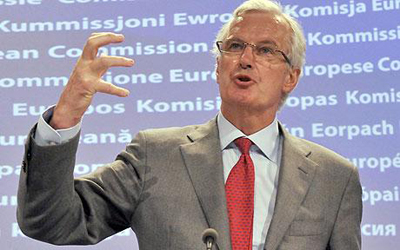
"Convergence should not be at the expense of quality," EU Internal Market Commissioner Michel Barnier said.
"It is essential that the IASB responds fully to concerns expressed by stakeholders, including additional field-testing of projects where needed," Barnier added.
Barnier is a member of the IASB's monitoring board which met jointly with the standard setter's trustees on Friday in London.
The IASB's rules are used in over 100 countries and the European Commission is pivotal in introducing any rule changes for over 8, 000 listed companies in the EU.
The accounting industry and policymakers worry that new rules, which effectively become law in over 100 countries using IASB standards, are being made too quickly, which could make them harder to implement.
The Group of 20 leading economies (G20) originally set a June deadline for convergence but have put it back six months.
"We should make use of the deadline set by the G20 recently," Barnier said.
The IASB's chairman David Tweedie said earlier this week he wants to stick to the June timetable to focus minds but there would be no compromise on quality.
Bob Glauber, an IASB trustee, said convergence was moving forward.
"It still has some distance to go," Glauber said.
"We continue to tell the monitoring board they should be totally assured we do not and shall not permit due process to be sacrificed to any kind of deadline," Glauber said.
Mary Schapiro, chairman of the US Securities and Exchange Commission and member of the IASB's monitoring board, welcomed the focus on quality.
"I think the rigour and timeliness of oversight is especially important," Schapiro said.
The SEC is due to say this year whether the United States will go beyond convergence and adopt the IASB's rules outright over the coming years, turning them into a truly global standard.




















Comments
Comments are closed for this article.