



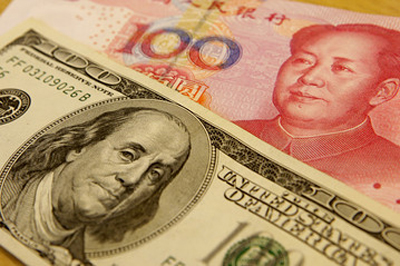
 SHANGHAI: The yuan hit a record trading high versus the dollar on Thursday after the People's Bank of China fixed its daily mid-point at an all-time high and the foreign exchange regulator tightened rules in a move traders said will pave the way for more yuan rises.
In response to the new regulations, onshore dollar/yuan forwards tumbled to reflect expectations of reduced activities in the future. The spread of the one-year onshore forwards against the offshore one-year non-deliverable forwards (NDFs) entered negative territory for the first time since last July.
The State Administration of Foreign Exchange said late on Wednesday that it would reduce corporate short-term foreign debt quotas so as to control risks from cross-border capital flows, a move that will make it more difficult for firms to do arbitrage trading to speculate on yuan appreciation, traders said.
Under SAFE's new rules, Chinese banks that had dollar-short positions of $2 billion or more as of Nov. 8 must reduce them by 60 percent. Banks with short positions of $2 billion or less must cut these in half.
The move to cut bets on yuan rises and curb capital inflows came after the PBOC fixed a slew of record high mid-points this year, indicating the government may be allowing the currency to appreciate at a faster pace to help fight inflation, partly propelled by high global commodity prices.
"Regulatory tactics are clear, making it difficult to speculate on yuan appreciation while letting the currency rise," said a trader at a European bank in Shanghai. "I think the PBOC is now poised for more aggressive moves (to let yuan rise)."
SPREAD
The yuan was trading at 6.5544 versus the dollar at midday, up from Wednesday's close Of 6.5559.
It hit an all-time trading high of 6.5539 in late morning trade, having rising 4.15 percent since it was depegged in June 2010, and 0.54 percent so far this year.
Before trading began, the PBOC fixed the yuan's mid-point at a record high of 6.5564, stronger than Wedesday's 6.5586 and toppling the previous record of 6.5580 set last Friday.
The fixing, from which the yuan can trade up or down a maximum 0.5 percent in a given day, is used by the PBOC to express the government's intentions for the currency.
Traders said trading was not affected by the one-day G20 seminar being held in the eastern Chinese city of Nanjing on Thursday as the meeting focuses on the reform of the global monetary system, not the currency issues.
While spot yuan trading remained relatively stable, one-year dollar/yuan onshore forwards slumped to 6.4176 bid at midday on Thursday from 6.4508 at the close on Wednesday.
The onshore forwards thus scored a rare premium for the yuan in one year's time versus the benchmark one-year NDFs which were bid at 6.4250 at midday.
One-year NDFs, which fell from 6.4280 at Wednesday's close, now implied yuan appreciation of 2.04 percent in 12 months, up from 1.99 percent they implied at Wednesday's close.
In contrast with the more speculative NDF market, onshore forwards typically only reflect the spread between Chinese and US interest rates and the dollar funding conditions in the domestic market, the China Foreign Exchange Trade System.
While onshore forwards rarely hint at expectations of yuan appreciation, their steep fall often has a psychological Influence on market views over the yuan's trend.




















Comments
Comments are closed for this article.