



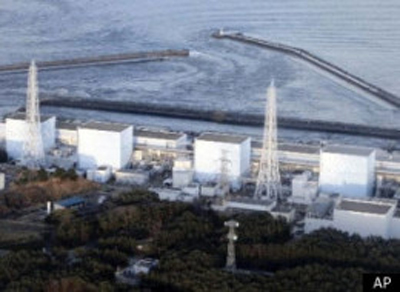
 TOKYO: Workers were withdrawn from a reactor building at Japan's wrecked nuclear plant on Sunday after potentially lethal levels of radiation were detected in water there, a major setback for the effort to avert a catastrophic meltdown.
The operator of the facility said radiation in the water of the No. 2 reactor was measured at more than 1,000 millisieverts an hour, the highest reading so far in a crisis triggered by a massive earthquake and tsunami on March 11.
That compares with a national safety standard of 250 millisieverts over a year.
The US Environmental Protection Agency says a single dose of 1,000 millisieverts is enough to cause haemorrhaging.
Plant operator Tokyo Electric Power Co. later said the extremely high radioactivity readings might have been wrong, adding the levels were being re-checked.
"The situation is serious, they have to pump away this water on the floor, get rid of it to lower the radiation," said Robert Finck, radiation protection specialist at the Swedish Radiation Safety
Authority, speaking before the operator expressed doubt about the high reading.
"It's virtually impossible to work, you can? only be there for a few minutes, it's impossible to say how long it will take before they can? gradually take control."
The Japanese government said the overall situation was unchanged at plant, 240 km (150 miles) north of Tokyo.
Two of the plant's six reactors are now seen as safe but the other four are volatile, occasionally emitting steam and smoke.
"We did expect to run into unforeseen difficulties, and this accumulation of high radioactivity water is one such example," Chief Cabinet Secretary Yukio Edano told a news briefing.
Yukiya Amano, director-general of the International Atomic Energy Agency, said the emergency could go on for weeks, if not months. "This is a very serious accident by all standards," he told the New York Times. "And it is not yet over."




















Comments
Comments are closed for this article.