



IS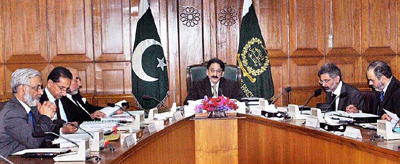 LAMABAD: Chief Justice of Pakistan Iftikhar Muhammad Chaudhry has said that independence and impartiality of judiciary is prerequisite for free, fair and impartial dispensation of justice.
He said the judiciary has taken great strides to strengthen its independence and enable the courts to deliver.
Addressing the participants of the National Judicial (Policy Making) Committee here on Saturday, he said the provision of inexpensive and expeditious justice was a dictate of the Constitution and a prime responsibility of the State, as laid down in Article 37(d) of the Constitution.
He said the judiciary, as a third pillar of the State, was required to perform this onerous responsibility and to be able to discharge this function, the Constitution provided for necessary safeguards as regards independence and impartiality of courts.
To realize this important objective, the National Judicial (Policy Making) Committee was established as a statutory body, he added.
About role and objective of the NJPMC, he said the apex body of the justice sector had the mandate to coordinate and harmonize Judicial Policy in the country, with a view to improving its capacity and performance.
"In line with this objective, we embarked on the path of reforming the administration of justice in the country in a manner to realize the goal of ensuring access to justice for all and dispensing free, fair and expeditious justice to those who suffer any violation of their rights or any wrong or mischief or grievance", he added.
The CJP further elaborated that in line with the constitutional mandate and with a view to respond to the increasing public confidence in the judiciary, they launched the National Judicial Policy in June, 2009.
The Policy was formulated after broad consensus and thorough consultation with the relevant stakeholders of the justice sector including judges, member of the bar, law officers, prosecutors, etc.
Under the Policy, certain targets were fixed and guidelines prescribed for expediting trail proceedings with a view to reduce pendency and further to create a good image of the judiciary, he added.
He said the targets set by the Policy had largely been realized. Actions were taken against the corrupt judicial officers and staff. The district judiciary performed well and decided record number of cases and their performance was being monitored.
He admitted that there were some shortcomings and lapses though, which were being discussed from time to time.
He said that the High Courts could not keep pace, primarily on account of the persistent shortages of strength in such courts.
In some regions, the National Judicial Policy successfully achieved the targets and eliminated backlog altogether, he added.
The Chief Justice said that the district Judiciary of Balochistan in particular did very well as it was currently poised to decide any civil or criminal case within a period of six to nine months from the date of filing of a suit or complaint.
He said the District Judiciary in the other provinces was also catching up. The success of the Policy had led to enhanced confidence of the general public in the capacity and ability of the courts to decide disputes.
"This enhanced confidence has led to increase in the fresh filing of cases, which is a good omen for the nation. It not only signifies increased public confidence in the judicial system but also public adherence to following the rule of law. It also shows greater public awareness about their rights and obligations", he added.
He expressed the hope that with continuous reforms in the judicial system and acquisition of necessary skills and expertise, they could further improve the functioning of the system.
He also welcomed the Chief Justices of the Lahore and Sindh High Courts, and Islamabad High Court who were attending the meeting for the first time, after their elevation as Chief Justices.
The Chief Justice also expressed his satisfaction over establishment of the Islamabad High Court by saying that it became functional after constitutional amendment.
The Islamabad High Court Act 2010 had also been passed by the Parliament and come into force, he noted.
It was the need of time and the demand of the residents and lawyers of Islamabad Capital Territory to have a full fledged High Court, he added.




















Comments
Comments are closed for this article.