



 RIO DE JANEIRO: Latin American currencies traded mixed for a second day on Friday as investors sought signs about the direction of global economic growth and what steps Europe will take to deal with its sovereign debt crisis.
Action and comments by European leaders and the euro zone's central bank (ECB) have yet to provide investors with a convincing plan for helping Greece, Spain, Italy, Portugal and Ireland to revive growth and avoid default, said Joao Medeiros, a partner at Pioneer corretora, a Sao Paulo currency brokerage.
German Chancellor Angela Merkel signaled on Thursday that new plans by the ECB to buy bonds of debt-burdened EU members complied with EU leaders' plans and called on governments to "act fast" on the region's problems.
While those words were enough to lift European stock prices on Friday, they remain too vague and insufficient to boost enthusiasm in Latin American economies already being hurt by Europe's slowdown and the outlook for a worldwide credit crunch if a European country defaults.
"The market is stagnant and trading volumes are very low. The world is waiting for September to see if Germany will approve the ECB's stimulus measures," said João Medeiros, a director at Pioneer brokerage in São Paulo.
The Brazilian real was little changed from Thursday, weakening 0.06 percent to 2.0196 per US dollar, despite a central bank report on Friday showing that the country's economy in June grew at its fastest pace in 15 months.
The bank's IBC-Br economic activity index rose a seasonally adjusted 0.75 percent from May, a result in line with the median forecast of 18 economists surveyed by Reuters.
The index, a measure of activity in the farming, manufacturing and services sectors, grew 0.99 percent from the same period a year earlier, the bank added. The result suggested that a series of government stimulus measures aimed at reviving the country's economy may have started to kick in.
Investors, though, remained reluctant to buy the real on concerns the central bank is ready to intervene if the real slips below 2 to the dollar, traders say.
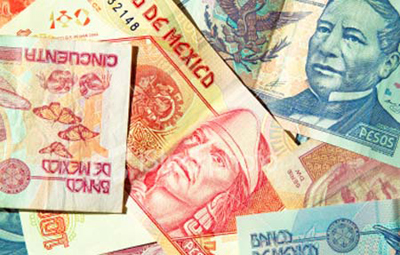
The Mexican peso weakened 0.37 percent to 13.2161 per dollar, after data released on Thursday showed that Latin America's second-largest economy lost momentum in the second quarter.
Mexico's economic growth in the April-June period, as compared with a year earlier, eased to 4.1 percent, in line with expectations, decelerating from the downwardly revised 4.5 percent expansion seen in the first quarter against a year earlier.
The Chilean peso dipped 0.3 percent in a fifth day of losses. On Thursday the country's Central Bank kept its base interest rate steady at 5 percent, on concerns that energy and food prices could grow in coming months. Lower interest rates could make the country's bonds more attractive for foreign investors.
Copyright Reuters, 2012




















Comments
Comments are closed for this article.