


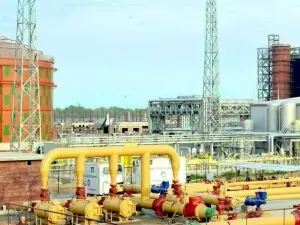
A secondary circuit for Iran's Arak heavy water reactor has become operational as part of its redesign under the 2015 nuclear deal, the country's atomic energy chief said on Monday. "Today a significant part of the reactor becomes operational," Ali Akbar Salehi told reporters at Arak.
The secondary circuit "transfers the heat generated in the reactor's heart to cooling towers" and is now complete, he added, in remarks aired on state television. Salehi noted the reactor's primary circuit, which contains the core, was still being built.
"Fifty-two systems have to be built so that the reactor can become operational... we have completed 20 so far," he said. Monday's announcement is part of Iran's pledge under the nuclear deal to "redesign and rebuild" a modernised reactor so that it cannot produce weapons-grade plutonium and only support "peaceful nuclear research and radioisotope production for medical and industrial purposes".
The deal known formally as the Joint Comprehensive Plan of Action was meant to give Iran relief from sanctions in return for curbs on its nuclear programme. But the JCPOA has been hanging by a thread since May last year when US President Donald Trump pulled out of it and began reimposing sanctions on the Islamic republic.
The remaining parties to the deal include Britain, China, France, Germany and Russia. The Europeans have repeatedly said they are committed to saving the accord, but their efforts have so far borne little fruit.
Tehran has already hit back four times with countermeasures in response to the US withdrawal. It stopped respecting the 300-kilogramme limit the deal imposed on its stocks of enriched uranium and abandoned the cap on enriching uranium above 3.67 percent.
Tehran started producing enriched uranium at its plant in Natanz using advanced centrifuges banned by the accord and testing new models. Uranium enrichment was also restarted at its underground Fordow facility in central Iran, which the deal banned.
Copyright Agence France-Presse, 2019

















Comments
Comments are closed for this article.