



Hoping to succeed where earlier Arab Spring revolutions have struggled, Sudan's new government is seeking support to build a youth-focused economy through fundamental reforms and a new safety net, its finance minister says.
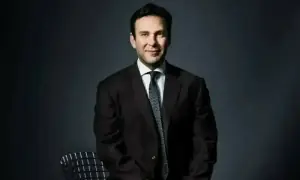
In an interview with AFP in Washington, Finance Minister Ibrahim Elbadawi voiced hope that Sudan by year-end will see the end of one of its biggest impediments - its continued classification by the United States as a state sponsor of terrorism.
Sudan's month-and-a-half-old government is seeking to start a new course for the African country after demonstrators, driven initially to the streets by high food prices, triggered the downfall first of veteran strongman Omar al-Bashir and then military rulers.
Elbadawi, tapped after a career at the World Bank, said he recognized the "dire needs" to create jobs for young people who make up some 60 percent of Sudan's population.
"These Sudanese youth, they are the ones who made this revolution. And they are the ones who paid the ultimate price and sacrifices for their country," Elbadawi said.
"And it is our responsibility to prioritize their needs and to respond to their aspirations," he said.
With such a young population, Elbadawi said that Prime Minister Abdalla Hamdok's government wanted to invest in education to create a more tech-savvy economy.
He also said that Sudan was looking to develop the economies of war-torn Darfur, Blue Nile and South Kordofan states as part of efforts to bring permanent peace.
But he appealed for understanding as the country reforms its economy. Sudan's revenue collection is just six percent of GDP, one of the lowest rates in the world, and it spends more on oil subsidies than education and health, levels that are unsustainable, Elbadawi said.
To avoid social shock, the minister said Sudan would prioritize holding back inflation and hold off on disruptive reforms until it can protect the poorest.
"Right now more than 65 percent of Sudanese are probably under the poverty line and we don't want them to go deeper," he said.
"So we have to have a social safety net and that is where we need the support of our partners." Speaking later at the Atlantic Council think tank, Elbadawi said Sudan was looking to set up an electronic cash transfer system for the vulnerable populations including pregnant women and families with small children.
Copyright Agence France-Presse, 2019















Comments
Comments are closed for this article.