



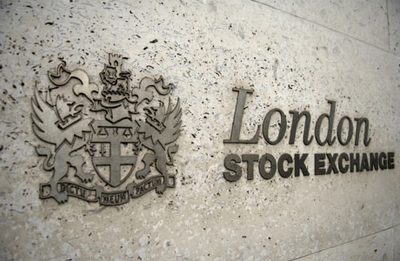
 LONDON: European stocks rallied on Tuesday on robust economic data from Germany and the US with traders also buoyed by the extra breathing room granted struggling Spain by EU ministers in Brussels.
At close, London's benchmark FTSE 100 index rose 1.07 percent to 5,956.43 points, in Paris the CAC 40 added 1.72 percent to 3,550.16 points and in Frankfurt the DAX 30 climbed 1.37 percent to 6.995.91 points.
In Madrid shares jumped by 2.40 percent and in Milan they added 2.08 percent. Lisbon rose by 1.60 percent, Amsterdam by 1.65 percent and Brussels by 1.71 percent.
In foreign exchange deals, the European single currency fell to $1.3109 from $1.3147 late in New York on Monday.
The dollar rose to 82.68 Japanese yen from 82.32 yen on Monday.
Stocks on Wall Street rose sharply on official data showing US consumer spending accelerating in February.
In afternoon trade, the Dow Jones Industrial Average rose 0.84 percent to 13,069.04 points, the broad-based S&P 500 gained 0.85 percent to 1,382.70 points, while the tech-heavy Nasdaq Composite added 1.00 percent to 3,013.61 points.
Fresh data showed US retail sales growing 1.1 percent in February from January, their highest increase in five months.
Sales growth was strong even with the key auto component stripped out, suggesting consumers were feeling more comfortable about spending amid the pickup in the job market.
Meanwhile, despite the positive signs in the economy, investors did not expect any change to the central bank's easy money stance as the Federal Reserve's March policy board meeting got under way Tuesday.
"Ahead of the FOMC meeting later this afternoon, equity markets have been buoyant taking their lead from Wall Street's advances yesterday," said CMC Markets senior strategist Brenda Kelly.
"The release of the German ZEW sentiment data has also given the markets a boost (by) beating the expectations by a long margin."
German investor confidence surged to the highest level for 21 months in March, amid growing optimism that Europe's top economy can shrug off the worst of the debt crisis, data showed on Tuesday.
The ZEW think tank's economic expectations index rose by 16.9 points in March to stand at plus 22.3 points, the highest level since June 2010, the organisation said in a statement.
Meanwhile, Spain agreed to European Union demands to lower its budget deficit target for this year from 5.8 percent of gross domestic product to 5.3 percent.
"Given this, the fact that the previous government missed the 2011 budget deficit target by 2.5 percent of GDP and the downward revision to the official growth forecast for this year, the government will have to announce additional fiscal measures, probably later this month," said Ben May of Capital Economics
The conservative Popular Party government had stunned Brussels by revealing the public deficit hit 8.5 of gross domestic product in 2011 -- far beyond the agreed 6.0-percent target.
Prime Minister Mariano Rajoy then landed a second blow by saying Spain would also let the deficit run to 5.8 percent in 2012, shooting past the 4.4-percent goal earlier agreed with the EU.
But on Monday, Spain and the EU agreed that Madrid must trim the deficit to 5.3 percent of GDP in 2012 and 3.0 percent in 2013 -- still a major challenge for the next two years.
Asian stock markets closed mostly higher on Tuesday, with traders unfazed by fresh easing measures from Japan's central bank.
The Bank of Japan on Tuesday decided to boost a loan programme by almost $25 billion to kickstart the domestic economy.
The fresh easing measures follow the rate-setting board's move last month to pump 10 trillion yen ($130 billion) more cash into the economy.
The bank also said it would hold interest rates at near zero.





















Comments
Comments are closed for this article.