



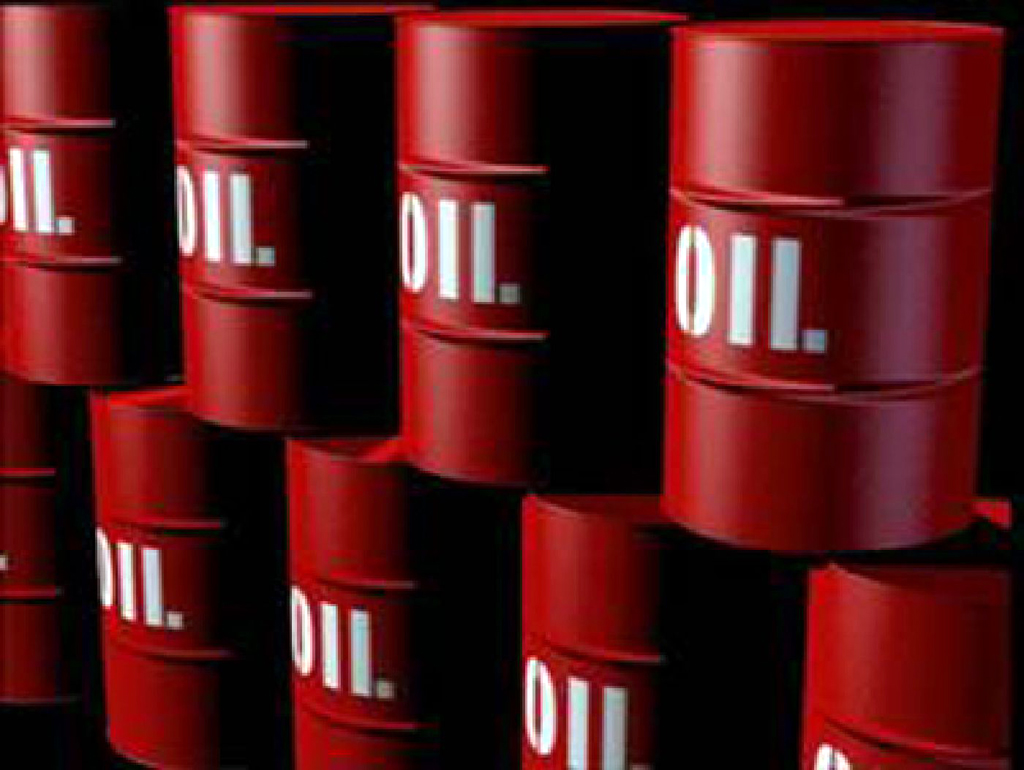
 SINGAPORE: Oil prices fell on Wednesday amid signs that global markets remain adequately supplied, despite a jump to 2019 highs this week on Washington's push for tighter sanctions against Iran.
Brent crude futures were at $74.24 per barrel at 0550 GMT, down 27 cents, or 0.4 percent, from their last close.
U.S. West Texas Intermediate (WTI) crude futures were at $66.05 per barrel, down 25 cents, or 0.4 percent, from their previous settlement.
Crude oil prices for spot delivery rose to 2019 highs earlier in the week after the United States said on Monday it would end all exemptions for sanctions against Iran, demanding countries halt oil imports from Tehran from May or face punitive action from Washington.
The spot price surge has put the Brent forward curve into steep backwardation, in which prices for later delivery are cheaper than for prompt dispatch.
Stephen Schork of the Schork Report energy newsletter, said the shift to backwardation in the past four months was "a sign that the market's underlying fundamentals have shifted away from a spot market that is well supplied to a market where demand is beginning to overtake supply."
U.S. sanctions against oil exporter Iran were introduced in November 2018, but Washington allowed its largest buyers limited imports of crude for another half-year as an adjustment period.
With Iranian oil exports likely declining sharply from May as most countries bow to U.S. pressure, global crude markets are expected to tighten in the short-run, Goldman Sachs and Barclays bank said this week.
Despite the tight spot market, analysts said global oil markets remained adequately supplied thanks to ample spare capacity from the Middle East dominated Organization of the Petroleum Exporting Countries (OPEC), Russian and also the United States.
The International Energy Agency (IEA), a watchdog for oil consuming countries, said in a statement on Tuesday that markets are "adequately supplied" and that "global spare production capacity remains at comfortable levels."
The biggest source of new oil supply comes from the United States, where crude oil production <C-OUT-T-EIA> has already risen by more than 2 million barrels per day (bpd) since early 2018 to a record of more than 12 million bpd early this year, making America the world's biggest oil producer ahead of Russia and Saudi Arabia.
"Total oil supplies from the United States are expected to grow by 1.6 million bpd this year," the IEA said.
In a sign of America's rising oil market clout, former OPEC-member and major crude exporter Indonesia has for the first time ordered a crude cargo from the United States, formerly the top crude importer but now the world's biggest oil producer.
























Comments
Comments are closed for this article.