


Yunus rules out World Bank role

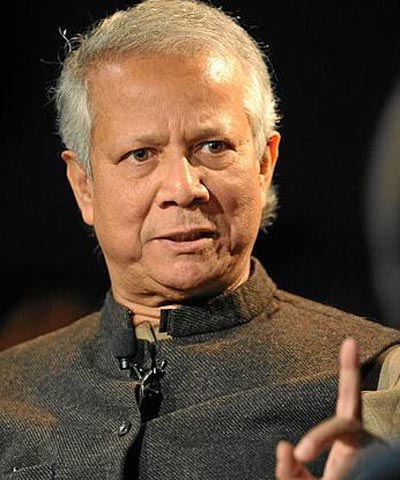 DHAKA: Bangladesh's Muhammad Yunus, who won a Nobel Prize for his work in microfinance, said on Friday he had no interest in becoming the new head of the World Bank despite being proposed for the position.
The country's Prime Minister Sheikh Hasina put forward Yunus last month during a visit by some European parliamentarians, saying he was respected for his pioneering role in poverty alleviation.
The move surprised many as Hasina has clashed with 70-year-old Yunus, who founded the Grameen Bank in 1983 to provide small loans to the poor, notably accusing him in December 2010 of "sucking blood from the poor."
"I never thought of taking up the top job of the World Bank or any other such multilateral institutions. I have been a regular critic of the World Bank for its policies and programs," Yunus said in a statement, while thanking Hasina.
Yunus said in 1995 US President Clinton had invited him to the Oval Office and "asked whether I had any interest in this". In 2005 ex-Bangladesh Prime Minister Khaleda Zia wanted to nominate him for UN Secretary General's post.
"Those who are feeling encouraged by the present proposal from the Prime Minister Sheikh Hasina may become disappointed with me that I am not giving importance to such a big opportunity for the country," he said.
World Bank President Robert Zoellick will step down at the end of his five-year term on June 30, setting up a race for the top post at the development bank.
Yunus and the Grameen Bank shared the Nobel peace prize in 2006 for creating "economic and social development from below" by making small loans to poor entrepreneurs.
Yunus was forced out of the bank last year, however, after the central bank ordered him to be fired for exceeding the mandatory retirement age a move seen by critics as being engineered by Hasina.
The microfinance pioneer said he hoped that Hasina's proposal that he take over at the World Bank would "make clear that the impressions she previously had about me and Grameen Bank no longer exist".
Copyright AFP (Agence France-Presse), 2012




















Comments
Comments are closed for this article.